
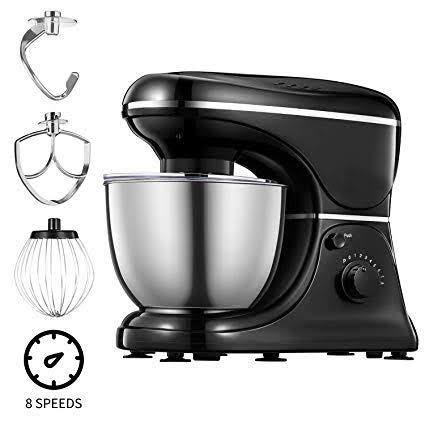
Best Dough Kneader Machine: Types, Uses & iring, messy and slow, especially when several batches are needed every day. A Dough Kneader Machine reduces that effort by mixing flour and liquid in a controlled, repeatable way. It can help families prepare daily roti while supporting bakeries, restaurants, hotels, cafés and catering businesses during busy hours.
Automated bakery equipment is also gaining importance as food businesses look for faster production, better hygiene and consistent results. Industry research estimates the global bakery-processing equipment market at about $16.7 billion in 2026, with automation and efficiency among the main growth drivers. Is a Dough Kneader Machine?
This kitchen appliance mixes flour with water, oil, salt, yeast and other ingredients. Its main parts normally include a bowl, motor, drive system and kneading hook, blade or spiral.
Instead of pressing dough by hand, it repeats the movement at a steady speed. A dedicated kneader mainly handles dough, while food processors cut or blend and stand mixers can whip, beat and mix with different attachments.
Common users include homes, tandoor kitchens, pizza shops, bakeries and restaurants.
How Does a Dough Kneader Work?
Ingredients are measured and placed inside the bowl. The motor powers a hook, blade or spiral attachment, which combines wet and dry ingredients.
Continuous movement stretches and folds the mixture, developing gluten and improving elasticity. An automatic dough kneader may include a timer, speed control or preset programme.
The operator should watch the first few minutes because flour type, water temperature and hydration affect the result. Smooth dough is then removed for resting, proofing, shaping or baking.
Main Types of Dough Kneaders
Manual Dough Kneaders
Manual models use a handle or basic mechanical system. They are affordable, easy to maintain and suitable for small quantities, but they still require physical effort.
Automatic Electric Dough Kneaders
An electric dough kneader machine uses a motor to mix and knead. Timers and automatic programmes make it practical for regular household cooking and small food businesses.
Stand Mixers With Dough Hooks
Stand mixers are multipurpose appliances. They can knead bread or pizza dough and also whip cream, beat eggs and mix cake batter.
Spiral Dough Mixers
A spiral mixer uses a spiral-shaped tool while the bowl may rotate. This action works well for bread and pizza dough and is common in professional bakeries.
Commercial Dough Kneaders
A commercial Dough Kneader Machine usually has a stronger motor, heavier frame and larger bowl. Common capacities include about 3 kg, 5 kg, 7 kg and 10 kg, although usable dough weight depends on the recipe and manufacturer.
Major Benefits of Automated Dough Kneading
The biggest advantage is consistency. A Dough Kneader Machine can repeat the same movement, speed and duration across batches, making recipe control easier.
It saves preparation time, reduces physical strain and lets staff focus on other tasks. Key benefits include even ingredient distribution, better gluten development, less hand contact, faster preparation and repeatable output—especially during peak-hour orders.
Results still depend on correct loading. Capacity, speed and kneading time matter more than simply running the motor longer.
What Can You Make With a Dough Kneader?
A kneader can prepare dough for:
- Roti and chapati
- Naan and paratha
- Bread loaves
- Pizza bases
- Buns and rolls
- Pastries
- Cookies and biscuits
- Fresh pasta
- Other bakery products
Recipes behave differently. Soft roti dough may use more water than pasta dough, while bread and pizza often need longer kneading. Check hydration, batch weight and operating time before trying a new recipe.
Features to Consider Before Buying
When we assess a Dough Kneader Machine, we begin with the real batch requirement rather than appearance or price.
Bowl Capacity
Choose capacity according to family size or daily production. A home making one or two batches does not need an oversized commercial unit. A bakery should not depend on a small domestic bowl for continuous output.
Brothers Home currently lists selected household models with a 3.25 kg bowl, including the BH-007 and GH-007. r Power
Heavy dough creates more resistance than cake batter. Larger batches need a stronger motor, durable gears and suitable cooling.
Brothers Home lists the BH-007 and GH-007 at 300–350W, placing them in the household-use category rather than industrial production. truction Material
Choose durable, food-safe contact parts. Stainless steel is widely used in food-processing equipment because it resists corrosion and is easy to clean. Types 304 and 316 are common food-contact grades. d Settings and Timer
Adjustable speeds improve control, while a timer helps different users repeat the same recipe without over-kneading.
Low speed is normally better for initially combining flour and liquid. The correct kneading speed can then develop the dough structure without causing unnecessary heat.
Safety Features
Look for:
- Overload protection
- Secure bowl locking
- Non-slip feet
- Protective covers
- Automatic shut-off
- Stable attachment locking
Commercial mixers should have effective guards around moving parts. OSHA bakery-equipment rules address positive bowl locks and guarding for hazardous components. of Cleaning
Removable bowls and detachable hooks make daily cleaning much easier. Avoid designs with difficult corners where wet flour and dough can collect.
Noise and Stability
Removable parts simplify cleaning, while a stable base reduces vibration and movement. This is particularly important in open restaurants and home kitchens where excessive noise can become distracting.
Warranty and Spare Parts
Confirm access to replacement hooks, bowls, switches, belts and motor servicing. A low-priced machine becomes costly when a small failed part cannot be replaced locally.
Reliable after-sales support is particularly important for businesses that cannot afford long production delays.
Fermentation Function
Some models include temperature-controlled proofing for bread, naan and pizza dough. Correct yeast quantity and resting time still matter.
This feature may be useful, but it should not be the main buying factor unless fermented dough is prepared regularly.
Home vs Commercial Dough Kneader Machine
| Factor | Home Machine | Commercial Machine |
| Capacity | Small to medium | Medium to very large |
| Motor power | Moderate | High |
| Usage | Occasional or daily home use | Repeated production |
| Size | Compact | Larger and heavier |
| Price | More affordable | Higher investment |
| Maintenance | Relatively simple | Professional service may be needed |
A home Dough Kneader Machine should fit the available space and normal family batch size. Businesses should estimate batches per hour and peak-day demand because low-capacity household models may wear quickly under repeated use.
A commercial buyer should also consider the motor’s duty cycle. This shows how long the machine can operate before it needs a cooling break.
How to Use a Dough Kneader Machine
- Place the appliance on a dry, stable surface.
- Lock the bowl and attachment correctly.
- Measure all ingredients accurately.
- Add them in the recommended order.
- Select the correct speed or programme.
- Stay below the maximum capacity.
- Watch the mixture during the first few minutes.
- Stop when the dough becomes smooth and elastic.
- Disconnect the power before removing the bowl.
- Rest the dough according to the recipe.
Always follow the manual for the exact Dough Kneader Machine model. Never place a hand, spoon or other utensil near a moving hook.
If flour remains around the sides, stop and unplug the appliance before scraping the bowl. Do not attempt to make adjustments while the motor is running.
Cleaning and Maintenance Tips
Unplug the Dough Kneader Machine before cleaning. Remove fresh flour and dough before they dry, and wash detachable food-contact parts separately.
Keep water away from the motor housing, controls and electrical cable. Dry every part before reassembly.
NSF guidance recommends cleaning removable parts separately, rinsing away detergent and ensuring components are dry before they return to the machine. oks, gears, belts, locks and cables for wear. Commercial units may need scheduled lubrication and servicing. Avoid chemicals that can damage food-contact surfaces.
Good maintenance improves hygiene, lowers the risk of breakdowns and helps extend the machine’s working life.
Common Buying and Usage Mistakes
Common mistakes include:
- Selecting the wrong capacity
- Comparing price alone
- Ignoring motor strength
- Overloading the bowl
- Using excessive speed
- Measuring ingredients inaccurately
- Running the motor without breaks
- Ignoring warranty conditions
- Buying without checking spare-parts availability
- Pouring water near electrical components
Before purchasing a Dough Kneader Machine, confirm the warranty and availability of local spare parts.
Frequently Asked Questions
Is a dough kneader useful for home kitchens?
Yes. It reduces daily physical effort and can help families prepare more consistent roti, naan, bread and pizza dough.
It is particularly helpful for large families and people who prepare fresh atta several times a week.
How much dough can a kneader prepare?
Capacity varies by model. Check whether the listed figure refers to flour weight, finished dough weight or total bowl volume.
The maximum bowl size should not automatically be treated as the safe dough capacity.
Can it make roti and chapati dough?
Yes. A Dough Kneader Machine can prepare soft atta dough when the flour-to-water ratio and kneading time are correct.
Start with the manufacturer’s recommended quantities and adjust the water gradually.
Is a dough kneader different from a stand mixer?
A dedicated kneader focuses mainly on dough. A stand mixer may also whip, beat and mix through interchangeable attachments.
A kneader may be the more practical choice when roti or bread dough is the main requirement.
How long does automatic kneading take?
Many recipes come together within several minutes, but timing depends on flour, hydration, batch size and speed.
Judge the dough by its smoothness and elasticity rather than relying on one fixed time.
Which bowl material is better?
Food-safe stainless steel is a practical choice because it is durable, corrosion-resistant and easy to clean.
Check the grade, thickness and surface finish where possible.
Can a household kneader be used commercially?
It may handle occasional small orders, but continuous production can exceed its duty cycle.
A commercial model is safer for repeated, high-volume work.
Does a dough kneader consume a lot of electricity?
Consumption depends on motor wattage and run time. A correctly sized model avoids unnecessary energy use.
Because most kneading cycles are relatively short, actual usage also depends on the number of batches prepared each day.
Five PAA and AI Overview FAQ Suggestions
What size kneader is best for a family?
Choose a bowl that handles the family’s normal flour quantity without reaching the machine’s maximum limit.
Can a kneader prepare whole-wheat atta?
Yes. Whole-wheat flour may need a slightly different water level and resting time than refined flour.
Why does dough stick to the bowl?
The mixture may contain too much water, need more kneading or require a short scrape-down after the motor stops.
Is a timer necessary?
No, but a timer helps repeat recipes and lowers the risk of over-kneading.
Which safety feature matters most?
Secure bowl locking and effective guarding are essential. Overload protection and automatic shut-off add further protection.
Final Buying Advice
A Dough Kneader Machine can save time, reduce physical effort and improve batch consistency. The best option depends on bowl capacity, motor strength, recipe type, kitchen space and frequency of use.
Home buyers should favour practical size, easy cleaning and simple storage. Businesses should focus on duty cycle, safety, service access and spare parts.
Do not choose by price alone. Compare the bowl, attachments, warranty and after-sales support.