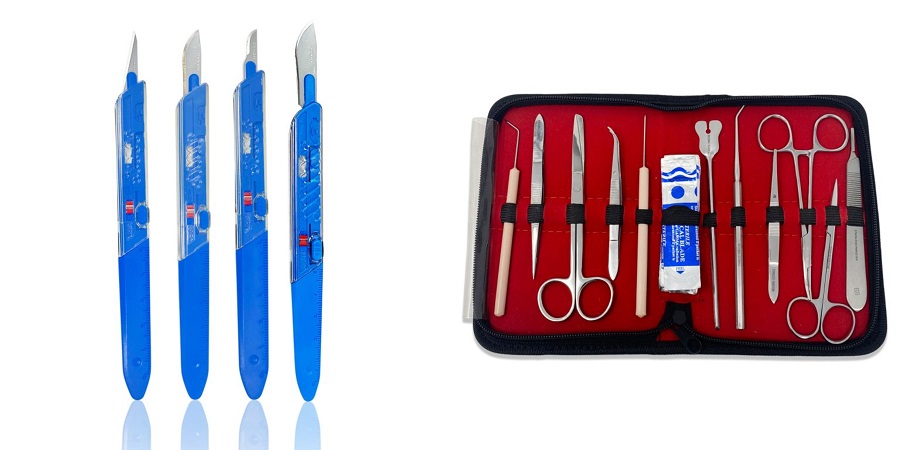
Reusable scalpels were the default for a long time. The handle stays, the blade gets replaced, the instrument gets sterilised and returned to the tray for the next procedure. That model functioned adequately until stringent infection control mandates and a need for improved safety in sharps handling, when combined with the logistics of replacing scalpel blades in the middle of busy clinical practice, significantly altered the equation.
Disposable scalpel blades have evolved beyond being merely a preferred option; they have become the go-to instrument in emergency rooms, outpatient facilities, podiatry clinics and procedure rooms with high patient throughput that render reusable instruments impractical to clean and restock.
What Changed the Calculation Toward Disposable
The infection control argument is the most straightforward one. A disposable scalpel used once and discarded into a sharps container removes the reprocessing step entirely — no autoclaving cycle, no blade replacement that requires handling a used blade, no risk associated with inadequate sterilisation of a heavily contaminated instrument.
Regulatory pressure around sharps handling has also shifted the practical equation. Safe removal of a scalpel blade from a reusable handle requires a specific technique and appropriate equipment. Blade removal injuries are consistently among the most common sharps injuries reported in clinical settings — a disposable scalpel discarded intact removes that injury opportunity entirely.
Blade Number Selection — Why It Matters for the Procedure
Disposable scalpels come in the same blade number range as reusable systems — the blade geometry that suits a specific procedural application doesn’t change because the handle is single-use.
Number 10 blades suit general tissue incision across a wide range of soft tissue procedures. The curved belly of the blade delivers clean incision across tissue with consistent pressure. Number 15 blades offer a smaller curved profile for more precise incision in confined anatomical areas — dermatology, plastic surgery, and procedures requiring fine control in small spaces reach for the 15 consistently.
Number 11 blades provide a pointed profile for stab incisions, abscess drainage, and procedures requiring precise puncture entry rather than a sweep incision. Number 22 and 23 blades handle large tissue incisions where the wider blade belly covers more ground efficiently.
Knowing which blade number suits the procedure is the starting point. Disposable scalpels stocked in the correct blade numbers for the procedures performed in a specific setting remove the need for blade handling entirely — the instrument arrives sterile and ready, performs the procedure, and goes directly to sharps disposal.
Handle Design and Grip During Procedure
The handle on a disposable scalpel needs to perform equivalently to a reusable handle in terms of grip, weight balance, and tactile feedback during incision. Early single-use designs sacrificed handle quality to keep costs down — the result was instruments that felt lighter and less balanced than the reusable equivalent, which affected how precisely the blade could be controlled.
Quality disposable scalpels use handle designs that replicate the weight distribution and grip surface of standard reusable handles closely enough that switching between the two doesn’t require procedural adjustment. For practitioners working across multiple settings — some with reusable instruments, some with single-use — that consistency matters.
Storage, Shelf Life, and Ordering Considerations
Individual sterile packaging maintains blade sharpness and sterility across the shelf life of the product. Bulk packaging that exposes multiple instruments to the same sterile field creates contamination risk when not all instruments get used in the same session.
Ordering in quantities that match actual consumption rather than purchasing in large volume that sits in storage for extended periods keeps instruments within their optimal performance window — blade sharpness does degrade over very long storage periods even within intact sterile packaging.
Cynamed supplies disposable scalpels across blade numbers and handle configurations for clinical and surgical applications — sterile single-use instruments built to the quality standard that procedure environments require. Full range at Cynamedical.