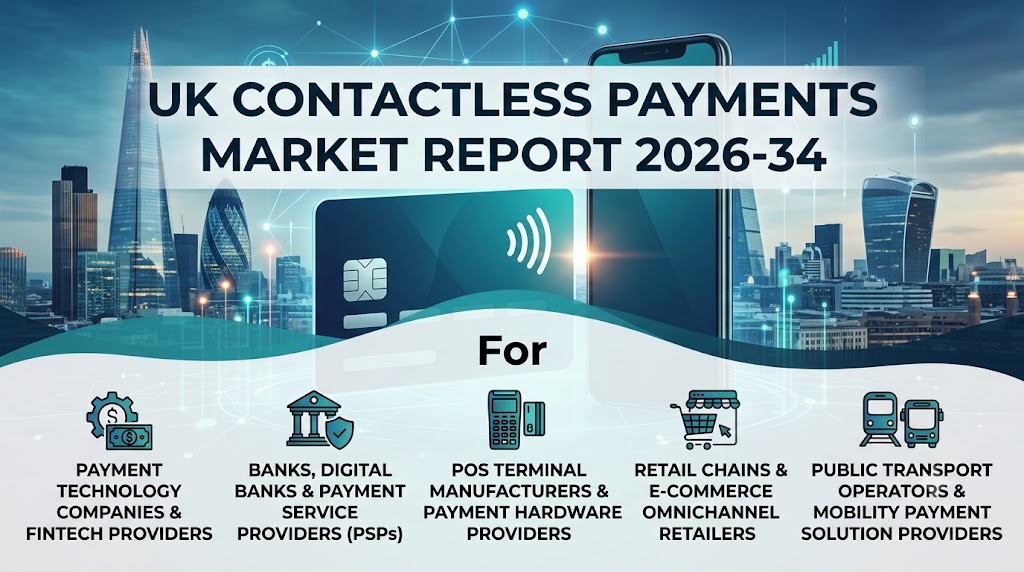
The consumer and enterprise reliance on rapid digital transaction architecture throughout the United Kingdom continues to support a highly resilient market framework. According to the comprehensive industry data featured on the IMARC Group UK Contactless Payments Market Report, the market achieved a substantial valuation of USD 577.2 Million in 2025.
Looking ahead, the market is positioned for sustained, predictable expansion. Driven by a widespread shift in consumer expectations and rapid advancements in terminal connectivity, the total market volume is projected to reach USD 831.4 Million by 2034. This trajectory represents a steady compound annual growth rate (CAGR) of 4.01% during the strategic forecast period spanning from 2026 to 2034. This steady climb underscores a mature digital market that is continuing to optimize its payment channels, broaden merchant acceptance points, and strengthen security protocols to capture consistent, high-volume transactions.
Key Market Growth Drivers:
The impressive expansion of the UK digital finance ecosystem is being accelerated by three primary structural catalysts:
1. Growing User Preference for Unmatched Speed and Convenience
The absolute bedrock driver of the market revolves around a profound shift in consumer behavior toward frictionless retail experiences. Contactless technology enables significantly quicker transactions than traditional cash payments or legacy chip-and-pin configurations. This fast-paced processing capability makes it the preferred choice for everyday, micro-volume shopping runs.
Retailers, local eateries, and public transportation networks are aggressively expanding their terminal networks to meet these consumer expectations. A notable example of this driver in action occurred when Glasgow-based hospitality software innovator Freetobook launched an advanced payment program integrated with the GuestTappy application on iPhones. This system allows UK hotels to seamlessly accept contactless payments directly on an iPhone, entirely removing the necessity for extra processing hardware while offering a smooth and safe transaction experience via debit cards, credit cards, and electronic e-wallets.
2. The Rapid Rise of Mobile Wallets and Digital Payment Apps
The massive, widespread adoption of advanced mobile wallets is fundamentally altering how technical consumer groups manage daily wealth. Digital payment applications provide users with a secure, heavily encrypted environment to store vital payment information directly on their smartphones, removing the physical requirement of carrying plastic cards.
This seamless integration improves the overall user experience by simplifying financial tracking, categorizing spending, and merging loyalty rewards directly into the point of sale (POS) terminal interface. Showcasing the international and merchant-facing side of this driver, DNA Payments rolled out Alipay+ POS acceptance to more than 50,000 UK merchants. This large-scale infrastructure project allows local businesses to accept payments from 14 distinct international e-wallets and banking apps, simplifying cross-border mobile transactions across the retail and hospitality sectors.
3. Increasing Adoption of Wearable Payment Devices
The rapid miniaturization of near-field communication (NFC) hardware has unlocked a brand new frontier in transactional convenience: wearable technology. Smartwatches, advanced fitness trackers, and even high-fashion rings are increasingly functioning as secure financial tokens.
The simplicity of completing a financial transaction with just a quick flick or tap of the wrist is highly attractive to busy individuals navigating fast-moving settings like heavy morning commutes or busy supermarket lines where transaction speed is crucial. To serve this emerging market, McLEAR officially launched its RingPay wearable payment device on Amazon UK. Operating securely on the global VISA network and managed entirely via a dedicated mobile app, this smart ring allows users to tap and complete transactions instantly without needing a phone or a device battery.
Key Market Segmentation:
The architectural versatility of touch-free commerce allows the contactless payments sector to serve an expansive array of everyday consumer behaviors, technical form factors, and enterprise environments. The market structure is cleanly categorized by payment type and end-use application.
Breakup by Type:
The technical mechanism of a transaction is determined by the specific hardware interface utilized by the consumer:
- Smartphone-Based Payments: The high-velocity growth segment leveraging native mobile wallet ecosystems, biometric authentication (facial recognition and fingerprint scans), and secure tokenization to process payments seamlessly.
- Card-Based Payments: The foundational volume driver of the market, which is further sub-categorized into:
- Credit Cards: Utilized heavily for continuous reward accumulation and enhanced consumer protection features during high-value retail purchases.
- Debit Cards: The dominant everyday transactional vehicle mapping directly to personal current accounts for immediate fund clearings.
- Others: Incorporating corporate expense cards and specialized prepaid gift networks.
Breakup by Application:
The operational demand profile spans nearly every major consumer-facing asset class of the modern British economy:
- Retail: Acting as a primary application driver, which is further split into:
- Consumer Electronics: High-value transactions increasingly utilizing biometric mobile authentication limits.
- Fashion & Garments: Fast-moving boutique setups relying on quick queue clearings.
- Others: Including grocery supermarkets and local convenience chains.
- Transportation: Revolutionizing urban mobility through automated tap-on, tap-off transit ticketing lines.
- Healthcare: Used in private medical practices, dental clinics, and pharmacies for quick prescription collections and co-payments.
- Hospitality: Spanning quick-service coffee shops, bars, fine-dining restaurants, and hotels looking to accelerate table turnaround times.
- Others: Including entertainment venues, public parking meters, and decentralized vending machines.
Sample Request For Your Business
Breakup by Region: Profiling the UK’s Digital Commerce Hotspots
Geographically, the demand footprint and transaction density for contactless payment systems mirror the population distribution, urban infrastructure networks, and economic centers of the United Kingdom.
- London: Stands firmly as the core administrative and investment epicenter of the market, driven by its unmatched density of tech-focused professionals, completely integrated public transit infrastructure, and high concentration of global retail flagships.
- South East & North West: High-volume regional corridors characterized by large urban centers, sprawling shopping complexes, and robust distribution hubs that demand efficient POS setups.
- East of England & South West: Thriving sub-markets experiencing strong growth due to an expanding network of independent hospitality businesses and regional transit modernizations.
- Scotland: A rapidly expanding digital economy leveraging advanced point-of-sale innovations to streamline local tourism, hospitality, and municipal transit links.
- West Midlands & Yorkshire and The Humber: Crucial industrial and commercial belts showing steady retail and transport payment upgrades.
- East Midlands & Others: Growing regional networks continuing to phase out legacy cash systems in favor of automated, touch-free terminal nodes.
Competitive Landscape:
The competitive environment across the United Kingdom is characterized by high levels of technological specialization, deep banking integration, and strategic terminal distribution agreements. Prominent payment processing conglomerates, banking institutions, and merchant-acquirers maintain their market positions by focusing on lowering per-transaction processing fees, improving terminal uptime, and offering advanced end-to-end data encryption.
The long-term strategy for top-tier market players centers on creating highly secure software-based POS interfaces (SoftPOS) that transform standard consumer smartphones into commercial payment terminals, lowering hardware installation barriers for small-and-medium enterprises (SMEs) across Britain.
Recent News:
Recent corporate breakthroughs and national transit updates highlight an industry-wide pivot toward frictionless regional commuting and hardware-free merchant setups:
- Expanding Regional Transit Integration: In February 2024, Transport for Wales officially introduced a new contactless Pay-As-You-Go system encompassing all journeys between Cardiff Central, Newport, and Pontyclun. Designed to scale up across 95 regional stations throughout South Wales, the system automatically calculates capped daily and weekly fares, ensuring commuters receive the best price without buying physical tickets in advance.
- The Rise of Tap-to-Pay on iPhone: Streamlining merchant setups across the nation, financial tech giant Square officially rolled out its Tap-to-Pay capability on iPhone in the UK in December 2023. This technology enables independent mobile traders, market stalls, and large-scale retailers to accept contactless cards, Apple Pay, and digital wallets directly on a standard iPhone, entirely eliminating the need for separate physical card terminals.
About Us:
IMARC Group is a global management consulting firm that helps the world’s most ambitious changemakers to create a lasting impact. The company provide a comprehensive suite of market entry and expansion services. IMARC offerings include thorough market assessment, feasibility studies, company incorporation assistance, factory setup support, regulatory approvals and licensing navigation, branding, marketing and sales strategies, competitive landscape and benchmarking analyses, pricing and cost research, and procurement research.
Contact Us:
IMARC Group‚
134 N 4th St‚ Brooklyn‚ NY 11249‚ US
Email: sales@imarcgroup․com
Tel No: (D) +91 120 433 0800
United States: (+1–201–971–6302)