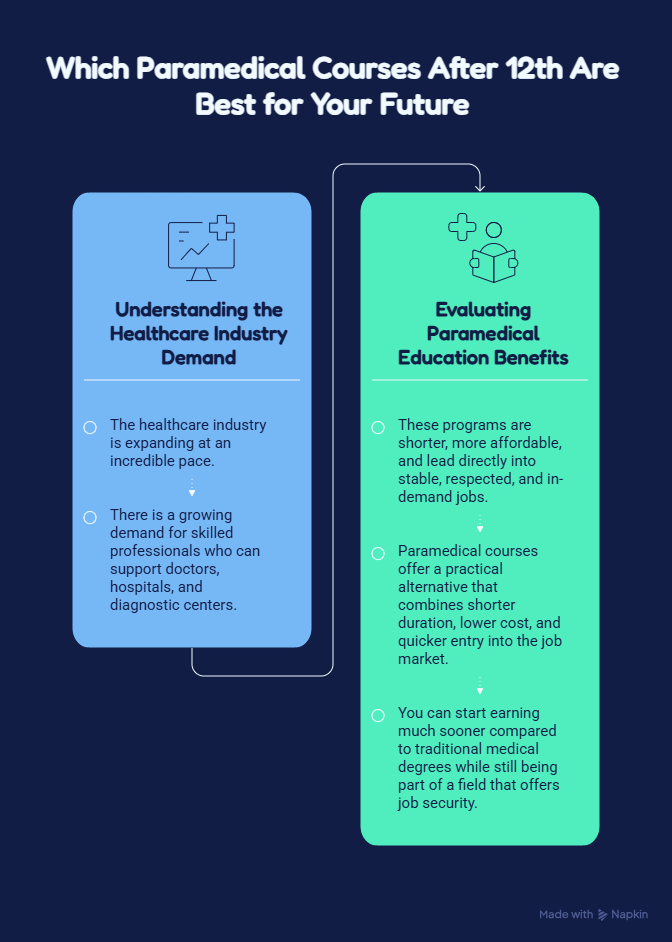
The healthcare industry is expanding at an incredible pace, and with it comes a growing demand for skilled professionals who can support doctors, hospitals, and diagnostic centers in delivering quality patient care. If you have just finished school and are drawn toward the medical field but don’t want to spend years preparing for MBBS or BDS entrance exams, exploring paramedical courses after 12th can be one of the smartest career decisions you make. These programs are shorter, more affordable, and lead directly into stable, respected, and in-demand jobs across the healthcare sector.
Why Consider Paramedical Courses After 12th
Not everyone wants to — or needs to — become a doctor to build a meaningful career in healthcare. Paramedical courses offer a practical alternative that combines shorter duration, lower cost, and quicker entry into the job market. Hospitals, clinics, diagnostic labs, and even the pharmaceutical industry constantly need trained technicians, therapists, and support staff to function smoothly. This is exactly the gap that paramedical education fills.
Choosing paramedical courses after 12th also means you can start earning much sooner compared to traditional medical degrees, while still being part of a field that offers job security, opportunities for further specialization, and the satisfaction of contributing directly to patient care.
Top Paramedical Courses to Consider
1. Diploma in Medical Laboratory Technology (DMLT)
This is one of the most popular paramedical courses after 12th, especially for students with a background in science. DMLT trains students to work in pathology labs, conducting blood tests, biopsies, and other diagnostic procedures. Lab technicians are essential in every hospital and diagnostic center, making this a consistently in-demand career choice.
2. B.Sc in Nursing
Nursing remains one of the most respected and stable career paths in healthcare. A B.Sc in Nursing prepares students for hospital wards, ICUs, community health centers, and even opportunities abroad. With the global shortage of qualified nurses, this course offers strong long-term career prospects.
3. Diploma in Radiology and Imaging Technology
Radiology technicians operate X-ray, CT scan, MRI, and ultrasound machines, playing a crucial role in diagnosis. This course is ideal for students interested in the technical side of medicine, and it typically leads to well-paying roles in hospitals and diagnostic chains.
4. Operation Theatre Technology (OTT)
Students trained in OTT assist surgeons during operations, manage surgical equipment, and maintain sterile environments in operation theatres. As surgical procedures increase across hospitals, the demand for trained OT technicians continues to rise steadily.
5. Physiotherapy (BPT)
Bachelor of Physiotherapy is a popular choice among students who enjoy working closely with patients recovering from injuries, surgeries, or chronic conditions. Physiotherapists are employed in hospitals, sports academies, rehabilitation centers, and increasingly, in private practice.
6. Diploma in Dialysis Technology
With the rise in kidney-related ailments, dialysis technicians are in high demand. This course trains students to operate dialysis machines and assist nephrologists, offering a specialized and stable career path within a relatively short study duration.
7. Diploma in Cardiac Care Technology
This course focuses on training students to assist cardiologists, operate ECG and cardiac monitoring equipment, and support patients in cardiac care units. Given the rise in heart-related conditions, this specialization offers strong job prospects in hospitals.
8. Medical Record Technology
For students who prefer working behind the scenes, a course in medical record technology teaches how to manage patient records, maintain hospital documentation systems, and ensure regulatory compliance — an increasingly important function as hospitals digitize their operations.
9. Anesthesia Technology
This specialized course trains students to assist anesthesiologists before, during, and after surgical procedures. It’s a great option for those who want a more technical, operation-theatre-focused role with strong demand in multi-specialty hospitals.
10. Optometry
Optometry technicians assist in eye examinations, vision testing, and the fitting of corrective lenses. With increasing screen time and rising vision-related issues across all age groups, optometrists and their support staff are needed more than ever.
How to Choose the Right Paramedical Course
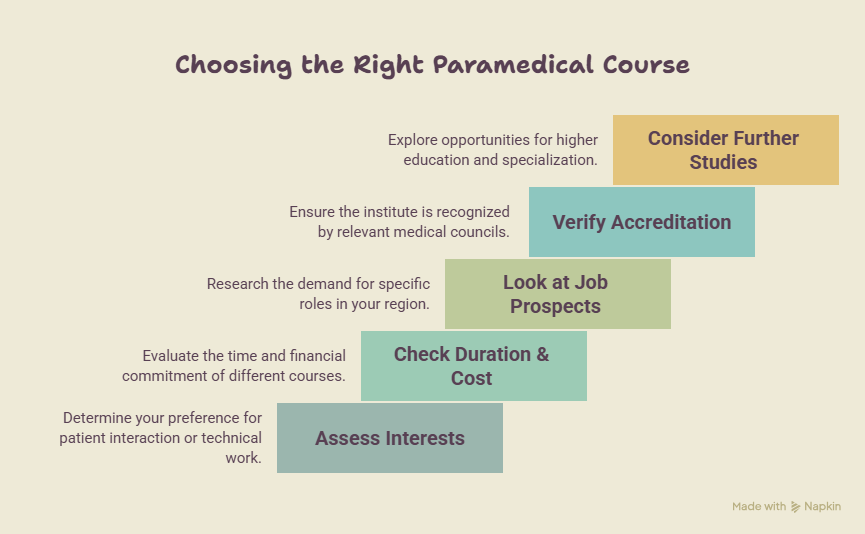
With so many options available, choosing among the various paramedical courses after 12th can feel overwhelming. Here are a few things to keep in mind:
- Assess Your Interests: Do you prefer direct patient interaction (like nursing or physiotherapy) or more technical, lab-based work (like DMLT or radiology)? Your personal inclination should guide your choice.
- Check Duration and Cost: Diploma courses are generally shorter (1-2 years) and more affordable, while degree courses like B.Sc Nursing or BPT take 3-4 years but often lead to higher-paying roles.
- Look at Job Prospects: Research the current demand for specific roles in your city or region, as some specializations may have more openings than others depending on local healthcare infrastructure.
- Verify Accreditation: Always choose institutes recognized by relevant medical councils or health education boards to ensure your qualification is valid and respected by employers.
- Consider Further Studies: Some paramedical fields offer clear pathways for higher education, such as moving from a diploma to a bachelor’s degree, or specializing further after gaining work experience.
Eligibility and Admission Process
Most paramedical courses after 12th require students to have completed their higher secondary education with Physics, Chemistry, and Biology (PCB) as core subjects, though some diploma programs also accept students from other streams depending on the institute. Admission is generally based on either merit (12th-grade marks) or entrance examinations conducted by individual colleges, state boards, or national-level bodies. It’s important to check the specific eligibility criteria of your chosen institute well in advance, as requirements can vary between diploma, degree, and certificate programs.
Career Scope and Growth
Graduates of paramedical courses after 12th can find employment in government hospitals, private healthcare chains, diagnostic centers, nursing homes, and even overseas healthcare systems that are actively recruiting trained professionals. Many students also choose to work for a few years and then pursue higher qualifications to move into supervisory, teaching, or specialized clinical roles.
Additionally, the COVID-19 pandemic highlighted just how essential paramedical staff are to the functioning of healthcare systems worldwide, further boosting recognition and demand for these roles. As India’s healthcare infrastructure continues to expand into smaller towns and cities, the need for trained paramedical professionals is only expected to grow in the coming years.
Salary Expectations
While starting salaries can vary based on specialization, location, and employer, most paramedical professionals can expect steady growth in income as they gain experience and additional certifications. Roles like radiology technicians, dialysis technicians, and physiotherapists often see better pay scales due to their specialized technical skills, while entry-level lab technicians and OT assistants typically start on modest salaries that improve significantly with experience.
Final Thoughts
Choosing the right career path after 12th doesn’t always mean following the traditional MBBS or engineering route. For students genuinely interested in healthcare but looking for a quicker, more focused path into the workforce, paramedical courses after 12th offer an excellent balance of shorter duration, affordability, and strong job prospects. Whether you’re drawn to lab work, patient care, surgical assistance, or diagnostic technology, there’s likely a paramedical specialization that matches your interests and sets you on a stable, fulfilling career path in healthcare.