Forty degrees in the city, and the fit still has to work. That’s the brief nobody writes down, but everyone’s dressing for. In Lahore, in Karachi, in every urban pocket where summer doesn’t ease up, and the streets don’t stop, the wardrobe question stopped being about what looks good and started being about what survives. Linen answered first.
What started as a regional necessity has become the defining fabric story of 2026 streetwear globally. The breathable textile market is growing at over 7% annually, not because trend forecasters willed it, but because the logic is undeniable. Cotton-linen blends that hold structure without holding heat. Silhouettes are loose enough to live in, sharp enough to mean something. Relaxed tailoring that earns the word relaxed.
1. The Streetwear Shift: Why Linen is Dominating in 2026
Trend Snapshot:
- Heavy cotton hoodies and rigid denim are losing ground to fluid, functional fabrics
- Oversized streetwear of the early 2020s is evolving, not disappearing, restructuring
- Climate-adaptive dressing has moved from niche conversation to mainstream behaviour
Pakistan’s streetwear scene, operating under 40°C+ summers in cities like Lahore and Karachi, has been ahead of this curve for years, and global fashion is now catching up
The pivot isn’t subtle. Walk any major city in 2026, and the silhouette has changed looser, longer, lighter. The maximalist era of heavy layering and oversized graphics hasn’t disappeared so much as adapted. What’s replaced the brute-force aesthetic is something more considered: clothing that performs.
The Market Research Future report tracking the textile fabrics sector projects a 7.03% CAGR through 2035, driven explicitly by demand for breathable, sustainable alternatives to synthetic and heavy-cotton streetwear. That number isn’t a forecast about luxury, it’s a forecast about function.
Where climate extremes pushed local markets to innovate early, the rest of the world is arriving at the same conclusion on its own terms. Linen is no longer the fabric you reach for on holiday. It’s the fabric you build a wardrobe around.
2. The Science of Comfort: Why Cotton-Linen Blends Are Taking Over
Pure linen has always had one legitimate problem: it wrinkles the moment you sit down. For streetwear where credibility is partly visual, and a creased silhouette reads as careless rather than lived-in, that was a real obstacle.
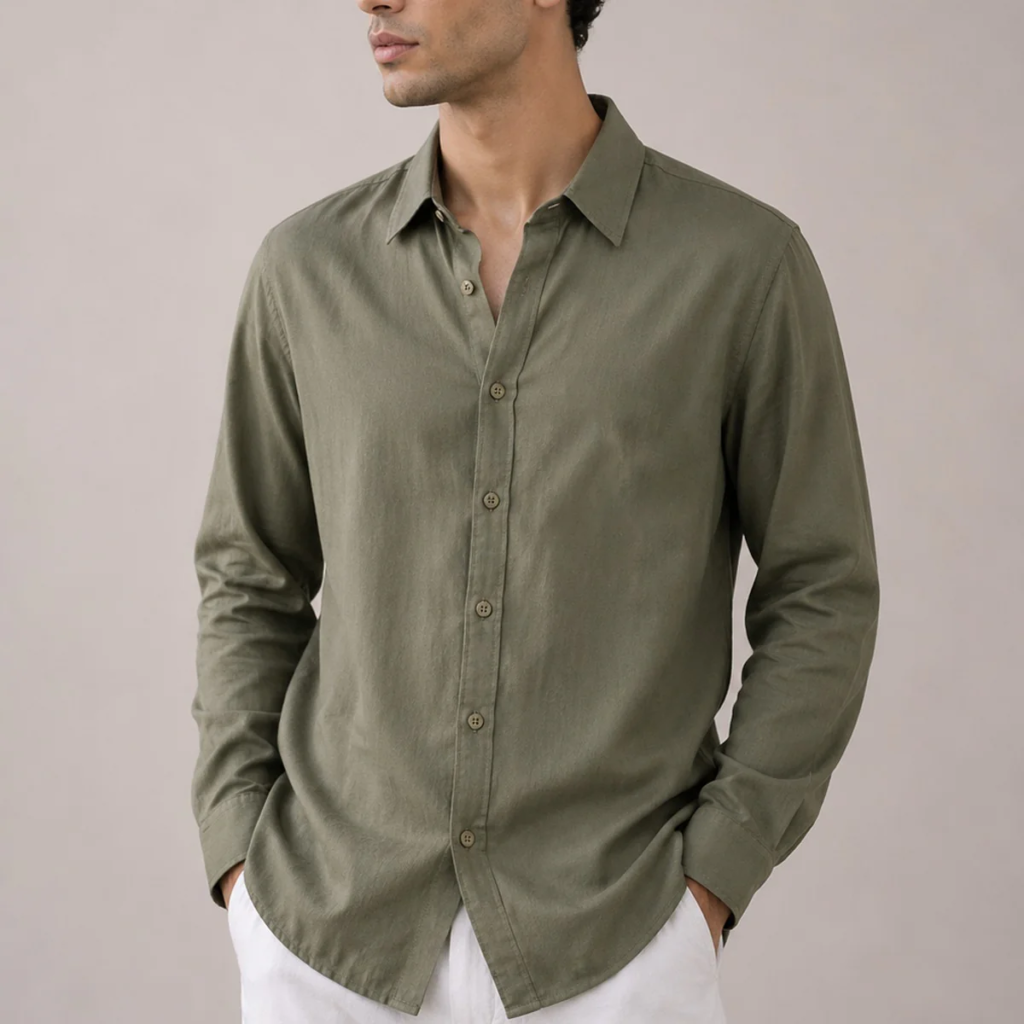
The blend is where the argument gets won. Flax runs hollow at the fiber level; heat moves through it instead of sitting against your skin. Cotton keeps the shape honest. Together they do what neither manages alone: a shirt that looks pressed at noon and actually feels like it should exist in summer.
Pro Tip: When shopping for cotton linen shirts, look for blends where linen makes up at least 40–55% of the fabric composition. Below that threshold, you lose most of the breathability benefit. Above 60%, you’re back in wrinkle territory without careful garment construction.
The result is a fabric category that answers both demands simultaneously: moisture-wicking performance and a low-maintenance finish. For urban dressing, that balance isn’t a compromise. It’s the point. Linen shirts in their blended form have become what a clean white T-shirt used to be: the reliable base layer that makes everything else work.
3. Essential Linen Pieces Defining This Season’s Aesthetic
Boxy Shirts & Drop-Shoulder Silhouettes
The camp collar has completed its transition from resort wear to everyday rotation. For men, it’s worn open, thrown over a fitted layer, collar relaxed, functioning closer to a jacket than a shirt.
For women, the same volume is being anchored: tucked hard into wide-leg denim, the shoulder drop creating weight where it counts. The difference between oversized and considered is mostly in construction. A drop shoulder distributes the fabric differently suddenly the looseness looks like a decision.
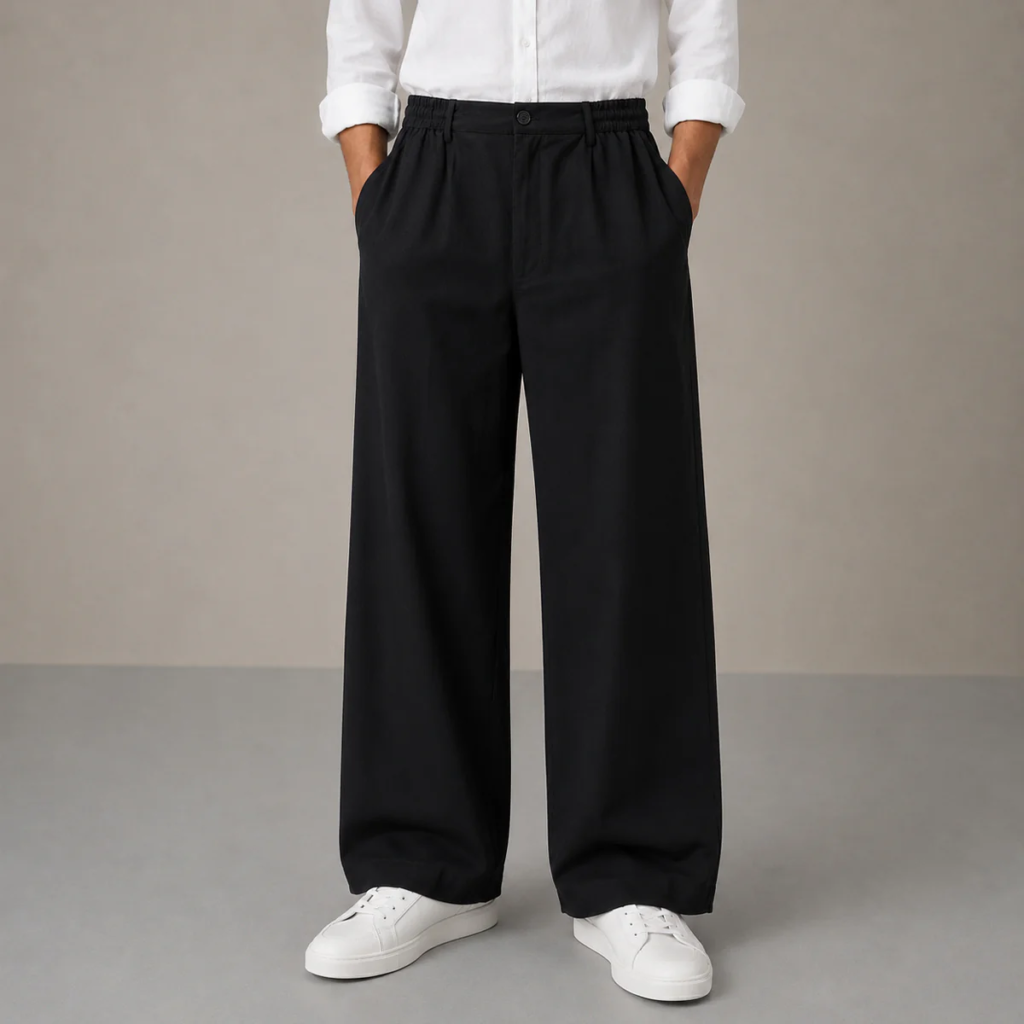
Relaxed & Pleated Linen Pants
Denim made its case for decades. In 40-degree heat, that case has collapsed. Wide-leg linen pants carry the same visual weight, the same ground-covering silhouette, without turning your legs into a slow cooker.
The pleat is the detail that tips it past casual: one forward fold on a high-waisted cut, and the whole thing reads structured. Chunky sneakers underneath, a graphic tee on top, and the outfit isn’t dressing around the heat; it’s built for it.
4. Building a Versatile Linen Collection (And How Brands Are Adapting)
A functional summer wardrobe built around linen follows a simple logic: start with neutrals, build in texture, and let silhouette carry the interest.
- Anchor in earth tones and off-whites. Sand, clay, warm ecru, these shades photograph well, age well, and layer without clashing. They also read as intentional rather than default.
- Invest in two core pieces first. A boxy linen shirt and one pair of relaxed linen pants will cover more ground than a full set of loud separates.
- Let fit do the heavy lifting. In a linen collection, the drape is the detail. Oversized on top, tapered (or wide) on the bottom, the proportional contrast is where the interest lives.
- Mix textures within the same fabric family. A slightly structured cotton-linen blazer over a softer linen shirt plays with weight and weaves without breaking the palette.
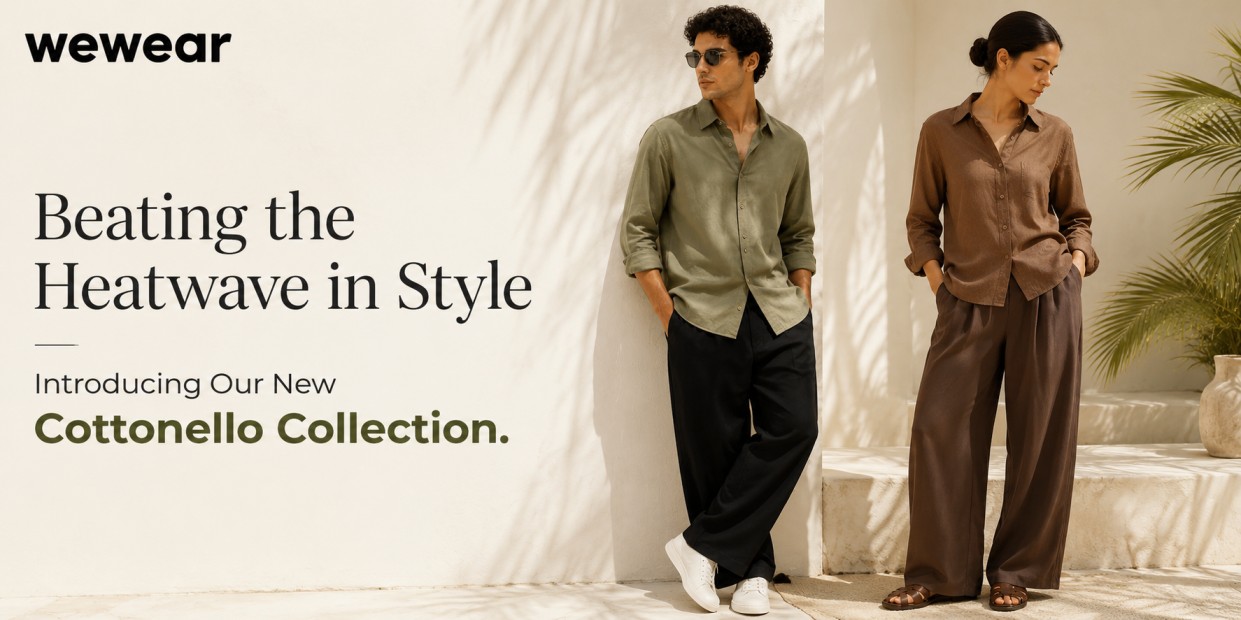
The industry has noticed. Contemporary labels are leading this charge at every price tier. Brands like Wewear have built out full collections focusing on mid-tier, accessible cotton-linen blends that bridge everyday comfort with elevated street silhouettes, proving that the linen shift isn’t confined to the luxury end of the market.
The LVLL and Textile Exchange 2026 trend reports confirm what the street already shows: “softer tailoring” is the season’s dominant aesthetic directive, moving decisively away from rigid structured fabrics toward exactly these co-ords and relaxed blends. This isn’t a micro-trend with a six-month shelf life. It’s a recalibration.
Conclusion
The shift to linen isn’t the fashion world discovering comfort. It’s the fashion world accepting that comfort was always brief; the industry just took its time catching up to the streets.