
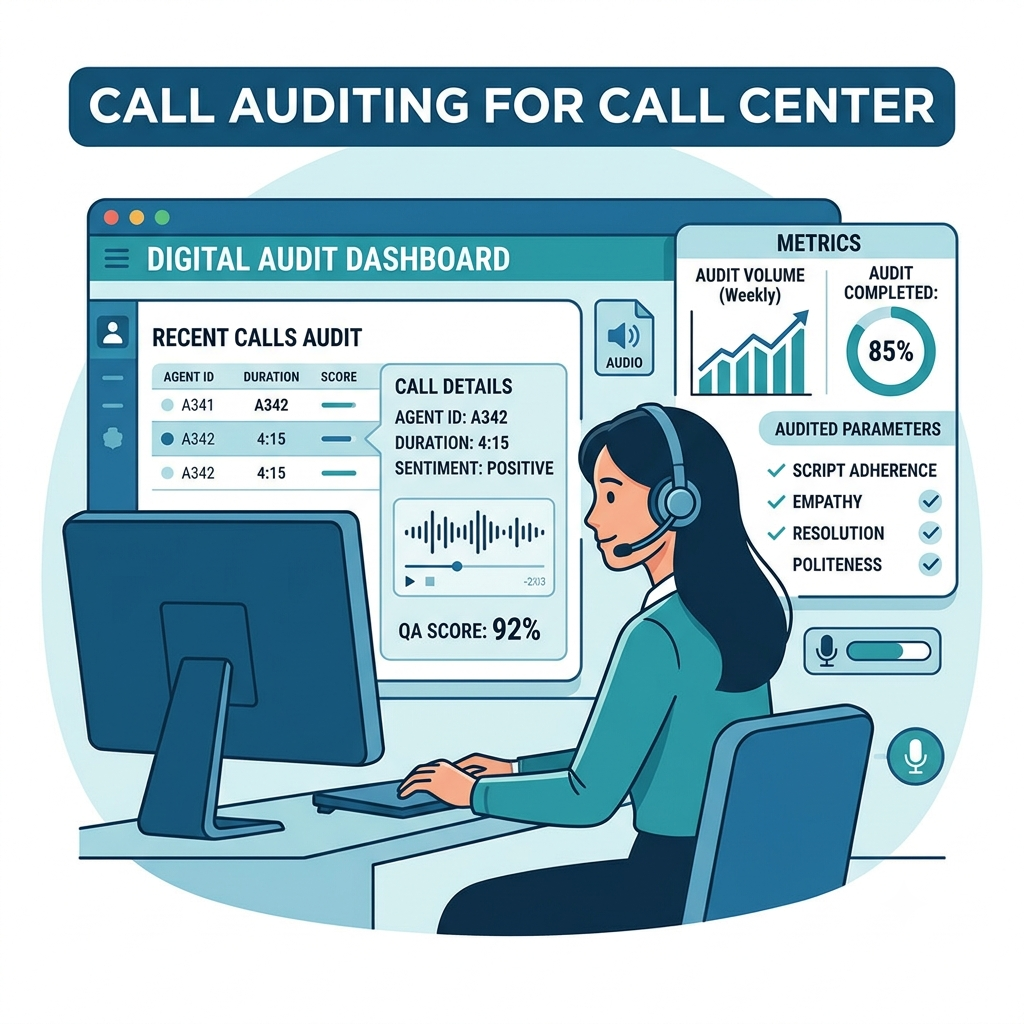
For decades, the quality assurance (QA) process in contact centers has remained largely unchanged: a team of supervisors spends hours listening to a random, tiny fraction of recorded calls, manually filling out scorecards, and trying to provide feedback that is often weeks old.
This traditional model is not only labor-intensive; it is statistically flawed. By manually reviewing only 1% to 2% of calls, organizations are left with significant blind spots. You miss critical compliance risks, fail to identify emerging trends, and lose the opportunity to coach agents effectively.
Fortunately, the landscape is shifting. With the advent of automated call auditing and advanced AI-powered call quality analytics, contact centers can now move from reactive sampling to proactive, 100% visibility.
The Bottleneck of Manual Reviews
The primary limitation of manual QA is scalability. As call volumes grow, the number of supervisors required to maintain adequate coverage increases exponentially. This is a massive operational cost that rarely delivers a return on investment proportionate to the effort.
Furthermore, manual reviews are inherently subjective. Different supervisors may interpret the same interaction differently based on their biases or moods, leading to inconsistent coaching. When feedback is disconnected from the actual performance data, agents often feel undervalued or confused, which negatively impacts morale and retention.
Enter the AI-Powered Quality Management System
An AI-powered quality management system (QMS) acts as a force multiplier for your QA efforts. Instead of relying on humans to “spot check” interactions, AI systems ingest, transcribe, and analyze every single call.
By utilizing Natural Language Processing (NLP) and sentiment analysis, these systems can categorize calls based on topic, urgency, mood, and even compliance adherence. Instead of spending hours listening to “good” calls to find a needle in a haystack, supervisors are presented with a curated list of high-risk or high-value interactions. This shift allows management to focus their time where it is needed most—coaching agents that actually need support.
Three Ways AI Analytics Boost Performance
Implementing AI-powered call quality analytics changes the game in three critical areas:
1. 100% Coverage and Compliance
With automated auditing, you no longer have to worry about the “blind spot” of the 98% of unreviewed calls. AI can scan every interaction for specific keywords, phrases, or regulatory scripts. If an agent fails to mention a required disclosure or uses prohibited language, the system flags it instantly. This level of oversight ensures that your business stays compliant while identifying systemic issues that could lead to financial or reputational damage.
2. Data-Driven Coaching
The goal of any QA program should be performance improvement, not just “grading.” AI analytics provide objective data points—such as talk-to-listen ratios, sentiment shifts during a call, and silence time. When a manager sits down with an agent, they aren’t relying on a subjective opinion; they are looking at a dashboard of actionable trends. This makes coaching sessions more professional, focused, and effective, leading to faster agent maturation and better customer outcomes.
3. Identifying the “Voice of the Customer”
How do you know why your customers are calling? Manual reviews often fail to capture the “why” behind the volume. AI-powered analytics can aggregate insights across thousands of calls to identify recurring pain points, product defects, or confusion regarding policies. By surfacing these trends, the contact center becomes a strategic asset, providing the rest of the business with the intelligence needed to improve products and services at the source.
Changing the Culture: From Policing to Empowering
Perhaps the most significant benefit of transitioning to automated systems is the shift in organizational culture. When AI takes over the “policing” aspects of QA—identifying errors and tracking compliance—supervisors are freed up to adopt the role of a coach and mentor.
Agents are also more likely to engage with feedback when it is based on objective, comprehensive data. They see that their performance is being evaluated fairly and consistently, which reduces anxiety and encourages them to take ownership of their professional development.
The Future is Automated
The contact center of the future isn’t defined by how many humans you have listening to recordings; it’s defined by how effectively you utilize technology to unlock the insights hidden within those recordings.
By integrating an AI-powered quality management system, your organization can stop chasing the past and start shaping the future. You will reduce operational costs, eliminate compliance blind spots, and empower your agents to reach new levels of performance.
The manual review process served its purpose in a pre-digital era, but in today’s fast-paced environment, it’s time to embrace the precision, scale, and clarity of AI. It’s time to say goodbye to tedious spreadsheets and hello to a smarter, data-driven approach to customer excellence.