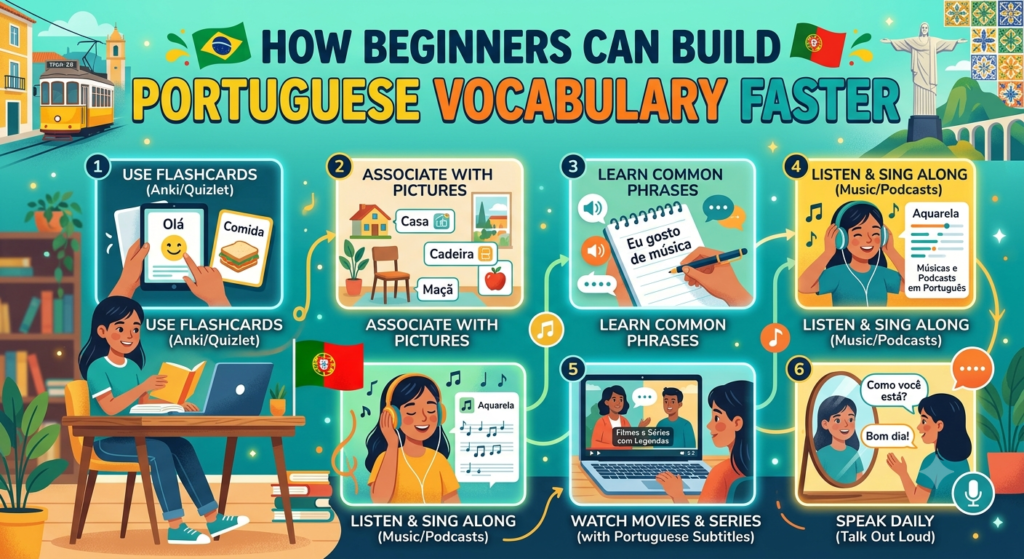
Building a strong vocabulary is one of the most important steps in learning any new language. For beginners, expanding vocabulary helps improve reading, listening, speaking, and writing skills while making everyday communication easier. The good news is that learning new Portuguese words does not have to be difficult. With the right strategies, consistent practice, and modern learning tools, beginners can make steady progress. If you’re interested in online learning Portuguese language, following practical vocabulary-building techniques can help you learn faster and remember words more effectively.
Start with Everyday Words
Instead of trying to memorize thousands of words at once, begin with vocabulary that you are most likely to use every day.
Focus on categories such as:
- Greetings
- Numbers
- Colors
- Family members
- Food and drinks
- Days and months
- Common verbs
- Household items
- Travel vocabulary
Learning useful words first allows you to begin forming simple conversations quickly.
Learn Words in Context
Memorizing isolated vocabulary can be difficult. Instead, learn new words through complete sentences and real-life situations.
For example, rather than remembering a single noun or verb, practice using it in everyday conversations. This helps you understand how words naturally fit together and improves long-term memory.
Students using online learning Portuguese language programs often benefit from lessons that introduce vocabulary through practical dialogues and interactive exercises.
Practice a Little Every Day
Consistency is more important than studying for long hours occasionally. Spending just a short amount of time reviewing vocabulary each day leads to better retention than trying to learn everything in one session.
Daily practice helps reinforce previously learned words while gradually introducing new ones.
Use Flashcards for Quick Review
Flashcards remain one of the most effective vocabulary-building tools. They allow learners to review words repeatedly until they become familiar.
Digital flashcards also make it convenient to practice while commuting, during breaks, or whenever a few spare minutes are available.
Read Simple Portuguese Content
Reading beginner-friendly materials helps learners encounter vocabulary naturally.
Start with:
- Short articles
- Children’s stories
- Simple dialogues
- Language learning books
- Basic news summaries
Repeated exposure helps reinforce vocabulary while improving reading comprehension.
Listen to Native Speakers
Listening plays a major role in vocabulary development. Hearing words used naturally helps learners understand pronunciation, sentence structure, and everyday expressions.
Podcasts, educational videos, and recorded conversations provide valuable listening practice that strengthens overall language skills.
Group Similar Words Together
Organizing vocabulary into categories makes learning more efficient.
Examples include:
- Transportation
- Weather
- Shopping
- Education
- Business
- Health
- Nature
- Travel
Grouping related words creates stronger memory connections and makes vocabulary easier to recall.
Practice Speaking Regularly
Using newly learned vocabulary in conversations is one of the fastest ways to remember it.
Even beginners can practice by:
- Introducing themselves
- Describing daily routines
- Talking about hobbies
- Asking simple questions
- Discussing familiar topics
Speaking actively reinforces vocabulary and builds confidence.
Write New Words Frequently
Writing helps strengthen memory through repetition.
Try keeping a vocabulary notebook where you:
- Record new words
- Write example sentences
- Review previous lessons
- Practice short paragraphs
Writing encourages active recall, making vocabulary easier to remember during conversations.
Review Vocabulary Using Spaced Repetition
Reviewing words at regular intervals is far more effective than cramming large amounts of information.
Many online learning Portuguese language platforms use spaced repetition systems that automatically schedule reviews just before learners are likely to forget vocabulary.
This method improves long-term retention while reducing unnecessary repetition.
Learn Common Phrases Instead of Individual Words
Many words become easier to remember when learned as part of useful expressions.
Instead of memorizing vocabulary separately, learn complete phrases used in daily conversations. This approach improves both vocabulary and speaking fluency at the same time.
Stay Motivated Through Small Goals
Setting realistic learning goals helps maintain motivation.
Examples include:
- Learning ten new words each day
- Reading one short passage daily
- Practicing vocabulary for fifteen minutes
- Completing one conversation exercise every day
Small achievements build confidence and encourage long-term consistency.
Use Technology to Support Learning
Modern language-learning platforms provide interactive exercises, pronunciation practice, vocabulary quizzes, progress tracking, and personalized recommendations.
These tools make learning more engaging while helping beginners focus on areas that need improvement.
Conclusion
Building Portuguese vocabulary does not require memorizing endless word lists. By learning practical vocabulary, studying consistently, practicing speaking, reading simple content, and reviewing words regularly, beginners can make steady progress and communicate with greater confidence. Choosing online learning Portuguese language programs provides flexible access to structured lessons, interactive activities, and personalized learning tools that make vocabulary building faster, easier, and more enjoyable.