Introduction
Gas turbines are widely used in power generation, oil & gas facilities, and heavy industrial operations because of their high efficiency and ability to deliver continuous power. One of the most critical subsystems during turbine startup is the firing circuit. Although it operates behind the scenes, it plays a decisive role in whether the turbine starts safely, reliably, and on time.
In modern turbine control systems developed by General Electric, firing circuits are designed to ensure precise ignition timing, stable combustion initiation, and coordinated startup sequencing.
What Is a Firing Circuit in a Gas Turbine?
A firing circuit is an electrical subsystem responsible for initiating combustion inside the gas turbine’s combustor. It does this by generating controlled high-energy ignition pulses that activate the igniters.
Unlike a simple spark system, a gas turbine firing circuit must operate under tightly controlled conditions. It does not just produce a spark—it delivers carefully timed electrical energy based on turbine speed, fuel flow, and airflow conditions.
Its core functions include:
- Producing high-voltage ignition pulses
- Timing ignition during turbine startup sequences
- Coordinating with fuel and airflow control systems
- Ensuring safe and repeatable combustion initiation
- Preventing unsafe ignition attempts under incorrect conditions
How the Firing Circuit Works in Turbine Startup
During startup, a gas turbine follows a strict sequence controlled by its automation system. The firing circuit becomes active at a specific stage when conditions are safe for ignition.
The typical process includes:
1. Pre-Start Verification
The control system confirms proper airflow, fuel readiness, and safe mechanical conditions before enabling ignition.
2. Ignition Pulse Generation
Once enabled, the firing circuit generates high-energy electrical pulses sent to the igniters in the combustion chamber.
3. Fuel Ignition and Flame Establishment
The igniters ignite the fuel-air mixture, creating a stable flame inside the combustor.
4. Feedback Confirmation
Sensors confirm flame presence, ensuring successful light-off before transitioning to full operation.
5. Transition to Steady Operation
After ignition is confirmed, the system reduces or disengages firing activity as combustion becomes self-sustaining.
Why the Firing Circuit Is So Important
The firing circuit is one of the most safety-critical components in the turbine startup system. If ignition is delayed, weak, or mistimed, it can lead to serious operational issues such as:
- Failed turbine startups
- Fuel accumulation in the combustor
- Combustion instability or flameout
- Mechanical stress due to repeated start attempts
- Increased maintenance requirements and downtime
Because gas turbines operate under extreme temperatures and pressures, even small ignition inconsistencies can significantly affect performance and reliability.
Advanced Control Integration in Modern Turbines
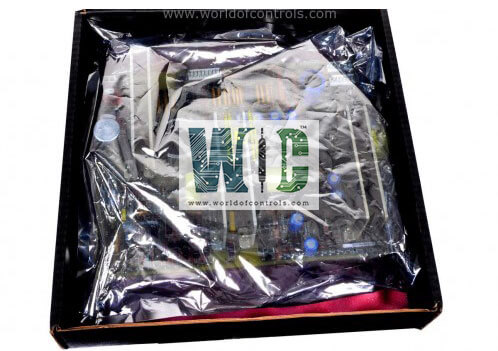
In turbine systems developed by General Electric, firing circuits are not standalone devices. Instead, they are integrated into broader electronic control architectures that manage sequencing, protection, and monitoring.
A typical modern firing circuit module operates as part of a coordinated system that:
- Interfaces with turbine control logic
- Ensures safe ignition timing based on sensor inputs
- Synchronizes with fuel control valves and compressor speed
- Provides diagnostic feedback for maintenance and fault detection
This integration improves both safety and efficiency by reducing the chances of human error and ensuring repeatable startup performance.
Industrial Significance of Firing Circuits
In industries such as power generation, LNG processing, and large-scale manufacturing, turbine reliability directly affects operational costs and output stability. A well-designed firing circuit contributes to:
- Faster and more reliable startups
- Reduced unplanned shutdowns
- Improved combustion efficiency
- Longer equipment life
- Lower maintenance costs
For operators, understanding how the firing circuit functions is essential for troubleshooting startup issues and maintaining high availability.
Conclusion
A firing circuit is a fundamental component of a gas turbine ignition system, responsible for initiating and controlling the combustion process during startup. In advanced turbine platforms developed by General Electric, these systems are tightly integrated into digital control architectures to ensure precision, safety, and reliability.
Understanding the role of firing circuits helps engineers and operators improve turbine performance, reduce failures, and maintain efficient operation in demanding industrial environments.