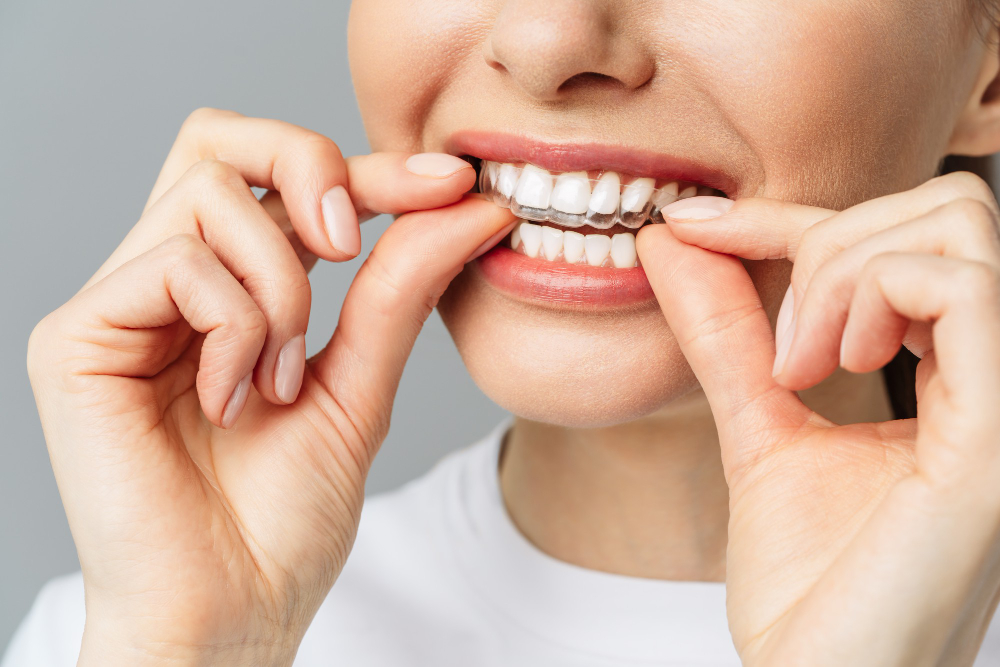
Getting straighter teeth used to mean years of metal brackets, food restrictions, and that unmistakable “braces look” in every photo. That’s changing fast, especially in urban pockets like Parel, where working professionals and college-goers are making a quieter, smarter choice. If you’ve been thinking about invisalign treatment in Parel Mumbai, this article will help you understand what actually goes into the process before you book that first appointment.
What Invisalign Actually Is (Without the Jargon)?
Invisalign is a branded system of custom-made clear plastic aligners that gradually shift your teeth into position. Each set is worn for about one to two weeks before you move to the next in the series.
A digital scan of your teeth is taken at the start no messy putty impressions. The scans are used to map out your tooth movement from where things are now to where they need to go. You can often see a 3D simulation of your final result before the treatment even begins.
When looking for a best invisalign dentist in Parel Mumbai, one thing worth checking is whether the clinic uses iTero or a comparable intraoral scanner, since digital scanning improves both accuracy and the planning process.
Not Everyone Is a Candidate Here’s What Affects Eligibility
This is something many people don’t realise until the consultation. Invisalign works well for a wide range of cases, but it isn’t the right fit for everyone.
Severely rotated teeth, significant skeletal jaw discrepancies, or cases requiring tooth extractions with complex movements may still need conventional braces or a combination approach. A proper clinical assessment, including X-rays, is essential before any treatment plan is finalised.
Age matters too. Since aligners are removable, compliance is heavily patient-dependent. Adults and disciplined teenagers tend to get the best results. Younger children usually aren’t suitable candidates.
Those considering clear aligners treatment in Parel Mumbai should ask the treating dentist specifically about their case complexity not just the general benefits of the system.
The Real Reason People Are Choosing Clear Aligners Now
Let’s be honest. Aesthetics matter. Nobody wants to walk into a client meeting or a wedding function with a mouth full of metal wires. But there’s more to this shift than just looks.
Clear aligners have become genuinely practical for people with busy schedules. You remove them while eating, brush normally, and wear them for 20–22 hours a day. For someone working long hours in a corporate setup or a hospital or a media house all of which are common in Parel’s professional crowd that flexibility is real.
The technology has also matured. What used to be suitable only for mild spacing issues now handles moderate crowding, bite corrections, and rotations that once required traditional orthodontic appliances.
The Treatment Timeline: What to Realistically Expect
Mild cases can wrap up in as little as six months. More involved corrections typically take 12 to 18 months, sometimes longer. These are average ranges, not guarantees.
Your adherence to wear time is the single biggest variable. Taking aligners out “just for a bit” too frequently adds weeks to your overall treatment duration. This is something every orthodontist will tell you upfront.
Mid-treatment check-ins, usually every six to eight weeks, allow the invisalign braces specialist to monitor progress and make adjustments if certain teeth aren’t tracking as expected. Refinements additional aligner sets made after your initial series are common and usually included in the original treatment fee.
Attachments, IPR, and the Details Clinics Don’t Always Advertise
Two things often catch patients off guard.
Attachments are small tooth-coloured bumps bonded onto certain teeth to help the aligner grip and move them more precisely. They’re barely visible, but they do exist. Most patients with moderate-to-complex cases will have them.
IPR (Interproximal Reduction) is a controlled process where tiny amounts of enamel are removed between specific teeth to create space for movement. It sounds alarming but is clinically safe when done in appropriate amounts.
Asking about both of these during your consultation will give you a much clearer picture of what your specific treatment involves. A good invisible braces treatment plan should address these factors explicitly.
Cost and What Drives the Price Variation
Invisalign pricing in Mumbai varies considerably. A simple case might start around ₹80,000–₹1,00,000. Complex full-arch corrections with refinements can go significantly higher.
What drives the difference? Case complexity, the number of aligners required, the experience of the treating specialist, and whether the clinic is an Invisalign-certified provider versus a newer practice using the system for the first time.
Patients seeking affordable invisalign treatment should be cautious about unusually low quotes they may exclude refinements, retainers, or post-treatment follow-ups, which are all important costs.
EMI options are now offered at many clinics. Always ask for a written cost breakdown before committing.
After Invisalign: The Part Most People Underestimate
Treatment doesn’t end when you finish your last aligner tray.
Retainers either fixed (bonded behind your teeth) or removable are essential to maintain results. Teeth have a natural tendency to drift back toward their original position, especially in the first year after treatment. Without consistent retainer use, relapse is genuinely common.
An invisalign orthodontist will typically advise full-time retainer use for several months, followed by nights-only wear indefinitely. This isn’t optional if you want to keep your results long-term.
How to Choose the Right Clinic in Parel?
Parel has no shortage of dental clinics, but Invisalign outcomes are heavily dependent on the treating clinician’s experience and case selection judgement not just the technology.
Look for:
- A dentist with specific orthodontic training or an on-staff orthodontist
- Documented Invisalign certification and volume (providers are ranked by case numbers)
- A clinic that shows you your 3D ClinCheck simulation before asking for full payment
- Transparent pricing with refinements and retainers included
Visiting a clear teeth aligners clinic that offers a proper consultation not just a sales pitch is a meaningful signal of clinical seriousness.
What Sets Apart a Trustworthy Dental Clinic in This Area?
Parel sits at an interesting intersection it’s close to major commercial hubs, hospitals, and residential neighbourhoods, which means dental clinics here serve a fairly varied patient base. That variety demands adaptability.
A best dental clinic in Parel should ideally offer full orthodontic consultations, in-house scanning, and be able to handle complex cases rather than outsourcing decisions. Coordination between a general dentist and an orthodontist within the same facility tends to produce better-managed outcomes.
Questions Worth Asking at Your First Appointment
Before committing to any provider, these questions are worth raising:
- How many Invisalign cases have you completed in the last year?
- Will I need attachments, and how many?
- Is IPR part of my plan?
- Are refinements included in the quoted price?
- What type of retainer will I need, and is it included?
A top dental clinic in Parel Mumbai will have clear, detailed answers to all of the above not vague reassurances.
One More Thing: Digital Records and Treatment Continuity
Something that often gets overlooked is the importance of digital treatment records. If you relocate, travel frequently for work, or need to switch clinics mid-treatment, having your ClinCheck data, scan files, and aligner tracking records makes the transition far less complicated.
Ask your clinic upfront whether they provide copies of your treatment files. A trusted dental care clinic in Parel should have no hesitation in giving you access to your own records.
Conclusion
Invisalign isn’t the right fit for every patient or every budget but for the right case, managed by an experienced clinician, it delivers results that are hard to argue with. The key is going in informed, asking the right questions, and choosing a provider based on competence rather than just convenience or price.
If you’re based in or around Parel, the options are there. A top-rated dental clinic in Parel Mumbai offering Invisalign should be able to give you a clear assessment of whether you’re a suitable candidate and what the process will actually look like for your specific teeth.
The final anchor to keep in mind: whatever your concerns cost, timeline, or complexity walking into an expert dental treatment clinic in Parel with the right questions will make the entire decision far easier and more confident.
FAQs
Can I eat normally during Invisalign treatment?
Yes. Since aligners are removable, you can eat and drink whatever you like just remove them before meals and brush before putting them back in.
How long do I need to wear aligners each day?
Most treatment protocols recommend 20 to 22 hours daily. Less than that will slow your progress and potentially compromise results.
Is Invisalign painful?
Mild pressure and discomfort are common, especially with each new aligner set. It’s different from the sharp pain sometimes associated with metal braces. Over-the-counter pain relief is usually enough if needed.
Will Invisalign affect my speech?
There’s typically a brief adjustment period of a few days where speech may feel slightly different. Most patients adapt quickly.
At what age can someone start Invisalign?
Invisalign Teen and similar products exist for younger patients, but generally, the permanent teeth need to be fully erupted. Adults of any age are suitable candidates if clinically appropriate.
What happens if I lose an aligner?
Contact your clinic immediately. Depending on where you are in treatment, they may advise wearing the previous set temporarily while a replacement is made. Replacement costs vary by provider.
Is there a difference between Invisalign and other clear aligner brands?
Yes. Invisalign has the most clinical research behind it and a wider range of case complexity it can handle. Other brands may be suitable for simpler cases but may lack the same depth of clinical data.