Introduction
Modern gas and steam turbines operate under extremely demanding conditions, where high rotational speeds, thermal stress, and mechanical loads can quickly lead to wear or failure if not properly managed. To ensure safe and efficient operation, condition monitoring has become a core part of turbine control philosophy.
Among various monitoring techniques, vibration analysis is one of the most critical. It provides early warning signs of mechanical issues and supports both protective and predictive maintenance strategies. Within this framework, vibration monitoring boards used in GE turbine control systems play a central role in capturing, processing, and responding to machine behavior in real time.
Importance of Vibration Monitoring in Turbines
Vibration is often the first measurable symptom of developing faults in turbine machinery. Issues such as rotor imbalance, shaft misalignment, blade degradation, or bearing wear typically manifest as changes in vibration patterns before any visible damage occurs.
Effective vibration monitoring enables operators to:
- Detect mechanical abnormalities at an early stage
- Prevent catastrophic equipment failure
- Reduce unplanned downtime
- Extend turbine component life
- Improve overall plant reliability and efficiency
Because turbines are high-value assets in power generation and industrial operations, continuous vibration monitoring is essential for operational safety.
Core Condition Monitoring Strategies
Condition monitoring in turbine systems relies on continuous data collection, intelligent processing, and timely decision-making. The main strategies include:
1. Real-Time Monitoring
Sensors installed at key turbine locations continuously measure vibration levels. These signals are transmitted to dedicated monitoring electronics that evaluate changes in amplitude, frequency, and waveform characteristics. Real-time monitoring ensures immediate awareness of abnormal conditions.
2. Alarm and Protection Thresholds
Predefined vibration limits are configured within turbine protection systems. When vibration exceeds these thresholds, alarms alert operators, and if necessary, automatic shutdown actions are triggered to prevent equipment damage.
3. Trend-Based Predictive Maintenance
Instead of relying only on fixed thresholds, modern systems analyze vibration trends over time. Gradual increases in vibration levels can indicate developing issues, allowing maintenance teams to intervene before failure occurs.
4. Multi-Parameter Diagnostics
Vibration data is often analyzed alongside other turbine parameters such as temperature, pressure, load, and speed. This integrated approach improves diagnostic accuracy and reduces false alarms caused by isolated fluctuations.
Role of GE Vibration Monitoring Systems
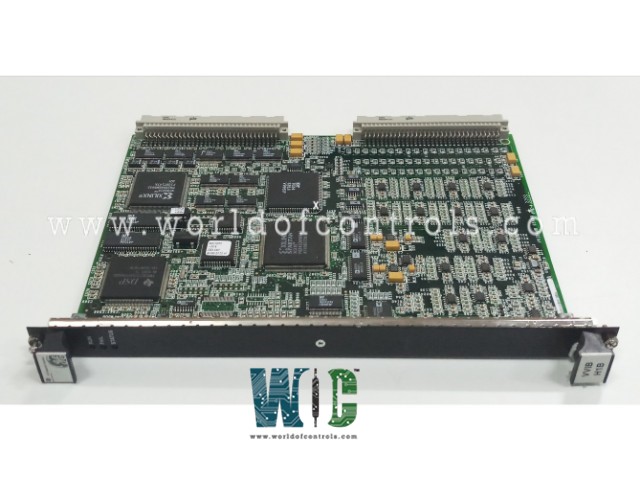
In GE turbine control architectures, vibration monitoring is handled through specialized electronic modules integrated into distributed control systems. These modules act as the interface between physical vibration sensors and the turbine control logic.
Their primary functions include:
- Receiving raw signals from proximity probes and accelerometers
- Conditioning and filtering analog input signals
- Converting vibration data into digital form for processing
- Communicating diagnostic information to the main turbine controller
By performing these functions, vibration monitoring boards ensure that raw mechanical signals are transformed into actionable intelligence for protection and control systems.
Contribution to Turbine Reliability
Vibration monitoring systems significantly improve turbine reliability by enabling:
Early Fault Detection
Subtle changes in vibration patterns can indicate early-stage mechanical wear or imbalance, allowing corrective action before severe damage occurs.
Fast Protective Response
When abnormal vibration levels are detected, the system can trigger alarms or initiate automatic shutdown sequences to protect critical components.
Improved Maintenance Planning
Long-term vibration data trends help engineers schedule maintenance activities more effectively, reducing unnecessary inspections and emergency repairs.
Enhanced Operational Efficiency
Stable vibration control contributes to smoother turbine operation, reduced mechanical stress, and improved energy efficiency.
Benefits of Advanced Condition Monitoring
Implementing structured vibration monitoring strategies in turbine systems delivers several key benefits:
- Increased operational uptime
- Reduced maintenance and repair costs
- Improved safety for equipment and personnel
- Extended service life of turbine components
- Higher reliability in power generation systems
These advantages are essential in industries where turbines operate continuously under high loads and where downtime can result in significant financial losses.
Conclusion
Condition monitoring strategies are fundamental to the safe and efficient operation of modern turbine systems. Among them, vibration monitoring remains one of the most important tools for detecting mechanical issues and preventing failures.
GE vibration monitoring systems, through their specialized control modules, provide real-time data acquisition, signal processing, and protective response capabilities. By enabling early detection and predictive maintenance, they play a vital role in ensuring turbine reliability, performance stability, and long-term operational safety.