Introduction
Modern gas turbines are among the most advanced rotating machines used in power generation and industrial applications. Their performance depends not only on mechanical design but also on highly sophisticated electronic control systems. At the heart of these systems lies Digital Signal Processing (DSP), a technology that enables real-time analysis and control of turbine behavior. DSP plays a critical role in ensuring efficiency, safety, and operational stability in modern gas turbine systems.
Understanding Digital Signal Processing in Turbines
Digital Signal Processing refers to the conversion and manipulation of real-world signals into digital data that can be analyzed by control systems. In gas turbines, sensors continuously generate signals related to:
- Exhaust and combustion temperatures
- Pressure levels across turbine stages
- Shaft vibration and mechanical stress
- Rotational speed and load demand
These signals are often noisy, high-speed, and time-sensitive. DSP systems filter, interpret, and process this data in real time, allowing the control system to make precise adjustments without delay.
By converting raw sensor data into meaningful information, DSP ensures that turbine operations remain stable even under rapidly changing load conditions.
Role of DSP in Gas Turbine Control Systems
Gas turbines operate under extreme thermal and mechanical conditions, requiring continuous monitoring and fast response control logic. DSP enables several key functions:
Real-Time Control and Response
DSP systems process sensor inputs instantly and adjust fuel flow, airflow, and ignition timing to maintain optimal combustion conditions.
Signal Filtering and Accuracy
Industrial environments introduce noise into sensor readings. DSP eliminates distortions, ensuring that control decisions are based on accurate data.
System Stability
By detecting anomalies in vibration or pressure patterns, DSP helps prevent unstable operating conditions that could damage turbine components.
Predictive Capability
Advanced DSP algorithms can identify early signs of wear, imbalance, or performance degradation, enabling predictive maintenance strategies.
DSP Hardware in Industrial Control Architecture
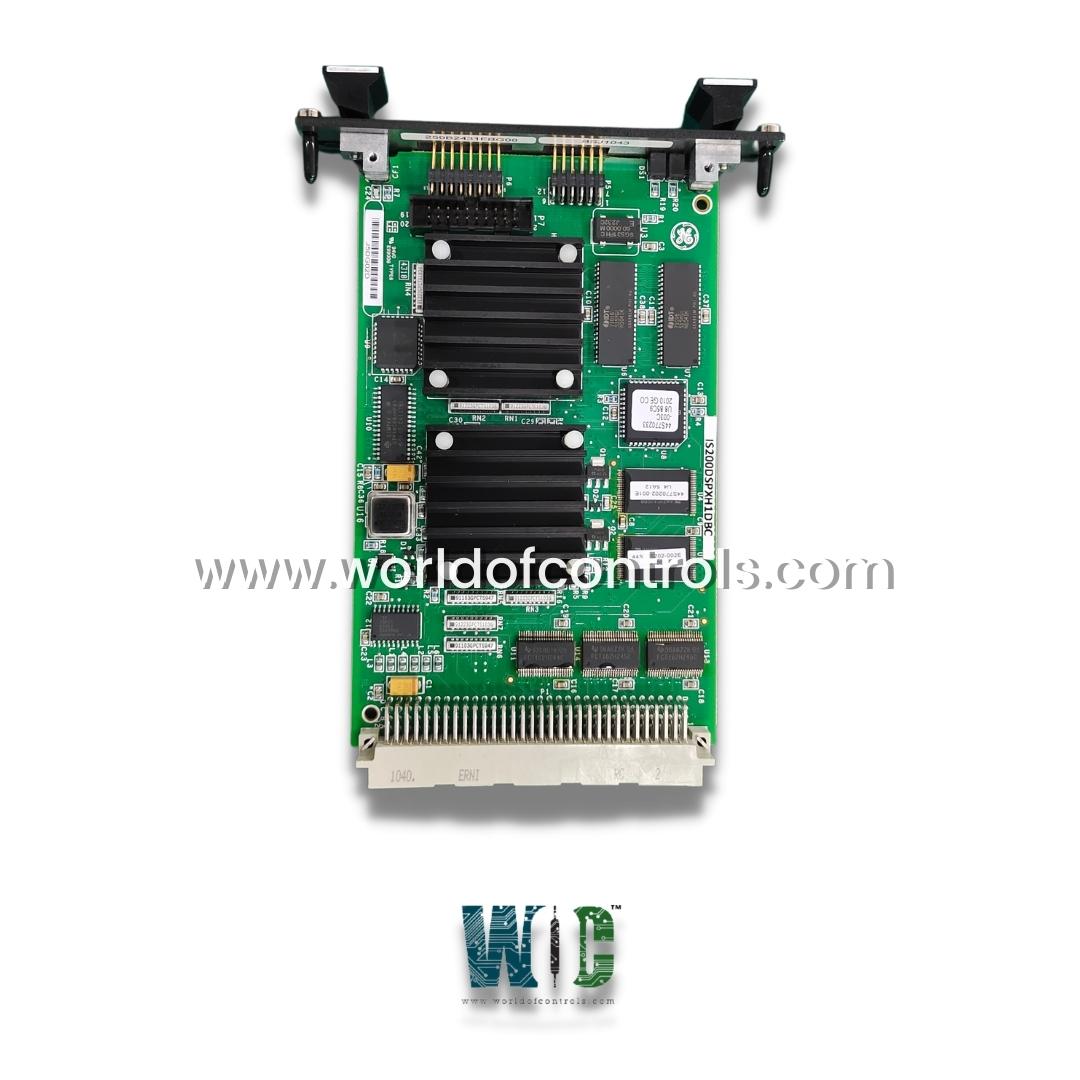
In industrial turbine systems, DSP functions are implemented through specialized control hardware modules integrated into distributed control systems. These processing units serve as the computational backbone of turbine automation platforms.
Such modules are designed to handle high-speed data acquisition and execute control algorithms with minimal latency. They typically operate in coordination with other system components, forming a layered architecture that includes:
- Sensor interface modules
- Control processors
- Communication networks
- Actuator control units
Within this structure, DSP-based hardware ensures that critical control loops are executed without interruption, even in high-demand operating conditions.
Importance in Power Generation Applications
Gas turbines are widely used in power plants where rapid response to electricity demand is essential. DSP-based control systems help maintain grid stability by enabling turbines to adjust output quickly and safely.
Key benefits include:
- Improved fuel efficiency through optimized combustion control
- Reduced emissions by maintaining precise operating conditions
- Enhanced operational reliability and reduced downtime
- Protection of mechanical components from excessive stress
These advantages make DSP an essential technology in modern energy infrastructure.
Future Trends in DSP-Based Turbine Control
As power systems become more digital and interconnected, DSP technology continues to evolve. Integration with artificial intelligence, machine learning, and advanced analytics is enabling smarter turbine control systems capable of self-optimization and adaptive performance tuning.
Future turbine control systems are expected to rely even more heavily on high-speed digital processing to achieve greater efficiency, flexibility, and sustainability.
Conclusion
Digital Signal Processing is a foundational technology in modern gas turbine control systems. It enables real-time data interpretation, precise control actions, and enhanced system stability. By transforming raw sensor signals into actionable insights, DSP ensures that turbines operate safely and efficiently under all conditions. As the energy industry advances, DSP-based control architectures will continue to play a central role in shaping the future of reliable and efficient power generation.