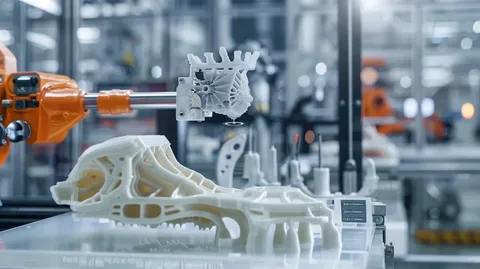
In today’s fast-evolving manufacturing world, rapid prototyping and cost-efficient production have become essential for businesses of all sizes. Among various additive manufacturing methods, FDM (Fused Deposition Modeling) stands out as one of the most widely used and practical technologies. With FDM 3D printing services, companies can quickly turn digital designs into real, functional prototypes and end-use parts with impressive accuracy and durability.
This article explores the importance of premium FDM printing, its benefits, applications, materials, and how to choose the right service provider for high-quality results.
Understanding Premium FDM 3D Printing Services
Premium FDM 3D printing services refer to professional-grade manufacturing solutions that use advanced fused deposition modeling technology to produce high-quality parts. These services focus not just on printing objects, but on ensuring precision, structural integrity, and surface finish suitable for industrial and commercial use.
Unlike basic or hobby-level printing, premium services involve calibrated machines, expert technicians, and quality-controlled processes that reduce errors and improve consistency across production batches.
- High-precision layer-by-layer fabrication using thermoplastic materials
- Professional calibration for dimensional accuracy
- Reduced printing defects and improved surface finish
- Suitable for prototypes, functional parts, and small production runs
- Advanced slicing software for optimized print quality
In addition, premium providers often offer design assistance, helping clients optimize CAD files for better printability and performance. This makes FDM 3D printing services more efficient and reliable for engineering, product design, and manufacturing industries.
Key Benefits of FDM 3D Printing Services
One of the major advantages of FDM 3D printing services is cost-effectiveness. Compared to traditional manufacturing methods like injection molding, FDM eliminates the need for expensive tooling. This allows businesses to produce prototypes and parts at a significantly lower cost, especially for small batches.
Another important benefit is speed. FDM technology enables rapid prototyping, allowing companies to test and refine designs within hours or days instead of weeks. This accelerates product development cycles and improves time-to-market.
- Lower production costs compared to traditional manufacturing
- Fast turnaround time for prototypes and parts
- Ideal for iterative design and testing
- Minimal material wastage during production
- Flexible customization for complex geometries
Furthermore, FDM printing supports a wide range of thermoplastics, making it suitable for both functional and aesthetic applications. The flexibility of FDM 3D printing services ensures that businesses can experiment with different materials and designs without significant financial risk.
Applications of FDM 3D Printing in Various Industries
FDM 3D printing services are widely used across multiple industries due to their versatility and reliability. In engineering and manufacturing, they are commonly used for producing functional prototypes, jigs, fixtures, and end-use components.
In the medical field, FDM technology is used to create anatomical models, surgical guides, and customized medical tools. Similarly, the automotive and aerospace industries rely on FDM printing for lightweight components and prototype testing.
- Engineering prototypes and functional testing parts
- Automotive components and custom fixtures
- Aerospace lightweight models and testing tools
- Medical models and surgical planning aids
- Consumer product design and concept validation
In addition, educational institutions and research labs also use FDM 3D printing services to teach design principles and conduct experimental projects. The adaptability of this technology makes it an essential tool in modern innovation ecosystems.
Materials and Technology Used in FDM Printing
One of the strengths of FDM 3D printing services lies in the variety of materials available. Common thermoplastics include PLA, ABS, PETG, Nylon, and TPU, each offering unique properties such as flexibility, heat resistance, or strength.
Premium providers also use advanced industrial-grade materials like carbon fiber-infused filaments, which provide enhanced durability and stiffness for demanding applications. These materials make FDM suitable for both prototyping and end-use production.
- PLA for eco-friendly and low-cost prototyping
- ABS for strong and heat-resistant parts
- PETG for chemical resistance and durability
- TPU for flexible and rubber-like components
- Carbon fiber composites for high-strength applications
Modern FDM machines also feature dual extrusion systems, heated chambers, and high-resolution nozzles. These technological improvements allow FDM 3D printing services to achieve better accuracy, smoother finishes, and improved mechanical properties in final products.
Choosing the Right FDM 3D Printing Service Provider
Selecting the right provider for FDM 3D printing services is crucial for achieving high-quality results. A reliable provider should have advanced equipment, experienced technicians, and a proven track record of delivering precise and durable parts.
It is also important to consider turnaround time, material availability, and post-processing capabilities. Premium providers often offer sanding, polishing, and painting services to enhance the final appearance and functionality of printed parts.
- Evaluate machine quality and technology used
- Check experience in your specific industry
- Compare material options and availability
- Review turnaround time and delivery reliability
- Look for post-processing and finishing services
Additionally, strong customer support and design consultation can significantly improve the overall experience. Working with a professional provider of FDM 3D printing services ensures better communication, fewer errors, and optimized production outcomes.
Conclusion
Premium FDM 3D printing services have transformed the way industries design, test, and produce components. By offering cost-effective, fast, and flexible manufacturing solutions, they empower businesses to innovate without the limitations of traditional production methods.
From engineering prototypes to medical models and industrial parts, FDM technology continues to expand its role across multiple sectors. By choosing the right service provider and materials, businesses can achieve high-quality results that meet both functional and aesthetic requirements.
In a world driven by innovation and speed, investing in reliable FDM 3D printing services is no longer optional—it is a strategic advantage for staying competitive and bringing ideas to life efficiently.