
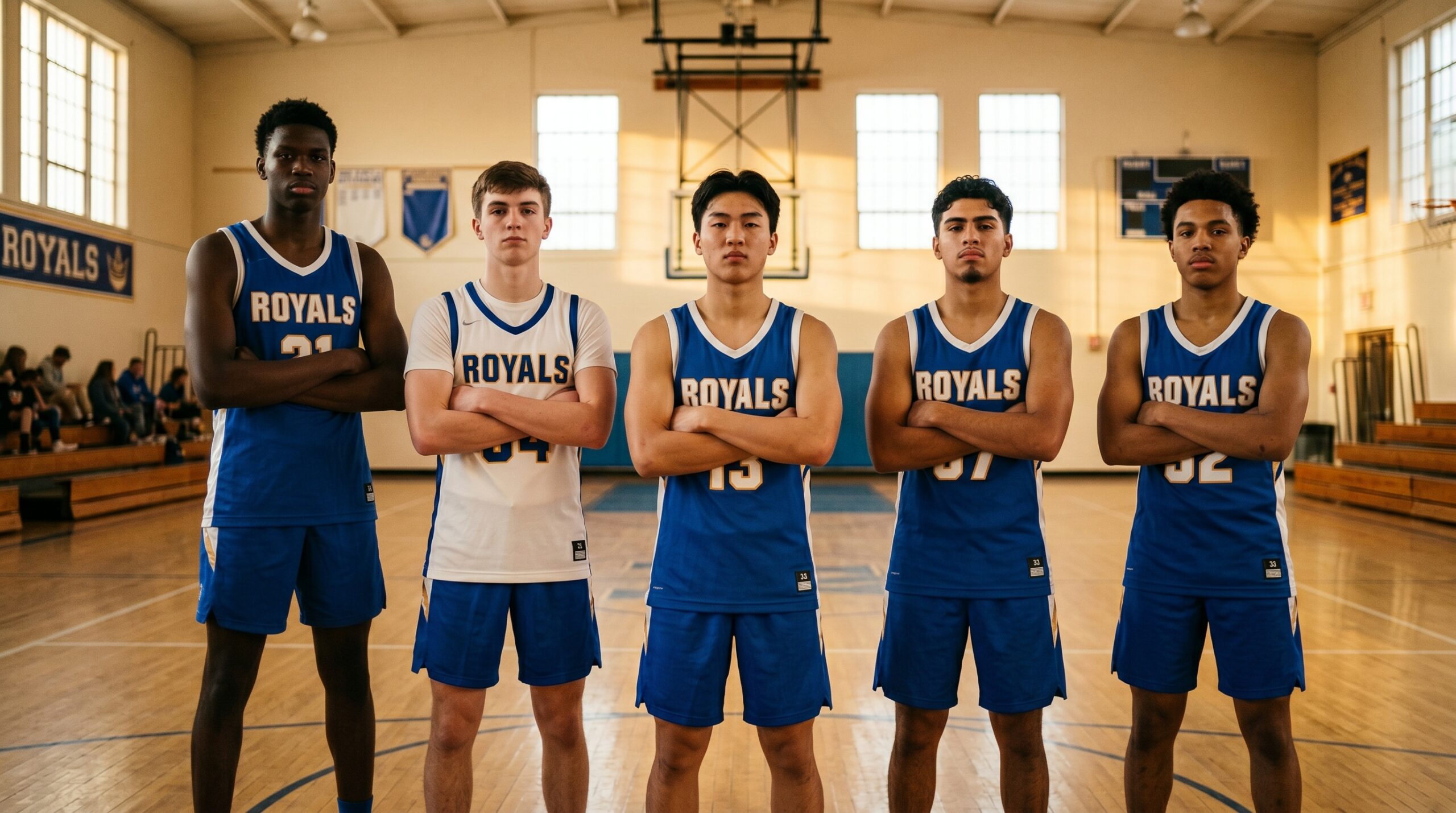
Basketball is more than a game in America — it is a cultural phenomenon that stretches from neighborhood playgrounds in Brooklyn to glittering arenas in Los Angeles. At the heart of this cultural tapestry sits one of the most recognizable pieces of sporting apparel on the planet: the basketball jersey. A great jersey is not simply fabric and thread. It is identity, memory, and motivation stitched together. Whether you are outfitting a youth league in Ohio, a high school varsity team in Texas, a college program in North Carolina, or a semi-professional squad competing across the country, thoughtful basketball jersey design plays a decisive role in how a team looks, feels, and ultimately performs.
This guide walks you through everything that goes into crafting a jersey your players will be proud to wear and your fans will be eager to rock in the stands. From color theory and typography to fabric technology and modern trends, every detail matters.
Why Jersey Design Matters More Than You Think
Ask any coach in the country and they will tell you the same thing: confidence wins games. When athletes step onto the hardwood wearing a uniform that looks sharp and feels premium, something shifts in their body language. They stand taller. They move with swagger. They play with a collective sense of pride.
The visual identity of your team also communicates to opponents before a single ball is bounced. A clean, cohesive, professional-looking jersey says, “We take this seriously.” It tells parents your program is organized. It tells sponsors your brand is worth their investment. And for young athletes especially, wearing the same uniform as their teammates fosters the kind of unity that transforms a roster of individuals into a true team.
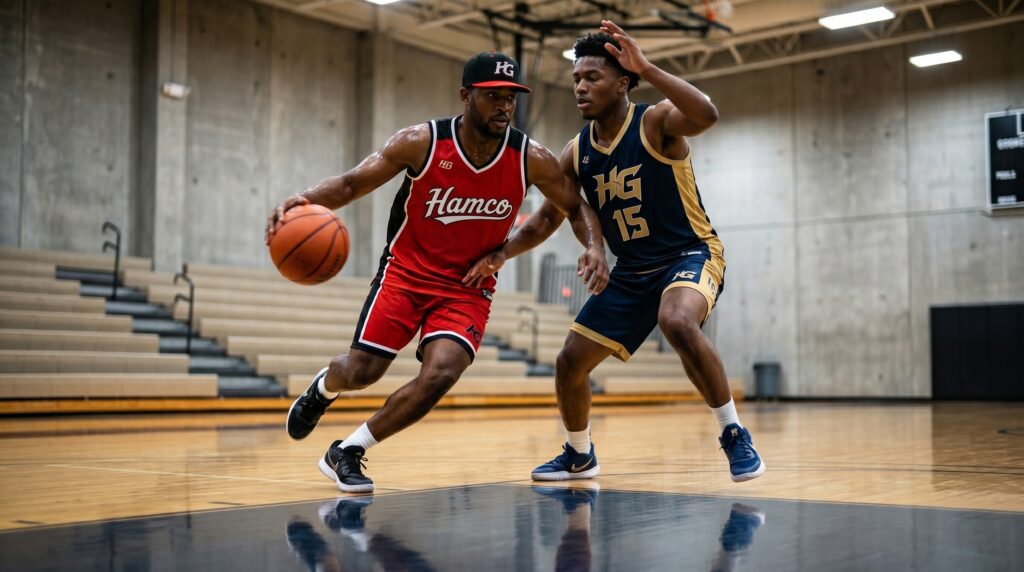
In a country where basketball culture runs deep — shaped by legends like Jordan, Bird, Magic, Kobe, and LeBron — the jersey has become an iconic symbol of belonging. From pickup runs at the Venice Beach courts to Friday-night prep games in Indiana, the uniform is the thread that connects every level of American hoops.
The Essential Elements of a Great Basketball Jersey
Designing a basketball jersey involves balancing aesthetics with athletic functionality. Here are the pillars every coach, director, or team manager should understand before approving a final concept.
1. Color Palette
Color is the first thing the human eye processes, which means your color choices will set the emotional tone of your team. Bold reds and oranges project aggression and energy — perfect for squads that play a fast-paced, transition-heavy style. Blues and greens suggest discipline, composure, and trust. Black and gold remain timeless choices that convey sophistication and power, which is why so many elite American programs gravitate toward darker, contrasting palettes.
When selecting colors, think about three specific considerations: the school or organization’s existing brand, the contrast needed for visibility on the court, and how the colors will read under different lighting conditions. A jersey that pops in bright outdoor sunlight may look flat under dim gymnasium fluorescents. Good designers test their mockups in multiple environments before committing.
2. Typography and Numbering
The numbers and letters on a jersey are not just functional — they are a statement. NBA teams spend enormous resources perfecting their custom numeric fonts because they know those digits will be photographed, televised, and printed on merchandise for decades. Your team deserves the same attention to detail.
Block fonts offer boldness and readability from long distances, making them ideal for high-action sports like basketball. Italicized or slanted fonts communicate speed and momentum. Custom or hand-drawn letterforms let your team stand out in a league where many programs fall back on generic athletic typography.
Whatever direction you choose, prioritize legibility. Referees, scorekeepers, and television cameras need to read those numbers instantly. Avoid overly thin strokes, decorative flourishes that muddy the silhouette, or colors that blend into the body of the jersey.
3. Logos and Branding
Whether your logo lives on the chest, the shorts, or a small sleeve patch, its placement and scale matter. Strong team marks feel confident without overwhelming the jersey. They integrate into the overall composition rather than fighting it. If your organization does not yet have a professional logo, investing in one before finalizing your basketball jersey design will save you from costly redesigns later.
Sponsor logos, when used, should be thoughtfully positioned. American youth and adult leagues increasingly incorporate local business sponsorships to offset costs, but these patches should complement the primary design, not dominate it.
4. Layout and Composition
Where does the eye travel first? A skilled designer thinks about visual hierarchy: team name, player number, player name, logos, and decorative elements all need their own breathing room. Too many elements crammed together create a chaotic look that feels more like a NASCAR car than a basketball uniform.
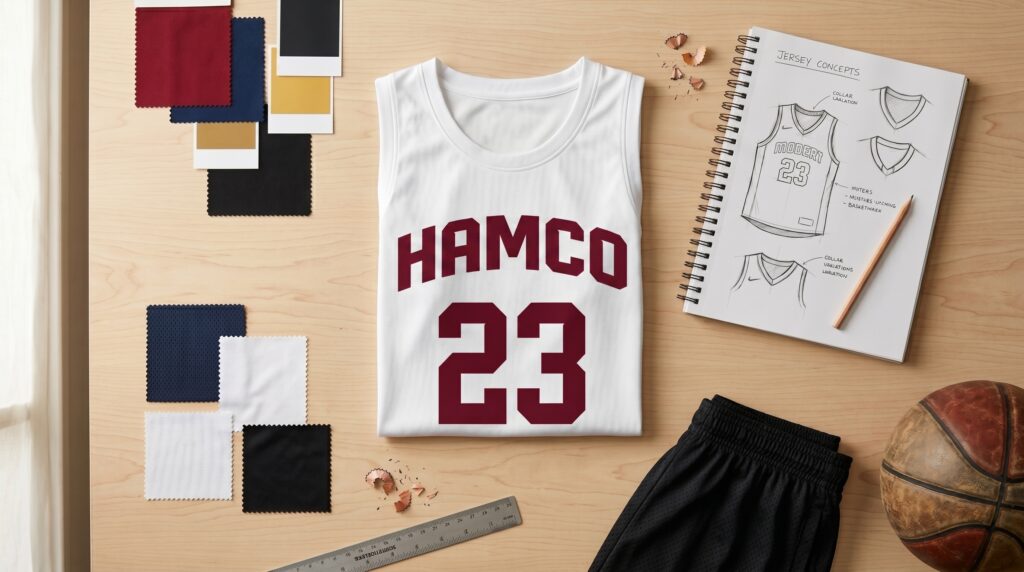
Consider negative space as a design tool. Some of the most iconic American basketball jerseys — the Chicago Bulls’ classic away set, for example — succeed because they let the wordmark and numbers breathe against a clean field of color.
Fabric and Performance Technology
Design goes beyond aesthetics. The modern American basketball player expects gear that performs as hard as they do. Over the past decade, textile innovation has completely reshaped what a jersey can deliver.
Moisture-Wicking Fabrics
Polyester microfiber blends now dominate the sport because they pull sweat away from the skin and allow it to evaporate quickly. This keeps athletes drier, lighter, and more comfortable through four demanding quarters. For teams in hot, humid regions like Florida, Georgia, or Arizona, this technology is non-negotiable.
Mesh Panels and Ventilation
Strategic mesh zones — typically around the sides, under the arms, and across the upper back — allow for increased airflow. When paired with lightweight body fabric, mesh dramatically improves breathability without sacrificing structure.
Stretch and Four-Way Movement
Basketball is a sport of explosive jumps, quick cuts, and full-range arm movement. Fabrics with four-way stretch accommodate these motions without restriction or bunching. Players should never be fighting their uniform; the jersey should feel like a second skin.
Durability and Stitching
Reinforced seams, double-stitched hems, and sublimated graphics (where the design is dyed directly into the fabric rather than screen-printed on top) dramatically extend the life of a jersey. For programs running tight budgets, investing in better construction upfront saves money over the long haul because the uniforms survive multiple seasons of practices, games, and washes.
Home vs. Away: The Classic American Standard
Every serious American basketball program — from middle school to the pros — needs at least two jersey sets: home and away. Traditionally, home jerseys are lighter (white or a pale team color) while away jerseys are darker. This convention exists so that fans and officials can instantly distinguish teams on a crowded court.
Some programs go further with alternate or “city edition” uniforms, inspired by the NBA’s hugely popular city series. These special-edition looks celebrate local culture, history, or milestones, and they give teams a chance to sell additional merchandise to fans hungry for new drops.
If budget allows, a three-jersey rotation keeps players feeling fresh throughout the season and gives your program more visual identity touchpoints for marketing, social media, and community engagement.
Trends Shaping American Basketball Uniforms Right Now
The design language of basketball jerseys evolves constantly, influenced by streetwear, fashion, and pop culture. Here are the trends defining the current landscape.
Streetwear Crossover
The line between basketball apparel and streetwear has all but disappeared. Contemporary jerseys increasingly borrow from hip-hop fashion, skate culture, and luxury sportswear. Oversized graphics, bold wordmarks stretched across the chest, and experimental color blocking all reflect this crossover.
Retro Revival
Vintage 1990s and early 2000s styling is enjoying a major comeback. Teams are embracing pinstripes, gradient fades, and bold block lettering reminiscent of the Iverson, Stockton, and Barkley era. Fans love the nostalgia, and younger players appreciate the fresh twist on classic templates.
Sublimated All-Over Prints
Full-body sublimated graphics — cosmic patterns, geometric designs, city skylines, or abstract art — give teams a bold, modern edge. Sublimation prints never crack or peel because the dye becomes part of the fabric itself, making these jerseys as durable as they are eye-catching.
Minimalism Done Right
On the opposite end of the spectrum, minimalist design remains influential. Clean typography, a single accent color, and plenty of negative space can feel every bit as premium as a maximalist all-over print. Think of minimalism as the quiet confidence that does not need to shout.
Sustainable Fabrics
American teams, schools, and leagues are increasingly conscious of their environmental footprint. Recycled polyester made from post-consumer plastic bottles is now widely available and matches the performance of traditional synthetics. Expect this trend to accelerate as sustainability becomes a priority for universities, municipalities, and corporate sponsors.
Customization and Personalization
One of the biggest advantages of working with a dedicated uniform partner is the ability to fully customize your team’s look. Player names, unique numbering, captain markers, memorial patches, championship stars, and tournament commemorations all add layers of meaning to a jersey.
For youth and amateur programs, personalization creates unforgettable memories. Imagine a sixth-grader pulling on a jersey with his own last name stitched across the back for the first time. That moment sticks with a kid forever. For high school and college teams, custom details communicate tradition — a banner year, a conference title, a tribute to a beloved coach.
If you are ready to begin your own project, working with specialists who understand both design and athletic apparel production makes all the difference. Teams across the country trust hamcospo to translate their vision into jerseys that look sharp, feel premium, and hold up to a grueling season schedule.
Common Mistakes to Avoid
Even well-intentioned programs make design missteps. Here are the pitfalls to sidestep when finalizing your uniforms.
Chasing trends instead of building identity. Trends come and go, but your team’s identity should endure. Incorporate modern elements, but anchor your design in something timeless that reflects who your program truly is.
Ignoring visibility. Some color combinations look stunning on a computer screen but become unreadable at distance. Always test numbers and wordmarks from at least 50 feet away before approving.
Overcrowding the design. Just because you can add another stripe, patch, or accent does not mean you should. Restraint is a hallmark of great design.
Skimping on fit. A gorgeous jersey that fits poorly will never be worn with confidence. Work with a supplier that offers a full range of sizes, including options tailored for youth, women, and athletes with larger frames.
Forgetting about the shorts. The shorts are half of the uniform. Coordinate design elements between the jersey and the shorts so the full kit reads as one cohesive look.
Budgeting for Your Team’s Jerseys
Cost varies widely depending on fabric quality, customization level, and order size. Bulk orders generally reduce per-unit pricing, so ordering for the entire roster at once is almost always smarter than piecing together individual jerseys throughout the season.
For most American amateur and school programs, budgeting between forty-five and ninety dollars per player for a premium jersey-and-shorts set is a reasonable starting point. Elite-level custom kits with sublimated graphics and advanced fabrics can climb higher. Remember that a well-made uniform lasts three to five seasons, making the cost-per-wear extremely reasonable compared with lower-quality alternatives that need frequent replacement.
Fundraisers, local sponsorships, booster clubs, and crowdfunding have all become popular ways American teams raise uniform budgets. Do not hesitate to engage your community — local businesses often jump at the chance to support youth sports in exchange for a small logo placement on the jersey or shorts.
The Ordering Process: What to Expect
When you partner with a quality custom uniform provider, the process typically flows like this:
First, you share your vision, including logos, colors, size breakdown, and any reference images. The design team then produces digital mockups showing how your concept will look on the actual jersey templates. You review, provide feedback, and request revisions until the design is exactly right.
Once the final design is approved, production begins. Depending on the level of customization and the time of year, turnaround typically ranges from two to six weeks. Many suppliers can rush orders for tournaments, playoffs, or season openers with enough advance notice.
Clear communication throughout the process is essential. A great uniform partner will walk you through every decision — fabric weight, neckline style, sleeve length, fit profile — and make sure no detail is left to chance. Look for a provider who offers unlimited design revisions, no setup fees, and a dedicated account representative who answers your calls quickly.
Tying It All Together
A basketball uniform is a canvas for the memories your team will make. It is the fabric your players sweat in, celebrate in, and grow in. It is the image splashed across your team’s social media feeds, printed in your local paper, and remembered by fans years after the final buzzer.
Getting your basketball jersey design right means weighing color, typography, logos, fabric, and fit with equal care. It means balancing tradition with modern trends. It means partnering with a supplier who treats your team’s identity as seriously as you do.
Whether you are building a new program from scratch or refreshing a decades-old legacy, take the time to get the details right. Involve your players, consult with your coaching staff, canvas your community, and invest in quality craftsmanship. The payoff — a team that looks unified, plays with pride, and carries your organization’s identity with style — is worth every ounce of effort.
American basketball culture was built on moments of magic performed in iconic uniforms. Your team’s moments are coming. Make sure you are dressed for them.