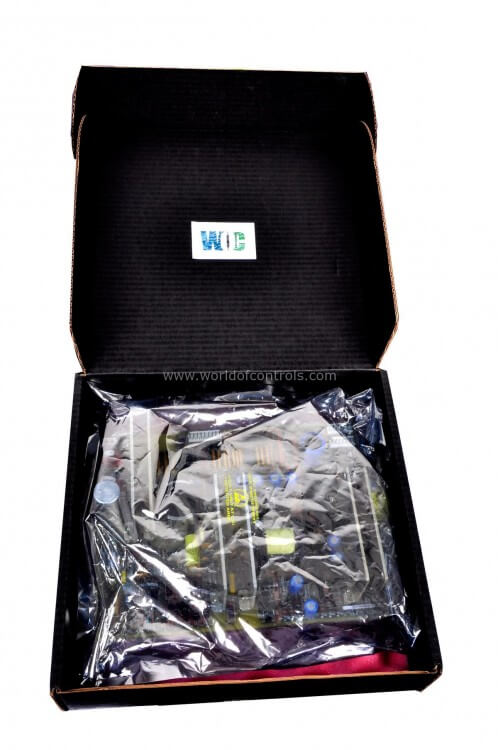
Pulse rate input boards are critical components in modern industrial systems, especially in the turbine industry. GE’s pulse rate input boards are widely used to monitor, control, and optimize turbine operations. This article provides a comprehensive overview of GE pulse rate input boards, their functionality, applications, and significance in turbine systems.
What Is a Pulse Rate Input Board?
A pulse rate input board is an electronic module that receives and processes pulse signals from sensors or other monitoring devices. These signals often represent physical measurements such as speed, rotation rate, or flow, which are then used for system control or data logging. In turbine systems, accurate pulse measurement is essential for performance monitoring, safety, and predictive maintenance.
Key Functions
- Signal Conversion – Converts mechanical or electrical pulses into digital signals that can be processed by turbine control systems.
- Data Accuracy – Ensures precise readings to prevent operational errors and inefficiencies.
- Integration – Interfaces with controllers, PLCs, or SCADA systems to facilitate real-time monitoring and control.
Role of GE Pulse Rate Input Boards in Turbines
GE pulse rate input boards play a crucial role in measuring the rotational speed of turbine shafts and other moving components. They are designed for high-performance industrial applications, ensuring reliability and precision even under demanding operating conditions.
Features and Capabilities
- High-Speed Pulse Processing: Capable of handling fast signal inputs, essential for turbines operating at high RPMs.
- Reliability: Built for continuous operation in harsh industrial environments.
- Compatibility: Seamlessly integrates with GE’s turbine monitoring and control systems.
- Error Detection: Diagnostic features help identify signal anomalies or equipment malfunctions before they escalate.
Benefits for Turbine Operations
- Monitoring Rotational Speed – Ensures turbines operate within safe limits, preventing mechanical stress or damage.
- Efficiency Optimization – Provides accurate data for control algorithms that optimize fuel consumption and energy output.
- Predictive Maintenance – Detects irregularities early, reducing unplanned downtime and maintenance costs.
Advantages of Using GE Pulse Rate Input Boards
Implementing GE pulse rate input boards in turbine operations offers several advantages:
- Enhanced Safety – Continuous monitoring prevents overspeed conditions and mechanical failures.
- Operational Efficiency – Accurate pulse readings improve turbine performance and energy output.
- Data-Driven Decisions – Provides reliable input for automated systems and analytics platforms.
- Reduced Maintenance Costs – Early detection of anomalies allows for scheduled maintenance, avoiding costly repairs.
Installation and Maintenance Tips
To maximize the performance of GE pulse rate input boards:
- Proper Wiring – Ensure signal inputs are correctly connected to avoid interference.
- Regular Calibration – Maintain accuracy by calibrating boards as per manufacturer recommendations.
- Environmental Protection – Protect boards from excessive vibration, moisture, and temperature extremes.
- Periodic Diagnostics – Use built-in diagnostics or monitoring tools to detect early faults.
Conclusion
GE pulse rate input boards are indispensable in turbine systems for precise monitoring, control, and optimization. Their ability to accurately process high-speed pulse signals ensures turbine safety, efficiency, and reliability. Understanding the role and capabilities of these boards enables engineers and operators to enhance turbine performance while minimizing operational risks and maintenance costs.