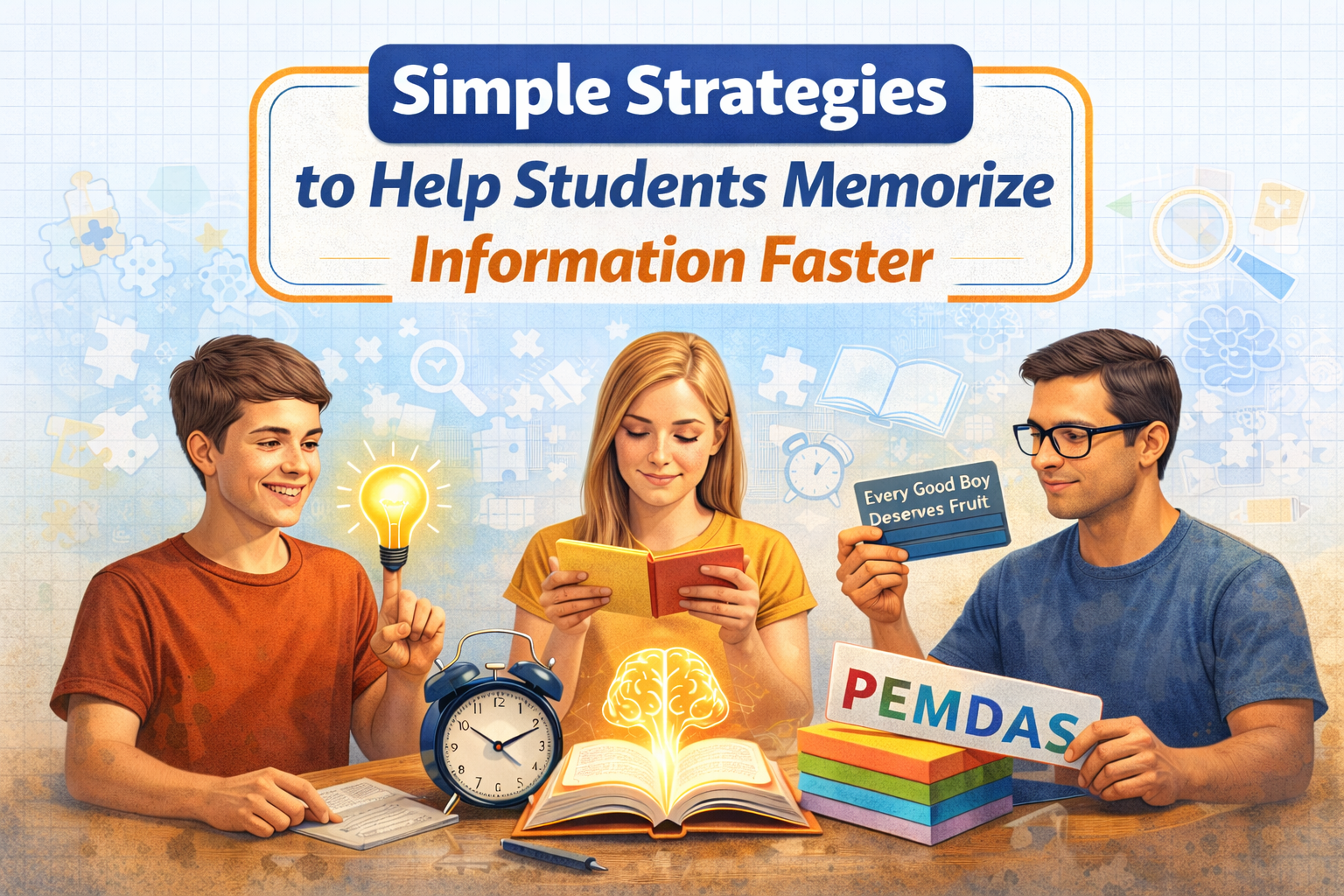
In today’s fast-paced learning environment, students are constantly required to absorb and retain large amounts of information. Whether studying academic subjects, learning a new language, or engaging in religious education, the ability to memorize efficiently plays a crucial role in success. However, memorization is not just about repetition—it involves understanding how the brain works and applying proven strategies to enhance retention.
This article explores simple yet effective techniques that help students memorize information faster while maintaining long-term retention. These strategies are practical, research-backed, and adaptable to different learning contexts.
Understanding How Memory Works
Before diving into techniques, it’s important to understand the basics of memory. The human brain processes information in three stages: encoding, storage, and retrieval. When students actively engage with information, they improve encoding. Consistent revision strengthens storage, while testing and recall improve retrieval.
Memorization becomes easier when learners use strategies that support all three stages instead of relying solely on passive reading or repetition.
Break Information into Smaller Chunks
One of the most effective memorization techniques is chunking. Instead of trying to memorize large blocks of information at once, students should divide content into smaller, manageable sections.
For example, when learning complex material, breaking it into topics, subtopics, or key points allows the brain to process information more efficiently. This method is particularly useful in structured learning environments, such as a Quran Memorization Class, where learners often divide verses into smaller portions for better retention.
Use Active Recall Instead of Passive Review
Many students make the mistake of repeatedly reading notes without testing their understanding. Active recall involves trying to retrieve information from memory without looking at the source.
Some effective active recall techniques include:
- Asking questions about the material
- Practicing self-testing
- Explaining concepts aloud
This method strengthens neural connections and significantly improves long-term retention compared to passive review.
Apply Spaced Repetition
Spaced repetition is a scientifically proven method that involves reviewing information at increasing intervals over time. Instead of cramming, students revisit material periodically to reinforce memory.
For instance, reviewing information after one day, then three days, then a week helps transfer knowledge from short-term to long-term memory. Many modern learning programs, including an Online Quran Recitation Course, incorporate spaced repetition to help learners retain verses and pronunciation rules effectively.
Create a Consistent Study Routine
Consistency is key to effective memorization. Studying at the same time each day trains the brain to focus and absorb information more efficiently.
A structured routine helps:
- Reduce procrastination
- Improve concentration
- Build discipline
Students who follow a regular schedule often perform better because their brains become accustomed to learning patterns. This is why structured programs, such as a Quran class in Canada, emphasize routine and guided practice for steady progress.
Engage Multiple Senses
Using multiple senses during learning enhances memory retention. When students see, hear, and speak information, they create stronger mental connections.
Examples include:
- Reading aloud
- Listening to audio recordings
- Writing notes by hand
This multi-sensory approach is particularly effective in language and recitation-based learning, where listening and repetition play a vital role.
Use Visualization Techniques
Visualization is a powerful tool for memorization. By creating mental images, students can associate abstract information with visual cues.
For example:
- Turning concepts into diagrams or charts
- Associating words with images
- Creating mental stories
These techniques make information more memorable and easier to recall during exams or practice sessions.
Teach What You Learn
Teaching is one of the most effective ways to reinforce memory. When students explain concepts to others, they deepen their understanding and identify gaps in their knowledge.
This method:
- Strengthens recall
- Improves comprehension
- Builds confidence
Even teaching a friend, family member, or study partner can significantly enhance retention.
Maintain a Healthy Lifestyle
Physical and mental well-being play a crucial role in memory performance. Students often overlook the importance of lifestyle factors in learning.
Key habits include:
- Getting enough sleep
- Eating nutritious foods
- Staying hydrated
- Taking regular breaks
Sleep, in particular, is essential for memory consolidation. Without proper rest, the brain struggles to store and retrieve information effectively.
Minimize Distractions
A focused environment is essential for effective memorization. Distractions such as social media, noise, or multitasking reduce concentration and slow down learning.
Students can improve focus by:
- Studying in a quiet space
- Turning off notifications
- Setting specific study goals
Creating a distraction-free environment allows the brain to fully engage with the material.
Practice Regular Revision
Revision is the backbone of memorization. Without consistent review, information fades over time.
Effective revision strategies include:
- Weekly summaries
- Flashcards
- Practice tests
Regular revision ensures that previously learned material remains fresh and accessible.
Stay Motivated and Set Clear Goals
Motivation plays a significant role in how effectively students memorize information. Setting clear, achievable goals helps maintain focus and direction.
For example:
- Memorizing a specific number of topics per week
- Tracking progress regularly
- Rewarding achievements
A goal-oriented approach keeps students engaged and committed to their learning journey.
Use Technology Wisely
Modern technology offers various tools that support memorization, such as apps for flashcards, reminders, and audio learning.
However, it’s important to use technology as a support system rather than a distraction. Structured digital platforms can enhance learning when used correctly.
Conclusion
Memorizing information faster is not about working harder—it’s about working smarter. By applying simple yet effective strategies such as chunking, active recall, spaced repetition, and consistent practice, students can significantly improve their learning efficiency.
Whether in academic studies or specialized programs like a Quran Memorization Class, success depends on using the right techniques combined with discipline and consistency. Similarly, guided learning environments such as an Online Quran Recitation Course or a Quran class in Canada demonstrate how structured approaches can enhance both memorization and understanding.
By incorporating these strategies into daily routines, students can not only memorize information faster but also retain it for the long term—leading to better performance and greater confidence in their learning journey.