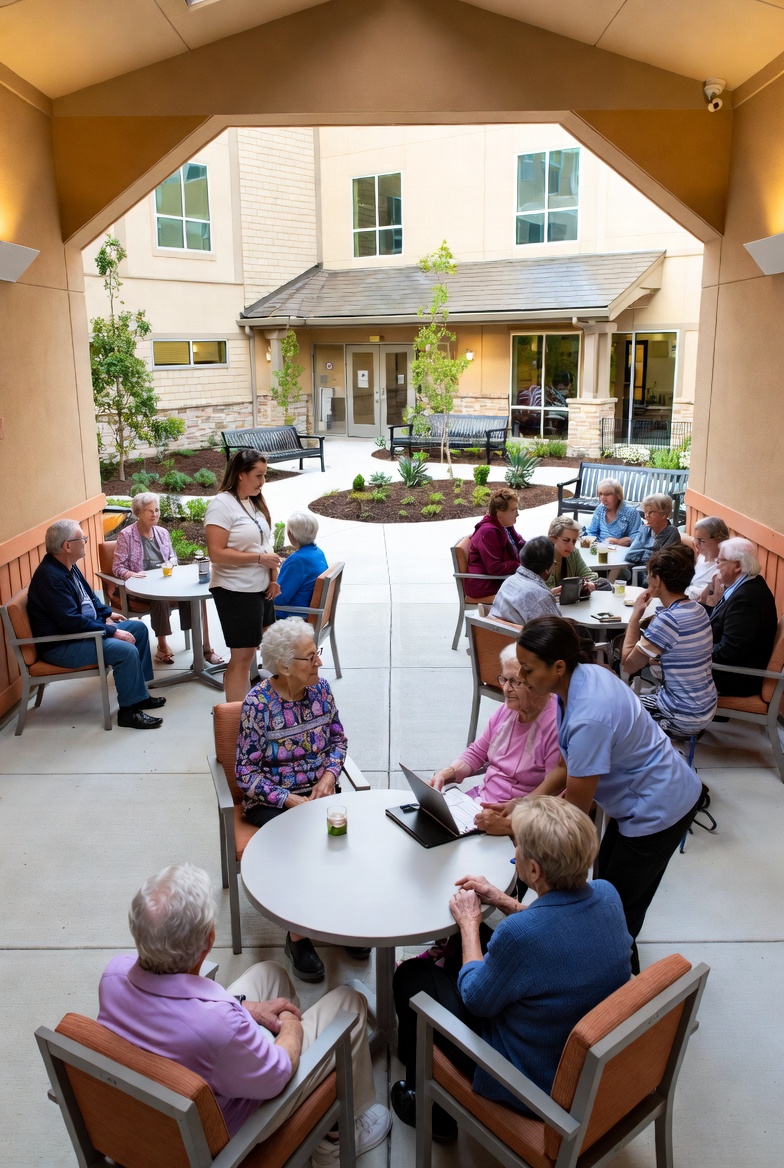
Alzheimer’s disease changes the way a person experiences the world, and ordinary environments are rarely prepared for those changes. Memory Care communities are intentionally designed to provide safety, meaningful engagement, and professional supervision that a private home cannot consistently offer. For many families, choosing specialized support becomes the most compassionate way to protect a loved one’s dignity and quality of life while ensuring their physical needs are met.
Environments Designed for Cognitive Needs
A house that was perfect for raising a family can become a maze of “hidden dangers” for someone with dementia. Steep stairs, confusing layouts, and complex appliances pose real risks. In a specialized community, every inch of the building is designed with cognitive impairment in mind.
You will find hallways with clear sightlines to reduce anxiety, calming color palettes to prevent overstimulation, and secure outdoor courtyards that allow for “safe wandering.” These design details may seem small, but they have a powerful effect on a resident’s daily comfort and their ability to move about independently without the fear of getting lost.
Caregivers Trained in Dementia Communication
Traditional caregiving—simply helping with a bath or a meal—is not enough for someone with memory loss. Staff in these communities are trained in specific communication techniques. They learn how to respond to repetitive questions, anxiety, or disorientation with “validation” rather than “correction.”
Correcting someone with Alzheimer’s often leads to frustration and conflict; validating their feelings and redirecting their attention preserves their self-esteem. This specialized training ensures that the resident feels heard and respected, which significantly reduces behavioral challenges like agitation or aggression.
Purposeful Engagement and “Success-Based” Activities
In a standard setting, a senior with dementia might sit in front of a TV for hours. In a Memory Care community, the day is structured around purposeful engagement. This might include “reminiscence therapy” using memory boxes, singing familiar hymns, or engaging in “life skills” like folding towels or sorting seeds.
These activities are called “success-based” because there is no wrong way to do them. They provide a sense of usefulness and identity even when short-term memory fades. These moments of connection help the brain stay engaged and can even slow the functional decline associated with the disease.
Health and Medication Oversight
Individuals with cognitive impairment are highly vulnerable to physical health issues that they may not be able to communicate. Dehydration, poor nutrition, and medication mistakes are common when a senior lives alone or with an untrained caregiver.
In a professional setting, nurses and trained aides provide consistent monitoring. They ensure that medications are taken at the exact right time, hydration is encouraged throughout the day, and any small change in physical health—such as a minor infection—is caught and treated before it becomes a hospital-level emergency.
Protection From Social Isolation
Social isolation is one of the fastest ways for dementia symptoms to worsen. At home, many seniors spend long hours alone while their family members are at work, which can lead to deep depression and increased confusion.
Community life offers gentle, “natural” social contact all day long. Whether it’s a greeting from a passing staff member or sitting next to a peer during a musical performance, these small interactions improve mood and help maintain social skills. A community provides a “village” where the resident is known, greeted by name, and included.
Supporting the “Hidden Patient”: The Family
Caregiving for someone with Alzheimer’s is often a 24-hour responsibility that eventually affects the caregiver’s own job, marriage, and physical health. It is often said that there is a “hidden patient” in every dementia case—the caregiver.
Specialized communities allow the family to take a breath. Knowing that your loved one is in a secure, professional environment allows you to sleep through the night without worry. It allows you to focus on your own well-being so that when you do visit, you can bring your best self to the resident.
Conclusion
Choosing this level of care is ultimately a decision rooted in love and realism. It is an acknowledgment that the disease requires more than one person can provide. Through dedicated teams and therapeutic environments, communities like Regency Birmingham reflect how individuals with Alzheimer’s can continue to live with comfort, respect, and meaningful moments.