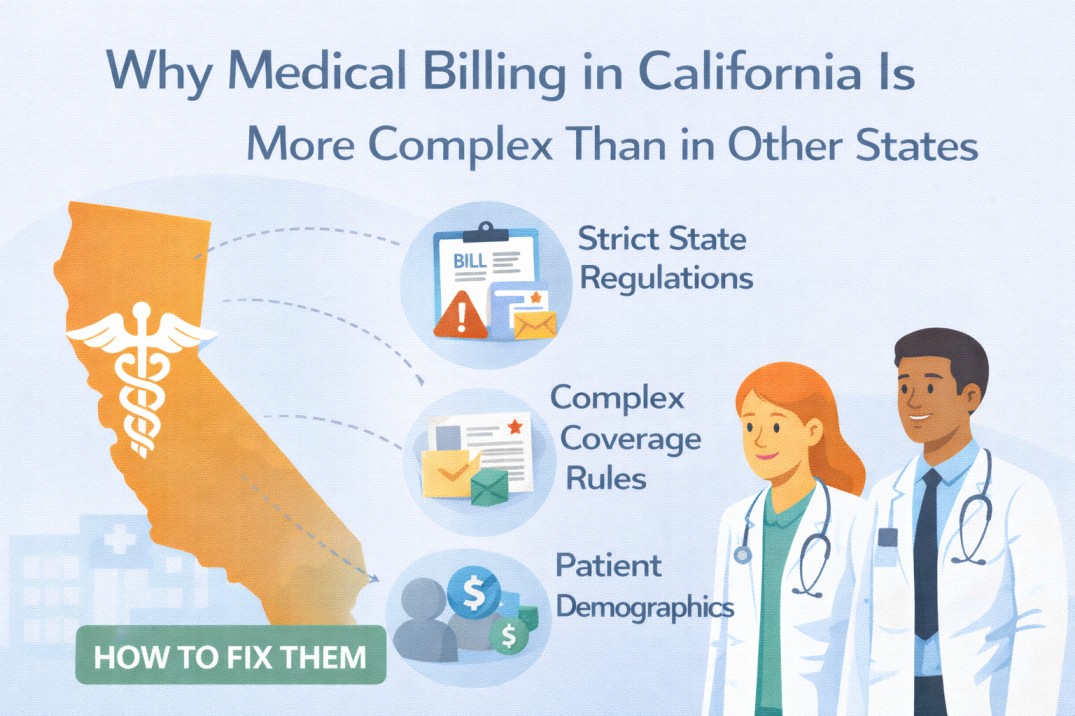
Healthcare billing is challenging nationwide, but California stands out as one of the most demanding states for providers and billing professionals. A combination of strict regulations, diverse insurance markets, complex payer rules, and high patient expectations creates a billing environment that requires advanced expertise. For practices operating in the state, understanding why Medical Billing in California is more complex is essential to maintaining compliance, protecting revenue, and ensuring smooth operations.
Extensive State Regulations and Oversight
California enforces healthcare regulations that often exceed federal requirements. Providers must comply with state-specific laws governing billing transparency, patient protections, and insurance practices. These regulations are frequently updated, requiring constant monitoring and adjustment to billing workflows.
Billing teams must ensure that claims, patient statements, and payment processes align with both federal and state guidelines. Even small compliance missteps can result in audits, penalties, or delayed payments, increasing the administrative burden for practices.
Diverse Insurance Market and Payer Variability
California has one of the most diverse insurance landscapes in the country. Practices commonly deal with a mix of large national insurers, regional health plans, managed care organizations, employer-based plans, and state-funded programs. Each payer has unique billing rules, reimbursement models, and authorization requirements.
This diversity increases the complexity of claims submission and follow-up. Billing professionals must understand payer specific policies to avoid denials and underpayments. Navigating this environment requires experience and detailed knowledge of multiple insurance systems.
Strict Patient Protection and Transparency Laws
California places a strong emphasis on patient rights and billing transparency. Laws related to surprise billing, cost disclosures, and balance billing require practices to communicate charges clearly and accurately. Billing statements must be detailed and compliant with state guidelines.
These requirements add another layer of responsibility to billing operations. Practices must ensure that patient estimates, explanations of benefits, and billing communications meet legal standards while remaining easy for patients to understand.
High Patient Responsibility and Collection Challenges
Healthcare costs in California are among the highest in the nation, leading to increased patient financial responsibility. High deductibles, copayments, and coinsurance amounts mean practices must collect more directly from patients.
Managing patient balances while maintaining positive relationships requires careful billing strategies and clear communication. Billing teams must balance compliance, transparency, and customer service, which adds complexity to revenue cycle management.
Medi Cal and Government Program Requirements
California’s Medicaid program, Medi-Cal, has its own set of billing rules, eligibility requirements, and reimbursement processes. Practices that serve Medi-Cal patients must navigate frequent policy changes, strict documentation standards, and varying payment timelines.
Billing errors in government programs can result in denied claims or repayment demands. Managing these programs alongside commercial payers increases the overall complexity of billing operations.
Frequent Regulatory and Policy Changes
California is known for implementing healthcare policy changes more frequently than many other states. New laws, payer policies, and reporting requirements often require billing processes to be updated quickly.
Practices must stay agile and informed to avoid disruptions. This constant state of change makes it difficult for in house billing teams to keep up without dedicated resources and ongoing education.
Increased Audit Risk and Compliance Scrutiny
Due to strict oversight, healthcare practices in California face a higher risk of audits. Both government agencies and private payers closely monitor billing practices for accuracy and compliance.
Billing teams must maintain thorough documentation, accurate coding, and clear audit trails. Preparing for and responding to audits adds significant administrative effort and requires specialized knowledge.
The Need for Specialized Billing Expertise
Given the regulatory, financial, and operational challenges, Medical Billing in California demands specialized expertise. Practices benefit from billing professionals who understand state laws, payer requirements, and compliance standards specific to California.
Specialized billing support helps reduce errors, minimize denials, and ensure timely reimbursement. It also allows providers to focus on patient care rather than navigating complex administrative requirements.
Technology Alone Is Not Enough
While billing software is an important tool, technology alone cannot manage the complexity of California billing. Human expertise is essential for interpreting regulations, resolving payer disputes, and adapting to policy changes.
The most successful practices combine advanced billing technology with experienced professionals who can apply judgment and knowledge to complex scenarios.
Conclusion
Medical Billing in California is more complex than in other states due to strict regulations, diverse payer networks, high patient responsibility, and frequent policy changes. Practices that underestimate these challenges risk compliance issues, revenue loss, and operational stress.
To succeed in California’s demanding healthcare environment, providers must invest in specialized billing expertise and proactive compliance strategies. With the right approach, practices can navigate complexity effectively, protect revenue, and continue delivering high-quality patient care.