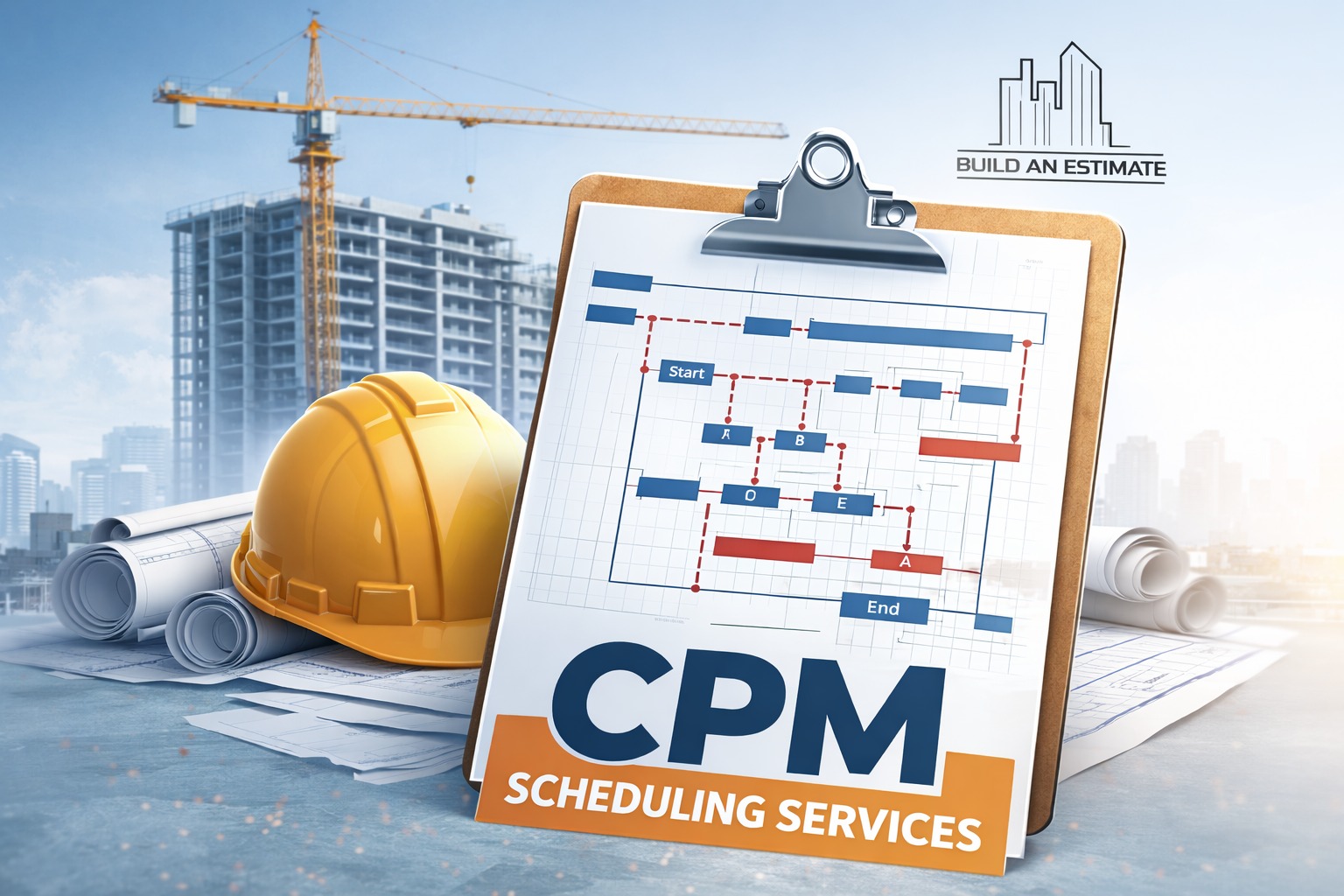
Professional CPM Scheduling Services Guide
In today’s competitive construction market, time truly equals money. Delays can increase labor costs, disrupt material deliveries, and damage client relationships. That is why CPM Scheduling Services have become a critical part of modern project management. Whether you are handling a commercial building, infrastructure project, or industrial facility, a properly developed schedule can determine overall success.
This guide explains how professional scheduling works, why it matters, and how companies like Build An Estimate support contractors, developers, and project managers with reliable planning solutions.
What Are CPM Scheduling Services?
CPM Scheduling Services are based on the Critical Path Method (CPM), a structured scheduling technique used to identify the sequence of activities that directly affect project completion time. The “critical path” represents the longest chain of dependent tasks that must be completed on time to avoid project delays.
Unlike simple timelines or basic Gantt charts, CPM scheduling breaks down the entire project into detailed activities. Each task includes duration, dependencies, start and finish dates, and resource allocation. This structured method provides clarity and control throughout the project lifecycle.
Professional scheduling specialists prepare detailed baseline schedules that become the roadmap for construction teams. These schedules are then updated regularly to reflect actual progress and identify potential risks.
Why Construction Projects Need CPM Scheduling
Construction projects involve multiple stakeholders, subcontractors, suppliers, and regulatory requirements. Without proper planning, even minor delays can create significant financial consequences.
1. Improved Time Management
Construction CPM scheduling helps project teams understand which activities are critical and which have flexibility. By focusing on critical tasks, managers can prevent unnecessary delays and optimize workflow.
2. Better Resource Allocation
Modern projects rely on resource-loaded schedules, which integrate labor, materials, and equipment into the timeline. This ensures that resources are available when needed and prevents costly idle time.
3. Risk Identification
Through schedule risk analysis, project managers can identify potential bottlenecks before they become major problems. This proactive approach reduces uncertainty and strengthens overall project control.
4. Stronger Communication
A well-developed CPM schedule serves as a communication tool between owners, contractors, consultants, and subcontractors. Everyone works from the same structured plan, reducing misunderstandings.
Core Components of Construction CPM Scheduling
Professional CPM Scheduling Services typically include several key components that enhance project visibility and control.
Work Breakdown Structure (WBS)
A Work Breakdown Structure divides the project into manageable sections. Each segment contains specific activities, making it easier to monitor progress and assign responsibility.
Activity Logic and Dependencies
Every task is connected through logical relationships. For example, foundation work must be completed before structural framing begins. These dependencies create the network diagram that defines the critical path.
Resource-Loaded Schedules
Resource-loaded schedules integrate workforce, equipment, and material requirements into the timeline. This approach helps contractors forecast labor needs and avoid resource conflicts.
Baseline Schedule Development
The baseline schedule represents the original approved project plan. It serves as the reference point for performance measurement throughout construction.
Schedule Risk Analysis and Mitigation
No construction project is free from risk. Weather conditions, supply chain disruptions, design changes, and labor shortages can all impact timelines.
Schedule risk analysis evaluates these uncertainties and measures their potential impact on completion dates. Advanced tools allow planners to simulate different scenarios and calculate probability-based outcomes.
Once risks are identified, teams can apply schedule compression techniques such as:
- Fast tracking (performing tasks in parallel)
- Crashing (adding resources to reduce activity duration)
- Re-sequencing non-critical tasks
These strategies help maintain deadlines without compromising quality or safety.
Construction Progress Tracking and Performance Control
Planning is only the first step. Effective project control requires continuous monitoring.
Construction Progress Tracking
Construction progress tracking compares actual site performance against the baseline schedule. Regular updates help identify delays early and allow corrective action before issues escalate.
Weekly or biweekly schedule updates typically include:
- Percentage completion of activities
- Revised forecasts
- Variance analysis
- Delay documentation
Accurate tracking ensures transparency and strengthens accountability across all project teams.
Earned Value Management (EVM)
Earned value management (EVM) combines cost and schedule performance into a single integrated system. By comparing planned value, earned value, and actual cost, project managers gain deeper insight into overall performance.
EVM answers critical questions such as:
- Are we ahead or behind schedule?
- Are we over or under budget?
- What is the forecasted completion cost and time?
When integrated with Construction CPM scheduling, EVM becomes a powerful tool for financial and timeline control.
Applications Across Different Project Types
CPM Scheduling Services are widely used across various construction sectors:
- Commercial buildings
- Residential developments
- Industrial facilities
- Infrastructure projects
- Healthcare and educational institutions
Each project type requires customized scheduling strategies. Industrial projects, for example, may require more detailed sequencing due to complex mechanical and electrical installations.
Benefits of Outsourcing CPM Scheduling Services
Many contractors choose to outsource scheduling to specialized professionals. This approach offers several advantages:
1. Expertise and Accuracy
Experienced schedulers understand construction logic, sequencing, and compliance requirements. Their expertise reduces errors and ensures realistic timelines.
2. Time Savings
Project managers can focus on field operations while scheduling experts handle updates, analysis, and reporting.
3. Stronger Claims Support
In case of disputes or delay claims, a professionally prepared schedule provides clear documentation and defensible records.
Companies like Build An Estimate support contractors with detailed scheduling solutions tailored to project scope and complexity. By combining technical expertise with practical construction knowledge, they help teams maintain control from start to finish.
Technology Behind Modern CPM Scheduling
Today’s CPM Scheduling Services rely on advanced project management software to develop and maintain schedules. These tools allow for:
- Real-time updates
- Data integration
- Resource optimization
- Automated reporting
- What-if scenario analysis
Cloud-based systems also enable collaboration between field teams and office staff, ensuring seamless communication.
Common Mistakes to Avoid in CPM Scheduling
Even with strong planning tools, mistakes can undermine scheduling effectiveness.
Overloading the Schedule
Adding unnecessary detail can make the schedule difficult to manage. The focus should remain on critical and near-critical activities.
Ignoring Logic Relationships
Incomplete or incorrect activity logic can create inaccurate critical paths and misleading forecasts.
Failing to Update Regularly
A schedule that is not updated frequently loses value. Regular updates are essential for meaningful construction progress tracking.
Lack of Risk Planning
Without schedule risk analysis, teams may underestimate potential disruptions.
Avoiding these common pitfalls ensures that CPM scheduling remains a practical management tool rather than a static document.
The Strategic Value of Professional CPM Scheduling Services
Professional CPM Scheduling Services provide more than just a timeline. They deliver strategic insight into project execution. With clear visibility into critical activities, resource requirements, and risk exposure, project leaders can make informed decisions.
When integrated with earned value management (EVM), progress tracking systems, and schedule compression techniques, CPM scheduling becomes a comprehensive project control framework.
In highly competitive markets, delivering projects on time strengthens reputation and client trust. Proper scheduling supports:
- Predictable completion dates
- Cost efficiency
- Reduced disputes
- Improved stakeholder confidence
Final Thoughts:
Construction projects are complex, fast-moving, and financially sensitive. Relying on informal planning methods is no longer sufficient. Professional CPM Scheduling Services provide structure, accountability, and clarity throughout the entire project lifecycle.
From baseline schedule development to schedule risk analysis and resource-loaded schedules, CPM methodologies empower teams to manage time effectively. Combined with construction progress tracking and earned value management (EVM), these services transform raw data into actionable insights.