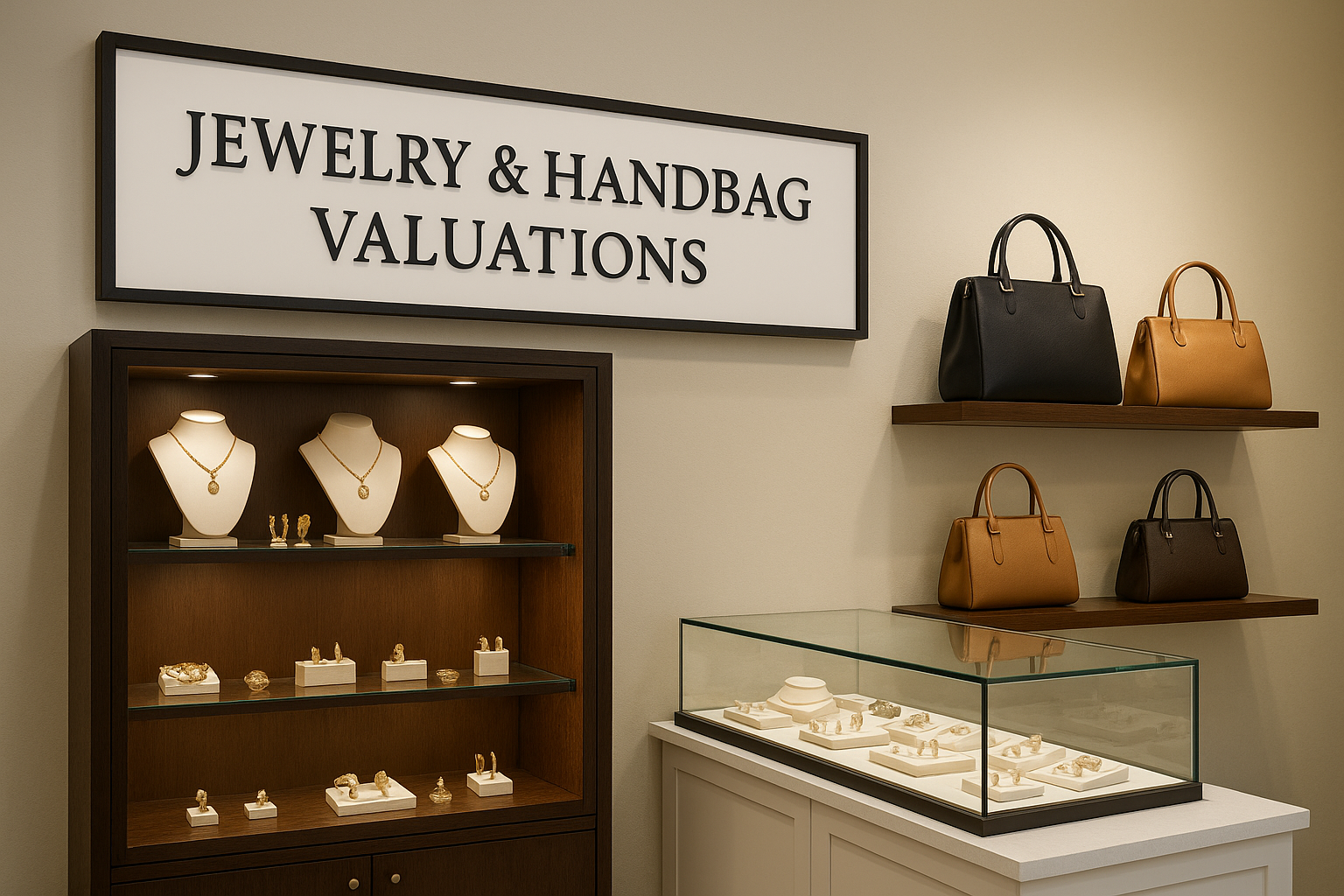
Do you have something that is antique—maybe a piece of jewelry that you inherited from your older generation or maybe a handbag that you bought at an auction when it was still the most talked-about stuff in town? If you have something like that, it may have been discontinued or lost its importance. There is a high likelihood that the market will discontinue the item as well.
Did this statement just create a panic situation in your mind? Well, is the situation really panic-worthy? It’s a yes and no—not a straight answer. But you must pay special attention to your jewelry and handbags during an appraisal.
The idea behind you panicking is that if you own a piece that’s no longer in production, be it a vintage ring, a retired designer handbag, or a limited-run item, it automatically comes to mind that the value might have come down and it will be difficult to get it replaced. But most often, in reality, the opposite is true.
If you are someone clueless about such stuff, then this is just the right article for you. Let’s go through the details, explore the various angles of this situation, and understand why obtaining a valuation for these items is even more important, noting that the process differs slightly from a standard valuation. But before we get through the details, let’s first have a clear idea about what the “discontinuation” exactly means.
What Does “Discontinued” Actually Mean?
You will learn that some pricey, likely vintage, items are no longer made. This discontinuation does not hold one single meaning here in the market. In simple terms, it means that it is no longer available in the market, and there are various reasons and meanings that might have led to this situation. A few such reasons and meanings have been listed below:
- The design is no longer manufactured.
- Original materials may no longer be available.
- Exact replacements may not exist on the retail market.
This applies to:
- Fine jewelry with retired designs or custom craftsmanship
- Luxury handbags from past collections
- Limited-edition or seasonal releases
When an item is discontinued, it does not lose its importance or relevance; rather, it indicates that the item can no longer be produced, making it harder to replace, which directly affects its valuation.
Why Discontinued Items Can’t Be Appraised Like Regular Ones
When you seek a valuation, the appraisers follow specific processes that determine the asset’s appraisal. They match the items with the current value that they would give in the current retail equivalents market. But with discontinued jewelry and handbags, there is no direct equivalent. When no direct equivalent exists, obtaining a valuation becomes challenging, leading to the use of an alternative method that requires answering a more complex question:
“What would it realistically cost to replace this item today with something of similar quality, prestige, and craftsmanship?”
To answer this question, a specific set of steps is followed to provide the valuation of the antique or discontinued asset.
To determine the replacement value for discontinued jewelry, appraisers follow a specific process.
1. Identifying Comparable Materials
To value an asset, the jewelry appraisal agency first breaks it down into its core components:
- Metal type and purity
- Gemstone quality and characteristics
- Craftsmanship level and design complexity
2. Evaluating Craftsmanship and Complexity
Discontinued items are likely due to the use of a rare or costly technique.
This is especially true for:
- Vintage jewelry
- Custom-made pieces
- Designs created by independent artisans
3. Sourcing Modern Equivalents (Not Identical Matches)
When the exact equivalent of the jewelry is not available, the appraisers select a nearly identical option, possibly the closest alternative.
- Items of similar quality and design intent
- Comparable materials and construction standards
- Current market availability
How Discontinued Handbags Are Valued
When it comes to the luxury bags, a similar kind of method is followed to get the handbag valuation done, only with a slight difference.
Brand Prestige Still Matters
When it comes to handbags, their valuation criteria differ from those of other luxury items. Even when a handbag model is discontinued, its brand continues to add value.
Materials and Construction Are Key
When it comes to handbags, the material and quality are critical, and they are closely analyzed.
- Leather or fabric quality
- Hardware materials and finish
- Stitching, structure, and durability
Condition Becomes Even More Important
In the case of handbag valuation, the condition plays an enormous role. Whether a bag looks to be a new one or an old one matters highly in the case of valuation.
Summing Up
To sum up, getting the valuation done of a discontinued asset is extremely challenging and something that is non- negotiable too. Just contact a reputable valuation company, and they will do the best job.