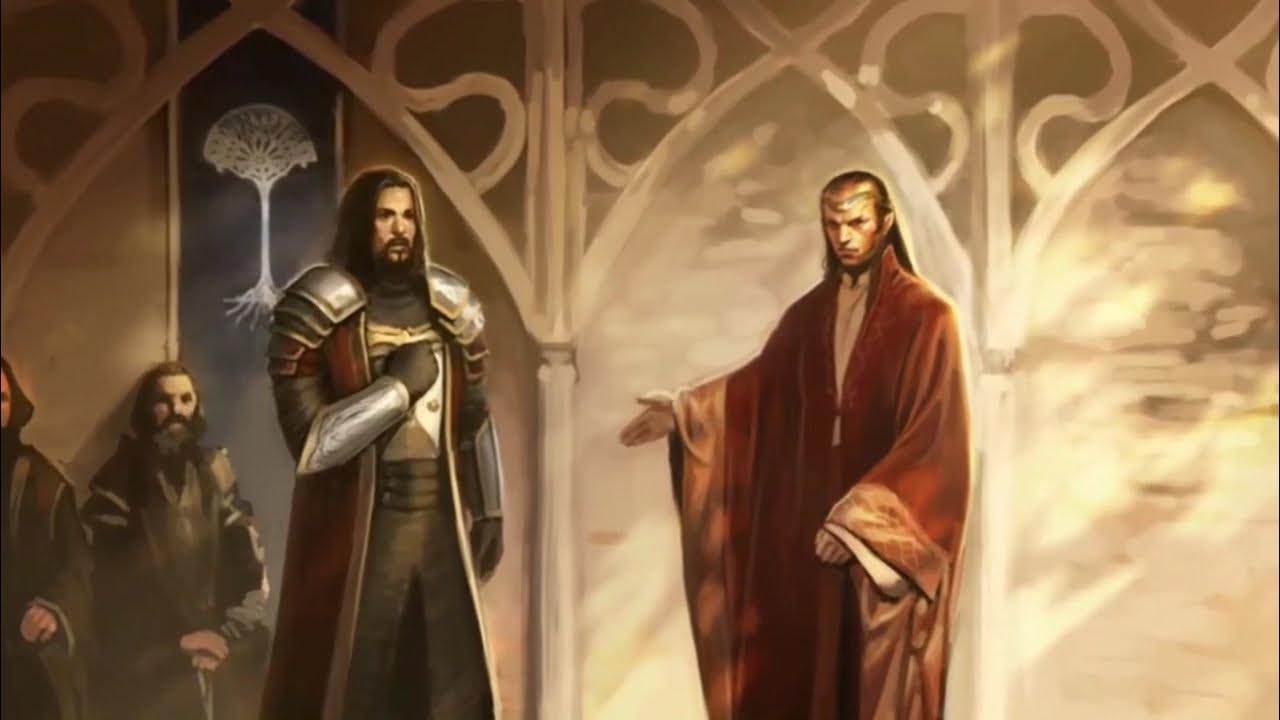
Fantasy literature often captivates readers with epic battles, legendary heroes, and vast imaginary worlds. Yet some authors go beyond spectacle to explore the deeper forces that shape those worlds—power, fear, history, and human choice. Robert Rastorp is one such author. His work stands out for its thoughtful examination of themes that lie beneath the surface of familiar fantasy narratives, particularly within the rich mythology of Middle-earth.
Through careful analysis and engaging storytelling, Rastorp invites readers to look beyond events and examine the causes, consequences, and moral weight behind them. His most well-known work, The Witch King and the Fates of Arnor and Gondor, exemplifies this approach, offering readers a thematic exploration of decline, leadership, and the long shadow of evil. This article explores the major themes that define Robert Rastorp’s books and explains why they resonate so strongly with readers.
A Thematic Approach to Fantasy
Unlike many fantasy authors who prioritize action or character arcs alone, Robert Rastorp approaches storytelling thematically. His books are built around ideas—questions about how societies function, why they fail, and how individuals influence historical outcomes.
Rastorp treats fantasy worlds as living systems shaped by time, fear, and human decisions. Rather than presenting good and evil as simple opposites, he explores how moral complexity and gradual decay often lead to catastrophic outcomes. This thematic depth makes his work especially compelling for readers who enjoy intellectual engagement alongside imaginative storytelling.
Power and Its Corrupting Influence
One of the most prominent themes in Robert Rastorp’s writing is the corrupting nature of power. He portrays power not as an immediate force that destroys, but as something that erodes judgment over time.
In The Witch King and the Fates of Arnor and Gondor, power manifests in multiple forms:
- The Witch King’s dominance through fear and manipulation
- Political authority weakened by internal division
- Leadership compromised by complacency and pride
Rastorp emphasizes that power rarely collapses a kingdom overnight. Instead, it creates conditions where poor decisions compound, leaving societies vulnerable. This slow corrosion of authority is a recurring theme across his work.
Fear as a Tool of Control
Fear plays a central role in Rastorp’s thematic framework. He treats fear not merely as an emotional response but as a strategic weapon capable of reshaping entire civilizations.
In The Witch King and the Fates of Arnor and Gondor, fear becomes more destructive than armies. The Witch King’s influence is felt long before physical conflict arises, as uncertainty, mistrust, and despair weaken the resolve of Arnor and Gondor.
Robert Rastorp shows how fear:
- Undermines unity
- Encourages isolation
- Leads to reactive, short-sighted leadership
This theme resonates beyond fantasy, reflecting real-world historical patterns where fear-driven decisions often lead to long-term decline.
The Inevitability of Decline
Another recurring theme in Robert Rastorp’s books is decline—not as fate, but as consequence. Rastorp challenges the idea that the fall of kingdoms is unavoidable. Instead, he presents decline as the result of accumulated choices, ignored warnings, and fractured leadership.
In The Witch King and the Fates of Arnor and Gondor, the fall of Arnor is not sudden or mysterious. It unfolds through:
- Political fragmentation
- Failure to adapt to emerging threats
- Weak alliances and internal conflict
Rastorp’s exploration of decline is methodical and reflective, reinforcing the idea that history is shaped by patterns rather than isolated moments.
History as a Living Force
Robert Rastorp treats history as an active presence rather than a static backdrop. Past events are not forgotten; they shape the present and constrain the future.
In his work, history:
- Influences political decisions
- Determines cultural identity
- Creates inherited strengths and weaknesses
In The Witch King and the Fates of Arnor and Gondor, the legacy of Númenor and earlier ages plays a critical role in how Gondor perceives itself and responds to threats. Rastorp highlights how clinging too tightly to past glory can blind leaders to present dangers.
Leadership and Responsibility
Leadership is a central concern in Rastorp’s writing. He does not portray leaders as purely heroic or villainous but as flawed individuals navigating complex systems.
Key leadership themes include:
- Responsibility versus ambition
- Vision versus tradition
- Action versus hesitation
Robert Rastorp consistently shows that leadership failures are rarely dramatic. More often, they stem from inaction, denial, or misplaced confidence. These subtle failures accumulate, leading to irreversible consequences.
Division and Fragmentation
Division is a recurring and devastating theme in Rastorp’s work. He portrays unity as fragile and easily undermined by fear, pride, or competing interests.
In The Witch King and the Fates of Arnor and Gondor, Arnor’s division into smaller realms becomes its greatest weakness. Rastorp presents fragmentation as a slow, almost invisible process that leaves societies unable to respond effectively to external threats.
This theme reinforces one of Rastorp’s core messages: survival depends as much on cohesion as on strength.
The Long Shadow of Evil
Rather than focusing on evil as an immediate force, Robert Rastorp explores its long-term influence. Evil, in his books, is patient. It works through time, exploiting weaknesses rather than overwhelming strength.
The Witch King embodies this concept perfectly. In The Witch King and the Fates of Arnor and Gondor, he is less a battlefield commander and more a strategic presence—someone who understands how to destabilize societies without direct confrontation.
This portrayal aligns closely with Tolkien’s own philosophy and adds depth to Rastorp’s thematic exploration.
Moral Complexity Over Simple Duality
Rastorp avoids simplistic good-versus-evil narratives. His books emphasize moral ambiguity, where even well-intentioned decisions can have harmful outcomes.
Themes of moral complexity include:
- The cost of preserving tradition
- The danger of neutrality in times of crisis
- The unintended consequences of fear-based decisions
By resisting clear moral binaries, Robert Rastorp encourages readers to think critically about responsibility and consequence.
Why These Themes Resonate With Readers
Readers are drawn to Robert Rastorp’s work because his themes feel timeless and relevant. Though grounded in fantasy, his explorations of power, fear, leadership, and decline mirror real historical and contemporary issues.
The Witch King and the Fates of Arnor and Gondor resonates because it does not merely recount events—it explains them. Readers gain insight into how societies unravel and why vigilance, unity, and thoughtful leadership matter.
Contribution to Fantasy Analysis
Rastorp’s thematic focus contributes meaningfully to modern fantasy analysis. He bridges the gap between scholarly interpretation and accessible storytelling, making complex ideas understandable without diluting their significance.
His work invites:
- Reflection rather than passive consumption
- Discussion rather than definitive conclusions
- Appreciation of fantasy as a serious literary form
Conclusion
Exploring the themes in Robert Rastorp’s books reveals an author deeply committed to understanding how worlds—both fictional and real—are shaped by time, choice, and consequence. Through The Witch King and the Fates of Arnor and Gondor, Rastorp demonstrates that fantasy can serve as a powerful lens for examining power, fear, leadership, and decline.
His thematic approach challenges readers to think critically, reflect deeply, and reconsider familiar narratives. For those seeking fantasy literature that rewards thoughtful engagement, Robert Rastorp offers work that is rich, meaningful, and enduring.