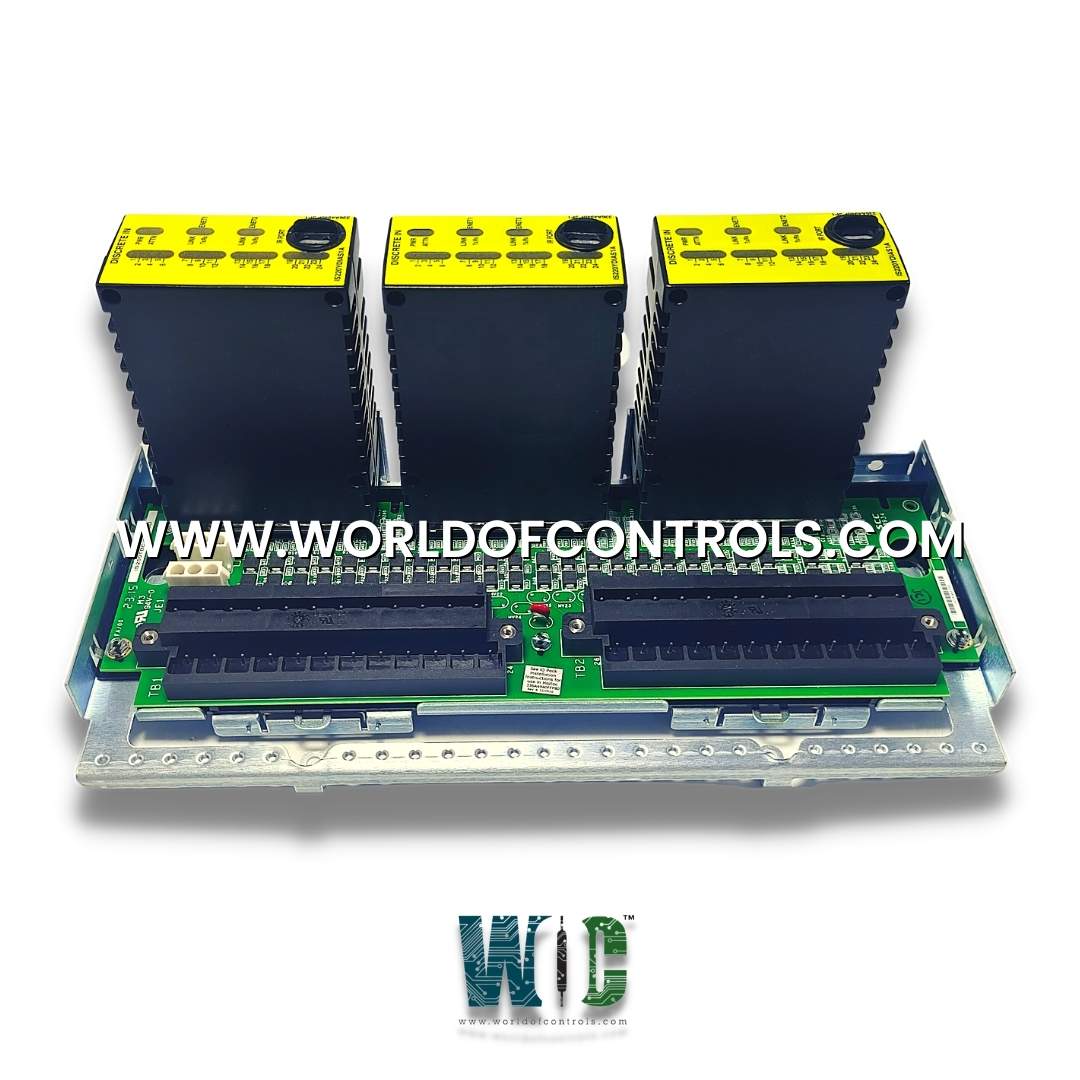
In modern power generation, maintaining consistent and reliable turbine operation is critical. Any failure in control systems can result in costly downtime, safety hazards, and decreased efficiency. One of the key technologies enhancing system reliability in this field is GE’s 125VDC Triple Modular Redundancy (TMR) I/O assembly, widely used in turbine control systems.
Understanding Triple Modular Redundancy (TMR)
Triple Modular Redundancy (TMR) is a fault-tolerant design technique used in critical industrial systems. In TMR, three identical modules perform the same operations simultaneously, and their outputs are continuously compared. If one module fails, the other two modules outvote the faulty one, ensuring uninterrupted system functionality.
The benefits of TMR include:
- Enhanced Reliability: Redundant modules significantly reduce the risk of total system failure.
- Immediate Fault Detection: Failures are detected in real time without interrupting operations.
- Continuous Operation: Systems maintain full functionality even if a module experiences a fault.
TMR is especially important in turbine control systems, where precision, safety, and uptime are non-negotiable.
The Role of GE 125VDC TMR I/O Modules
GE’s 125VDC TMR I/O modules serve as the interface between field devices—such as sensors, actuators, and switches—and the turbine control logic. They ensure accurate data flow and command execution, forming the backbone of turbine control systems.
Key features of these modules include:
- Triple Modular Design: Three synchronized channels provide redundancy.
- High Voltage Capability: 125VDC operation ensures compatibility with industrial turbine systems.
- Robust Diagnostics: Built-in fault detection enables operators to identify issues quickly.
- Seamless Integration: Fully compatible with GE’s Mark VIe control systems commonly used in power plants.
By implementing these modules, turbine operators can greatly reduce the risk of control-related outages.
Applications in the Turbine Industry
GE 125VDC TMR I/O assemblies are widely deployed in the turbine industry to enhance system reliability. Their applications include:
- Sensor Monitoring: Collecting real-time data from temperature, pressure, and flow sensors.
- Control Command Execution: Sending precise commands to actuators, valves, and other turbine components.
- Fault-Tolerant Operation: Maintaining control even if one module experiences a failure.
In industrial environments where uptime is critical, these modules ensure that turbines operate safely and efficiently.
Benefits of Implementing TMR Modules
Adopting GE 125VDC TMR I/O modules offers several operational advantages:
- Reduced Downtime: Redundant channels prevent single points of failure.
- Enhanced Safety: Immediate fault detection minimizes risk of turbine damage.
- Improved System Accuracy: Consistent input/output processing ensures optimal turbine performance.
- Simplified Maintenance: Built-in diagnostics help maintenance teams address issues proactively.
These benefits translate into long-term cost savings, improved operational efficiency, and increased confidence in turbine performance.
Conclusion
In the turbine industry, where reliability and uptime are critical, GE 125VDC Triple Modular Redundancy I/O modules provide a proven solution. By integrating these modules into turbine control systems, operators can achieve enhanced system reliability, fault-tolerant operation, and improved safety.
Investing in TMR technology is more than a technical choice—it is a strategic approach to optimizing plant efficiency and minimizing costly interruptions. With the use of GE’s TMR I/O assemblies, turbine operators can confidently maintain high-performance operations in demanding industrial environments.