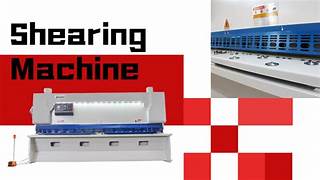
Shearing machines play a pivotal role in modern manufacturing, enabling industries to cut, shape, and process metals with precision and efficiency. These machines transform heavy metal sheets into precise components for construction, automotive, aerospace, and other sectors. By using controlled mechanical force, shearing machines produce straight and clean cuts without excessive waste, making them indispensable in precision engineering.
Understanding Shearing Machines
A shearing machine is a tool used to cut sheet metal or plates by applying a high amount of shear stress. It consists of a moving blade and a fixed blade. When the metal sheet passes between these blades, the machine slices it accurately. Unlike traditional cutting methods, shearing does not require heating or melting, which preserves the metal’s structural integrity.
There are several types of shearing machines: mechanical, hydraulic, and pneumatic. Each type suits different industrial needs. Mechanical shearing machines operate with a flywheel and a crank system. Hydraulic shearing machines use fluid pressure to generate cutting force, offering higher precision for thicker sheets. Pneumatic shearing machines rely on compressed air to control cutting action and are often used for light-duty applications.
Applications of Shearing Machines
Shearing machines are versatile and find applications in numerous industries. In the automotive sector, they cut steel and aluminum sheets for car panels and frames. Aerospace companies use shearing machines to produce lightweight yet strong components for airplanes. Construction industries rely on them for metal roofing, beams, and frameworks. Even small workshops use shearing machines for custom metal projects, demonstrating their adaptability.
Precision engineering benefits greatly from shearing machines. When paired with computer-aided machining (CAM) and design programs, these machines achieve exact measurements, reducing errors and material wastage. Engineers can create complex designs digitally and then execute them accurately with shearing machines, streamlining the production process.
Advantages of Using Shearing Machines
Shearing machines offer several advantages over traditional cutting methods. First, they ensure consistent quality with uniform cuts. This consistency is critical for industries where precision is non-negotiable. Second, they reduce labor costs because the cutting process is automated or semi-automated. Third, shearing machines minimize material waste, which saves costs and promotes sustainability.
Moreover, shearing machines enhance workplace safety. Traditional cutting methods involve hand-held tools or torches, increasing the risk of injuries. Modern shearing machines are equipped with safety guards, sensors, and emergency stops to protect operators. This feature is especially important in large-scale manufacturing where efficiency and safety must go hand in hand.
Integration with Technology
The integration of technology elevates the capabilities of shearing machines. Computer-aided machining and laser cutting machine CNC systems allow operators to control the cutting process with high precision. Digital interfaces enable users to input design specifications, adjust blade speed, and monitor the cutting process in real-time. This integration reduces human error and ensures that each metal sheet is cut to exact specifications.
Laser cutting machine CNC systems complement shearing machines in industries that demand intricate designs. While shearing machines excel at straight cuts, CNC laser cutters handle complex shapes with high precision. Together, they provide a complete solution for modern metal fabrication needs. Manufacturers can switch between shearing and laser cutting seamlessly, optimizing production for both speed and accuracy.
Maintenance and Safety Tips
Maintaining a shearing machine ensures long-term performance. Regular inspection of blades, hydraulic systems, and safety mechanisms prevents breakdowns. Operators must check alignment and lubrication frequently to maintain smooth operation. Worn-out blades should be replaced promptly to maintain cut quality.
Safety is equally important. Operators must wear protective gear, including gloves and goggles, to prevent injuries. Machines should always be turned off during maintenance, and safety guards must remain in place during operation. Proper training for personnel ensures that shearing machines are used efficiently and safely.
Trends in Shearing Technology
Modern shearing machines continue to evolve. Smart sensors, IoT-enabled monitoring, and AI-driven automation are increasingly common. These innovations allow predictive maintenance, real-time performance tracking, and adaptive cutting strategies. Such trends make shearing machines more efficient and cost-effective than ever before.
Sustainable manufacturing practices also influence shearing machine technology. Energy-efficient hydraulic systems and blade designs reduce environmental impact. Manufacturers increasingly favor machines that minimize material waste while maximizing precision. This trend aligns with the global shift toward greener production processes.
Choosing the Right Shearing Machine
Selecting the right shearing machine depends on several factors: the material type, sheet thickness, production volume, and desired precision. Small workshops might prefer compact mechanical shears, while large-scale manufacturers often choose hydraulic or CNC-integrated systems. Consulting with experts ensures that businesses invest in machines that meet both current and future production needs.
Conclusion
Shearing machines are at the heart of modern manufacturing. They provide precision, efficiency, and safety, making them essential in metal fabrication, construction, automotive, and aerospace industries. Integration with computer-aided machining and laser cutting machine CNC systems enhances their capabilities, allowing industries to achieve high-quality results with minimal waste. By understanding their applications, advantages, and technological trends, manufacturers can optimize operations and maintain a competitive edge.