Choosing a new heating system used to be a simple decision. If you lived in a cold climate, you bought a furnace. If you lived in the south, you got a heat pump. But as we move through 2026, the lines have blurred. Modern technology has turned the traditional heat pump vs furnace debate on its head, leaving many homeowners wondering if they should stick with the status quo or make the switch to electric.
The truth is, there isn’t a single “perfect” unit. The right choice depends on your local utility rates, how well your attic is insulated, and how you feel about the “style” of heat in your home. Let’s break down the real-world differences so you can stop guessing and start getting comfortable.
1. The Core Difference: Creating Heat vs. Moving It
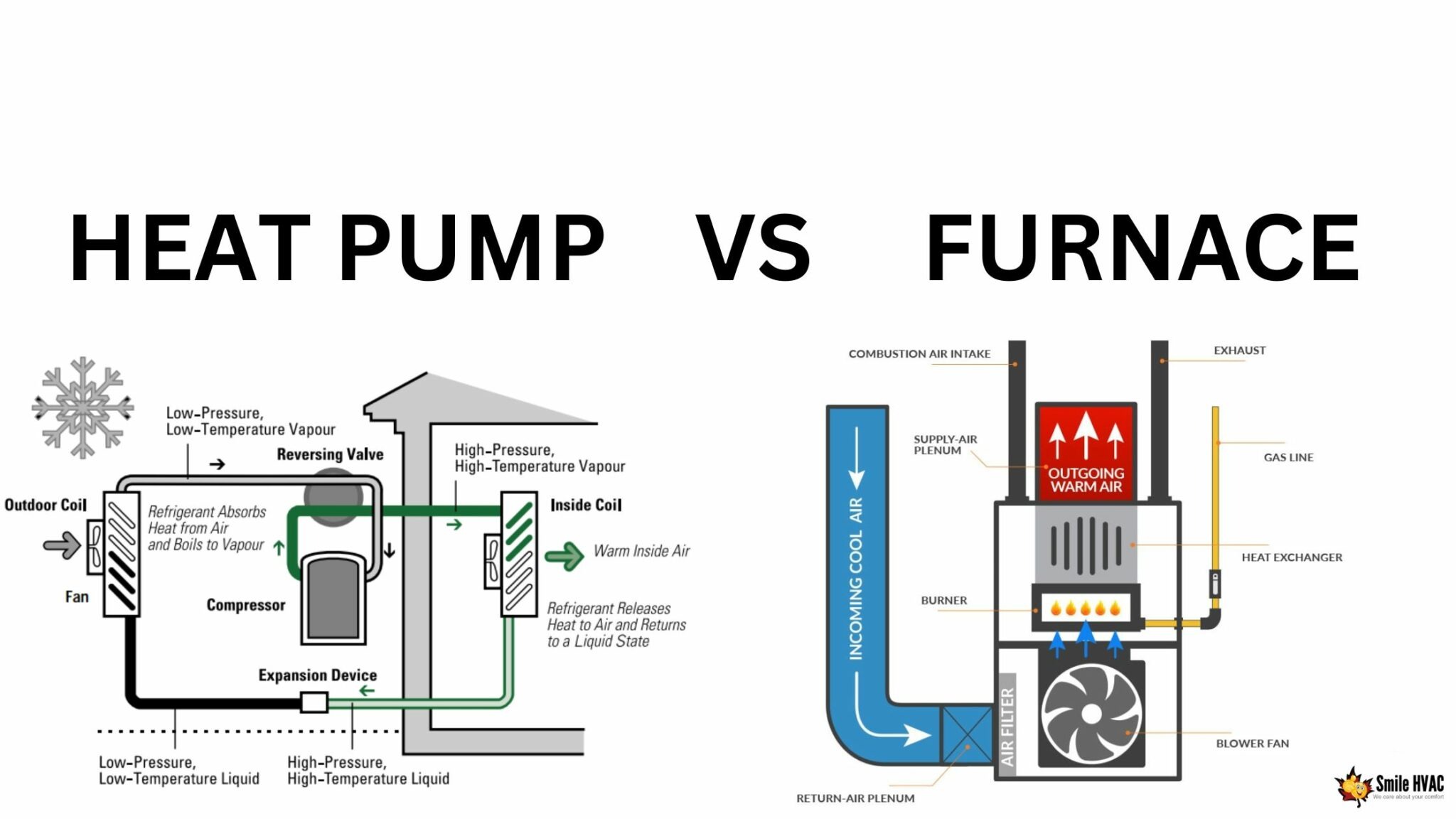
To understand a heat pump vs furnace comparison, you have to look at how they actually work. A furnace is a creator. It burns fuel (natural gas or propane) or uses electricity to create fire and heat. It’s powerful, it’s fast, and it doesn’t care how cold it is outside.
A heat pump is a mover. It doesn’t create heat; it just finds heat outside and pumps it into your house. Even when it’s 30 degrees out, there is still thermal energy in the air. The heat pump “grabs” that energy and moves it indoors. Because it’s moving heat rather than burning fuel to make it, it’s much more efficient.
2. Efficiency and the “Magic” of COP
When we talk about heat pump vs furnace efficiency, the numbers can look a bit strange. A high-efficiency gas furnace might be 98% efficient. That means for every dollar you spend on gas, 98 cents goes into heating your home, and 2 cents goes out the exhaust pipe.
A heat pump, however, can reach efficiencies of 300% or even 400%. How is that possible? Since it isn’t “creating” the energy, it can deliver three to four units of heat for every single unit of electricity it uses. This is known as the Coefficient of Performance (COP). In moderate weather, the heat pump wins the efficiency battle every single time.
3. The “Blast” vs. The “Glide” (Reader Psychology)
One thing people often forget to consider is how the heat actually feels.
- The Furnace: It provides a “blast” of heat. When it turns on, the air coming out of your vents is often 120 to 140 degrees. It heats the house up quickly, then shuts off.
- The Heat Pump: It provides a steady “glide.” The air coming out is usually around 90 to 100 degrees. It feels cooler to the touch (closer to your body temperature), but it runs for longer cycles to maintain a perfectly even temperature.
If you like that “toasty” feeling of standing over a vent, a heat pump might take some getting used to. But if you hate the “hot and cold” swings of a traditional system, you’ll love the steady comfort of a heat pump.
4. Cost and Local Reality
Finding the best heating system for home use isn’t just about the equipment; it’s about your zip code.
In 2026, natural gas prices have remained relatively stable, but electricity is becoming “greener” and more incentivized. If you live in an area with high gas prices and low electric rates, the heat pump is a financial no-brainer. However, in places like the Midwest where gas is cheap and winters are brutal, a furnace still has a strong foothold.
If your current system is struggling during a cold snap, getting an inspection from professional heating service in Denver or wherever you’re located, is vital. A pro can run a “load calculation” to see if your home’s ductwork and insulation are actually ready for a heat pump.
5. The “Dual-Fuel” Compromise
If you can’t decide, you don’t actually have to. Many homeowners are now opting for a Hybrid or Dual-Fuel system.
This setup uses a heat pump for most of the year. It handles all your cooling in the summer and your heating during the fall and spring. When the temperature drops below a certain point (usually around 25 or 30 degrees), the system automatically switches over to a gas furnace. It’s the “best of both worlds” approach that hedges your bets against rising energy prices.
Rule of Thumb: The 15-Year Test
- Choose a Furnace if: You have cheap natural gas, your winters regularly stay below zero, and you want a system that could last 20+ years.
- Choose a Heat Pump if: You want to get rid of your gas bill, you care about your carbon footprint, and you want one single system to handle both heating and cooling.
FAQ: Solving the Big Questions
Q: Do heat pumps still work in the snow? A: Yes! Modern “Cold Climate” heat pumps (ccASHPs) can now extract heat even when it’s -15°F outside. You no longer need to live in Florida to own one. However, their efficiency does drop as it gets colder, so they have to work harder.
Q: Is it cheaper to install a furnace or a heat pump? A: Usually, a furnace is cheaper to buy upfront. However, a heat pump replaces both your furnace and your air conditioner. If you need to replace both units at the same time, a heat pump is often the more affordable “all-in-one” solution.
Q: Are there still government rebates for heat pumps in 2026? A: Absolutely. Under current energy acts, many homeowners can still claim tax credits or instant rebates up to $2,000 or more. Some local utilities are even offering “fuel switching” bonuses to encourage people to move away from gas.
Q: Do I need to change my ductwork to switch to a heat pump? A: Not necessarily. Most heat pumps can use your existing furnace ducts. However, because heat pumps move more air at lower temperatures, a technician should check to ensure your ducts are sized correctly so the system doesn’t “whistle” or struggle to breathe.
Final Thought
The “better” system is the one that fits your budget today and your lifestyle tomorrow. If you’re looking for absolute reliability in a blizzard, the furnace remains king. But if you’re looking toward a future of high efficiency and lower carbon emissions, the heat pump is the clear winner.