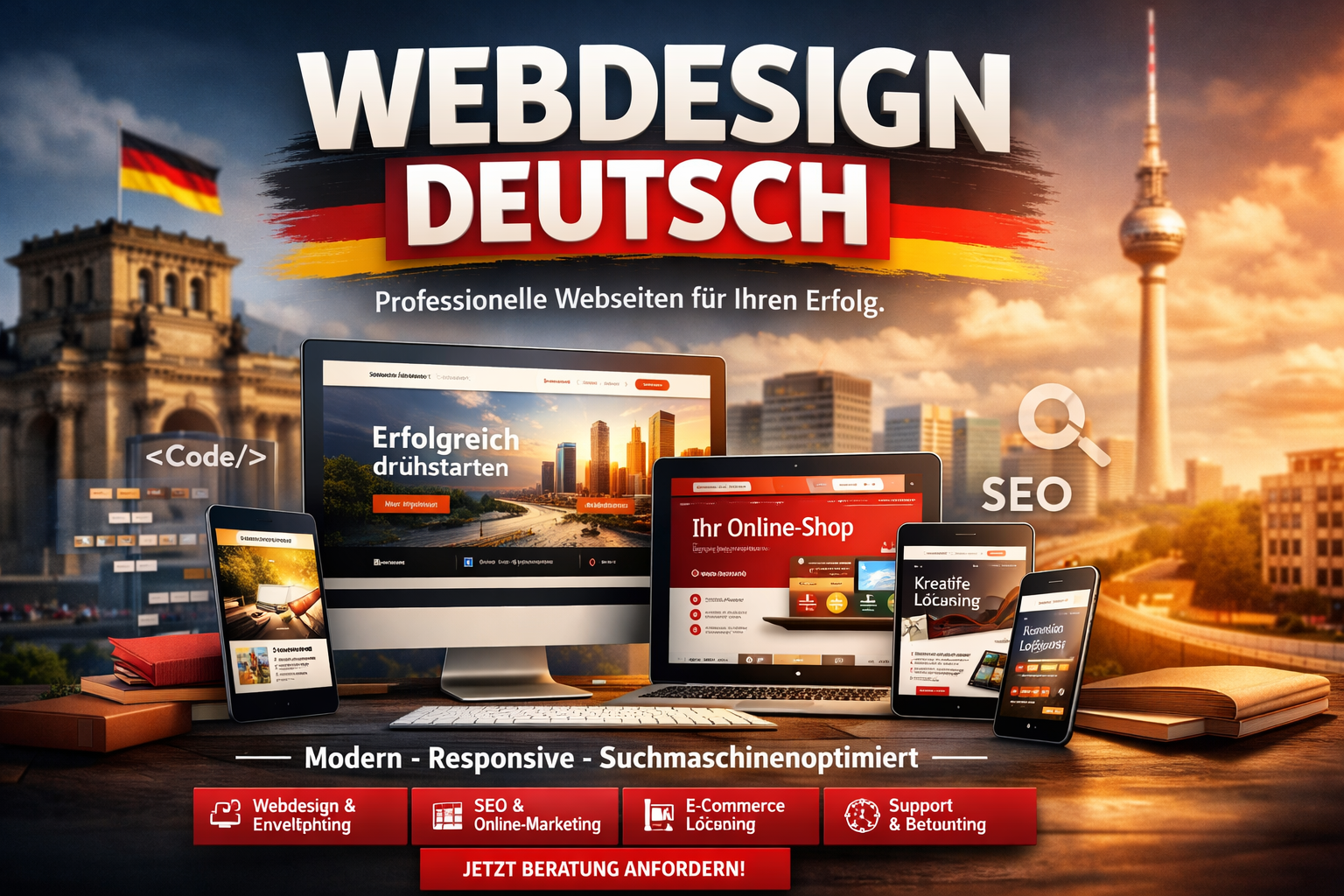
Webdesign Deutsch: Why Your Website Is Your Strongest Sales Tool
I’ve seen it many times: a company invests in advertising, social media, even paid campaigns — but their website quietly destroys all that effort.
And the reason is simple.
The design doesn’t match German expectations.
If you want to compete seriously in Germany, webdesign deutsch is not just about language. It’s about mindset. German users don’t get impressed easily. They evaluate. They compare. They check details.
And within seconds, they decide whether your business feels trustworthy.
First Impressions Matter More in Germany
In many markets, flashy visuals work. In Germany? Not really.
Here, people value:
- Structure
- Transparency
- Accuracy
- Professional presentation
- Clear information
If your website looks overloaded, confusing, or slow, visitors won’t complain. They’ll just leave.
And Google notices that.
Bounce rate, session time, interaction signals — these behavioral metrics influence rankings. A poorly structured website can silently cost you visibility.
That’s why serious webdesign deutsch focuses on clarity before creativity.
What Makes German Web Design Different?
From my experience, German websites that perform well usually share five characteristics.
1. Clear Structure
German users want to find information fast. No guessing games.
Navigation must be logical. Services should be explained properly. Pricing shouldn’t be hidden. Contact details must be easy to find.
Clarity builds trust.
2. Performance Is Non-Negotiable
If your website takes more than three seconds to load, you’re already losing potential customers.
Speed is not only a ranking factor — it’s a credibility factor.
Optimized images, clean coding, and efficient hosting are part of professional web design. When performance improves, user behavior improves — and Google rewards that.
3. Legal Transparency
Germany is strict about data protection.
Impressum.
Datenschutzerklärung.
Cookie consent.
If these are missing or poorly implemented, users lose confidence instantly. Compliance is not optional — it’s expected.
4. Mobile Experience
Even conservative industries now receive most traffic via mobile devices.
A responsive layout isn’t enough anymore. Buttons must be clickable. Text must be readable. Forms must work smoothly.
Google uses mobile-first indexing. That means your mobile version defines your ranking performance.
5. Subtle but Strong Conversion Strategy
German users dislike aggressive selling.
But they appreciate guidance.
A professional webdesign deutsch approach integrates:
- Clear call-to-actions
- Trust elements
- Certifications
- Testimonials
- Structured service explanations
It feels helpful — not pushy.
That difference increases conversions dramatically.
Why Design and SEO Must Work Together
One of the biggest mistakes I see is separating SEO from web design.
The designer builds something visually appealing.
The SEO expert tries to “optimize it later.”
That rarely works.
Search engines evaluate:
- Page hierarchy
- Content depth
- Internal linking
- Loading speed
- User engagement
If your website structure is wrong from the beginning, SEO becomes limited.
Modern web design must consider Google’s logic from day one.
How Google.de Evaluates Your Website
Google doesn’t rank websites. It ranks experiences.
When someone searches for services in Germany, Google analyzes:
- Does this page answer the query clearly?
- Is it fast?
- Is it mobile-friendly?
- Do users stay on the page?
- Is the content helpful and original?
The combination of user behavior and technical performance defines long-term ranking success.
That’s why simply copying competitors never works. Google recognizes patterns. It rewards originality and value.
Real Competitive Advantage: Depth Over Decoration
Many competitors use generic templates.
They look modern — but they feel empty.
High-performing German websites go deeper. They:
- Explain processes
- Provide real examples
- Answer questions before users ask
- Show authority through content
If your website demonstrates expertise, users trust you faster.
And trust increases dwell time.
And dwell time improves ranking.
Everything connects.
My Personal Approach to Webdesign Deutsch
When building a website for the German market, I focus on three main goals:
- Make it easy to understand.
- Make it technically clean.
- Make it conversion-ready.
Before design even starts, I analyze:
- Search intent
- Competitor weaknesses
- Keyword structure
- User expectations
Then I build the structure around that.
Not around design trends.
Not around personal taste.
Around strategy.
That’s the difference between a beautiful website and a profitable one.
Long-Term Results Instead of Short-Term Traffic
A strong website becomes a long-term growth engine.
With consistent optimization, professional webdesign deutsch can:
- Improve Google visibility
- Increase inquiries
- Strengthen brand perception
- Reduce dependency on paid ads
Instead of constantly chasing traffic, your website starts attracting it organically.
That’s sustainable growth.
FAQ
1. What is webdesign deutsch and why is it important?
Webdesign deutsch means creating websites specifically optimized for the German market. It includes language accuracy, structured design, fast loading speed, mobile responsiveness, and legal compliance. German users value clarity and professionalism. A website tailored to these expectations builds trust and improves visibility on Google.de.
2. How does web design affect Google rankings in Germany?
Web design directly impacts ranking because Google measures user experience. If your website loads quickly, works well on mobile devices, and provides clear information, users stay longer. Positive engagement signals help improve rankings over time.
3. How can better web design increase customer inquiries?
When visitors understand your services quickly and feel confident about your credibility, they are more likely to contact you. Clear structure, visible contact options, and trust elements make decision-making easier for potential clients.
4. What are the most important technical factors for German websites?
Key factors include fast loading times, mobile optimization, secure HTTPS connection, structured headings, and legal compliance. These elements improve both user trust and search engine performance.
5. How long does it take to see ranking improvements?
Initial improvements can appear within a few weeks after technical optimization. However, sustainable ranking growth typically takes three to six months, depending on competition and consistency.