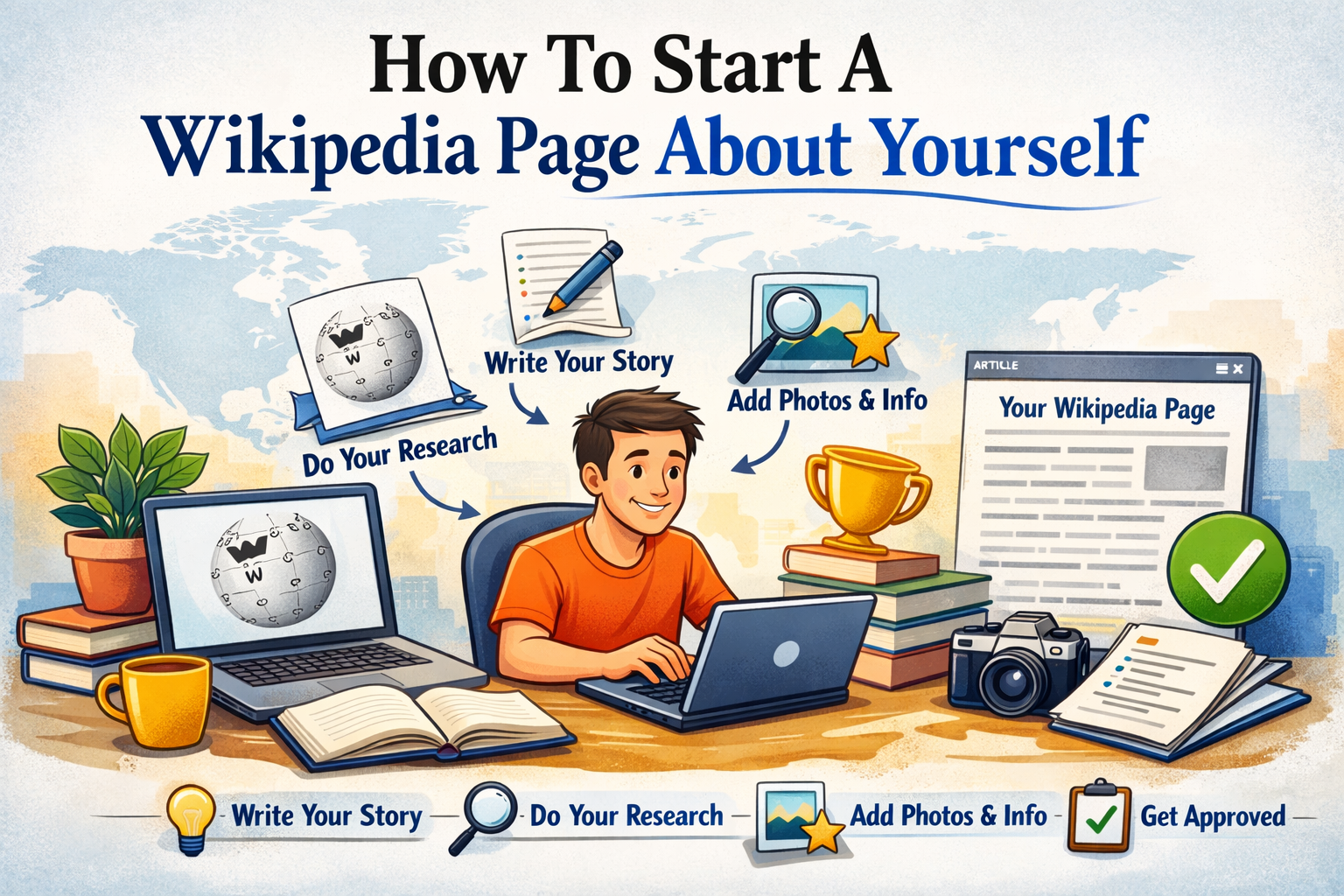
Have you ever Googled your own name and wondered, “Why isn’t there a Wikipedia page about me?” You’re not alone. In today’s digital world, a Wikipedia biography has become the modern equivalent of a brass plaque on a library wall—it signals that you’ve arrived. But here’s the catch: building your own Wikipedia page isn’t as simple as typing up your resume and hitting “publish.” It’s more like trying to get someone else to build a statue of you while you’re standing right there holding the hammer.
Creating a Wikipedia page about yourself is a delicate dance between showcasing your achievements and strictly following the platform’s rules. Many people hire professional wikipedia writers to navigate this complex process. Whether you go solo or seek help, this guide will walk you through everything you need to know about wikipedia page creation for personal biographies.
Are You Actually Wikipedia-Worthy?
Let’s start with a tough question: Does the world need a Wikipedia page about you? Wikipedia’s notability guidelines are stricter than a bouncer at an exclusive club. You can’t just walk in because you want to—you need to prove you belong there.
Wikipedia considers someone “notable” if they’ve received significant coverage in multiple reliable sources that are independent of the subject. What does that mean in plain English? You need newspaper articles, magazine profiles, book mentions, or features in reputable publications—written by other people, not your company newsletter or your cousin’s blog.
Ask yourself: Have major media outlets covered your work? Have you won awards that come with independent verification? Have you made contributions that others have documented? If you’re struggling to find third-party sources talking about you, Wikipedia probably isn’t ready for you yet.
The Big “Don’t” – Understanding Conflict of Interest
Here’s where things get tricky. Wikipedia strongly discourages people from writing about themselves. Think about it: Would you trust a job applicant to write their own reference letter? Probably not.
When you write about yourself, you have what Wikipedia calls a conflict of interest (COI). Even with the best intentions, it’s nearly impossible to maintain the cold, detached tone Wikipedia demands. You might think you’re being modest, but your version of “humble” might look like bragging to impartial editors.
This doesn’t mean you can’t create a page about yourself—it means you must be extra careful. Some people choose to hire professional wikipedia writers who understand the platform’s intricacies and can maintain the required neutrality. If you go the DIY route, you’ll need to check your ego at the door.
Gathering Your Ammunition: Finding Reliable Sources
Before writing a single word, become a detective. Your mission: find every reliable, independent source that mentions you.
What counts as reliable? Think major newspapers, academic journals, books from established publishers, and reputable magazines. What doesn’t count? Your personal website, your social media profiles, press releases you wrote, or interviews where you’re the one talking.
Organize these sources carefully—they’re the foundation your entire page will rest on. For every fact you want to include, you’ll need a source to back it up. No sources, no page.
Creating Your Account and Building Credibility
If you’re starting from scratch, create a Wikipedia account with a username that doesn’t scream “this is my company” or “I’m famous!”. Usernames like “MarketingTeamAtXYZ” or “JohnSmithOfficial” are red flags that will get you blocked faster than you can say “conflict of interest.”
Before diving into page creation, spend time learning the ropes. Make small edits to existing articles, fix typos, add citations, and get comfortable with Wikipedia’s editing tools. This isn’t busywork—it builds credibility. When you finally submit your own page, editors can see you’re a contributing community member, not just a self-promoter passing through.
Drafting Your Page: The Sandbox Method
Never create a wikipedia page directly in Wikipedia’s main space. That’s like building a house in the middle of the highway. Instead, use your sandbox—a personal drafting area attached to your account.
Here, you can build your page piece by piece without public scrutiny. Start with a simple structure:
- Lead section: Who you are in a nutshell
- Early life and education: Where you came from
- Career: What you’ve done
- Awards and recognition: How others have acknowledged you
- Personal life: Only what’s relevant and verifiable
- References: All those sources you collected
Writing with Ice in Your Veins: The Neutrality Challenge
This is the hardest part. Neutral point of view isn’t just a guideline—it’s Wikipedia’s religion. You need to write about yourself as if you’re describing a stranger.
Instead of “John revolutionized the industry with his groundbreaking approach,” write “John developed a new method for X, which was covered by Y publication.” Let the facts speak. Let your sources do the bragging.
Avoid any language that feels promotional. Words like “famous,” “renowned,” “pioneering,” or “celebrated” will trigger alarm bells. Stick to what the sources say, not how you feel about what they say.
Submitting and Surviving the Review Process
When your draft is ready, you’ll submit it through Wikipedia’s Articles for Creation (AfC) process. This sends your page to a queue where volunteer reviewers will examine it.
Here’s the uncomfortable truth: review can take weeks or even months. Wikipedia runs on volunteer power, not customer service timelines. Be patient. Don’t pester reviewers. Don’t resubmit the same version repeatedly.
During review, your page will be checked for notability, neutrality, and source quality. Reviewers might leave feedback or ask for changes. Treat their comments like gold—they’re telling you exactly what needs fixing.
What If It Gets Rejected?
Rejection stings, but it’s not the end. Most pages get rejected at least once. Common reasons include insufficient sources, promotional tone, or failure to establish notability.
Read the feedback carefully. Did reviewers say your sources aren’t strong enough? Find better ones. Did they flag certain sections as promotional? Rewrite them colder. Did they question your notability? Honestly assess whether you’re ready.
Sometimes, rejection means you need more time. Let your career develop, accumulate more coverage, and try again in a year. Other times, it means you need help. Many people turn to experienced wikipedia writers who specialize in wikipedia page creation and know exactly how to address reviewer concerns.
Conclusion
Creating a Wikipedia page about yourself is like planting a tree. You can’t just stick a branch in the ground and expect it to grow—you need the right soil, the right conditions, and lots of patience. The process requires meticulous attention to sourcing, unwavering commitment to neutrality, and respect for Wikipedia’s community standards.
Remember that Wikipedia isn’t a personal website or a marketing tool—it’s an encyclopedia with a mission to document notable topics through reliable sources. If you truly meet those standards, your page will eventually find its place. And if you’re not quite there yet, that’s okay too. Keep doing remarkable things, let others document them, and let the page come to you when the time is right.
Whether you tackle this yourself or enlist professional help, the goal remains the same: a well-crafted, accurate, and neutral representation of your place in the world. After all, isn’t that what a good encyclopedia entry should be?