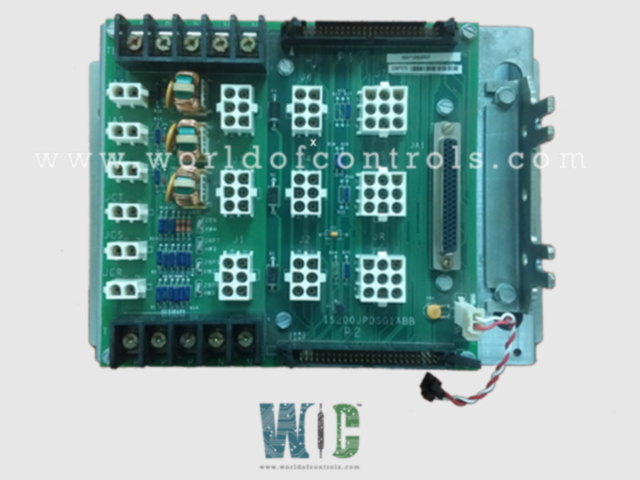
Power Distribution Boards form the electrical foundation of turbine control panels in GE Mark VI and VIe systems, channeling stable power to processors, I/O modules, relays, and field devices under extreme conditions. These boards integrate sophisticated protection circuits, monitoring relays, and redundant power paths to handle voltage fluctuations common in power plants. By optimizing energy delivery, they directly enhance safety protocols, streamline load balancing, and maximize operational uptime critical for continuous power generation.
In turbine environments where temperatures exceed 50°C and vibrations persist 24/7, unreliable power distribution risks cascading failures—from processor resets to emergency trips. Advanced boards mitigate these threats through intelligent design, ensuring control systems remain responsive during grid disturbances or generator faults.
Core Components
Modern Power Distribution Boards feature multi-phase AC/DC converters generating isolated rails at 5V logic, 24V field power, and 125VDC for critical relays. High-capacity busbars distribute current evenly, while circuit breakers (MCBs/MCCBs), fast-acting fuses, and metal oxide varistors (MOVs) provide layered overcurrent and surge protection. Voltage monitoring relays with current transformers (CTs) track real-time parameters, feeding data to plant SCADA via Modbus or IONet protocols.
Additional elements include earth leakage circuit breakers (ELCBs) for ground fault detection and thermal sensors preventing cabinet overheating. Conformal coatings on PCBs resist humidity and dust ingress, achieving IP54+ ratings suitable for turbine halls.
Enhancing Safety
Safety begins with ground fault interruption systems that detect imbalances in milliseconds, tripping breakers before arcs develop into flash hazards. Selective coordination ensures only the faulted circuit isolates, preserving power to protection relays and HMIs during incidents. Arc-flash mitigation via zone-selective interlocking reduces incident energy levels by 50-70%, complying with NFPA 70E standards.
Personnel safety improves through dead-front designs eliminating exposed terminals, touch-safe barriers, and keyed interlocks preventing energized maintenance. Integrated surge suppressors clamp transients from lightning or capacitor switching, protecting sensitive turbine electronics rated at just 15-24VDC. Field data shows these features cut electrical incidents by 40% in high-voltage environments.
Load Management Capabilities
Dynamic load shedding prioritizes essential loads—emergency trips, vibration monitors—during brownouts, using programmable relays to shed non-critical I/O within 100ms. Phase-balancing algorithms rotate power across three-phase inputs, preventing neutral overloads in unbalanced turbine cabinets drawing 50-200A total. Digital power meters provide kW demand profiling, enabling predictive load adjustments before thermal limits trigger.
Hot-swappable modules allow redundancy upgrades without shutdowns; dual supplies automatically transfer on under-voltage detection. Capacity planning tools forecast expansion needs, supporting up to 300% overload for startup surges while maintaining steady-state efficiency above 95%.
Improving Uptime
Redundant A/B power paths with automatic transfer switches (ATS) achieve 99.99% availability, with mean time to repair under 15 minutes via front-accessible breakers. Predictive diagnostics flag degrading fuses or CT saturation via event logs, enabling condition-based maintenance that extends MTBF beyond 100,000 hours. Self-healing features like auto-reclose for transient faults reduce nuisance trips by 60%.
In Mark VI panels, boards interface directly with PDIO modules, sharing telemetry for closed-loop voltage regulation. During grid events, ride-through capability sustains controls for 500ms, bridging generator recovery without turbine rollback.
Integration in Turbine Panels
These boards mount seamlessly in 19-inch VME racks alongside processors and I/O packs, using standardized J1/J2 connectors for plug-and-play installation. Simplex configurations suit smaller Frame 6B turbines, while duplex/TMR setups provide triple redundancy for 7FA/9HA-class units. Legacy compatibility allows Mark V-to-VIe drop-in replacements, preserving DIN rail layouts and signal wiring.
Commissioning via front-panel LCDs and Ethernet ports simplifies voltage balancing and breaker testing. Low EMI emissions ensure clean IONet communications, while compact footprints maximize panel density without airflow obstruction.
Real-World Performance Impact
In a Texas combined-cycle plant, upgraded boards handled a 30% load spike during summer peaks without derates, boosting annual MWh by 2.5%. Middle Eastern gas turbines report zero power-related trips post-installation, with safety audits confirming arc-flash categories reduced from 2 to 0. Maintenance costs dropped 35% through predictive alerts preempting failures.
Conclusion
Power Distribution Boards elevate turbine control panels by delivering unmatched safety, intelligent load management, and mission-critical uptime essential for modern power generation. For reliable performance, the IS200JPDSG1AEC Power Distribution Board from World of Controls stands out as a trusted solution from a premier GE components supplier.
Check Also – IS200IGEHG1A IGBT Passive Interface Board