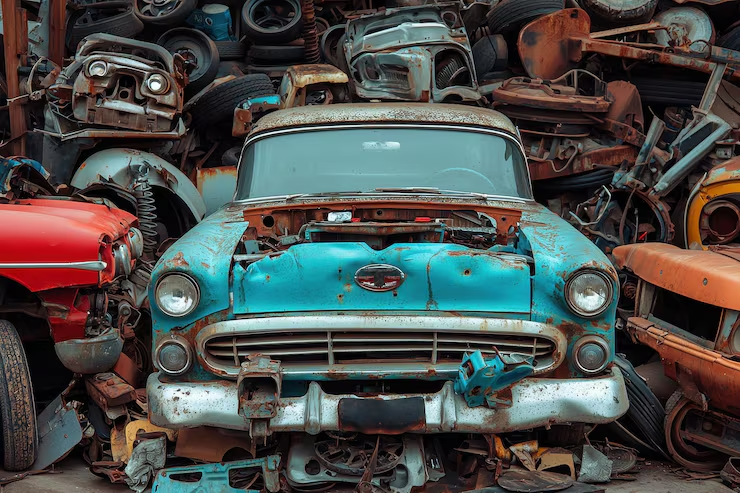
Selling a scrap car privately in Sydney can look simple on the surface. Many owners believe that listing the vehicle online and waiting for a buyer will bring a better return. In reality, private sales of damaged or end-of-life vehicles involve more work, more responsibility, and more risk than most people expect.
A scrap car is very different from a used car that still runs well. These vehicles often have major faults, missing parts, or legal limits that affect how they can be sold. Before choosing the private route, it is important to understand how the process works in Sydney and what is expected from you as the seller.
This guide explains the key points you should know before making that decision.
What Makes a Car a Scrap Vehicle
A car is usually considered scrap when repairs cost more than the vehicle is worth. This often includes cars with:
- Engine or transmission failure
- Severe accident damage
- Rust affecting structure
- Flood damage
- Missing key components
- Failed roadworthiness inspections
Even if the car still starts, it may still be classed as scrap if it cannot be legally driven without major repairs. Buyers view these vehicles as parts sources or metal, not as transport.
How Private Scrap Car Buyers Think
Private buyers for scrap vehicles usually fall into a few groups. Some want parts for repairs. Others rebuild cars for resale. Some buy only for metal recovery.
These buyers calculate offers based on facts, not appearance. They look at:
- Weight of the vehicle
- Demand for usable parts
- Model popularity
- Cost of transport and removal
- Current metal market rates
Emotional attachment does not influence their decision. Because of this, sellers often feel disappointed when offers come in lower than expected.
Setting a Realistic Asking Price
Pricing is one of the biggest challenges when selling privately. Online listings often show high asking prices, but that does not mean cars sell for those amounts.
A realistic price depends on:
- Whether the car is complete
- Whether it can roll or steer
- Registration status
- Damage level
- Demand for that model
Older vehicles with rare parts may attract more interest. Common models with heavy damage often receive lower offers.
Checking recent local sales helps, but final prices are usually set after inspection.
Legal Duties of Private Sellers in NSW
Selling a scrap car privately still carries legal responsibility. Even when people search for cash for scrap cars sydney, the law does not change for private sellers. You must follow NSW rules related to ownership proof, registration status, and proper disposal. Ignoring these duties can lead to fines, disputes, or future liability if the vehicle is misused after sale.
Proof of Ownership
You must show that the vehicle belongs to you. Buyers may ask for:
- Registration papers
- Old service records
- Photo identification
Without proof, many buyers will walk away.
Registration and Disposal
If the car is registered, you must lodge a Notice of Disposal with Transport for NSW. If it is unregistered, this must be stated clearly in your listing and discussions.
Number plates may need to be removed depending on the situation.
Time Commitment and Delays
Private selling often takes longer than expected. Tasks include:
- Writing listings
- Answering calls and messages
- Organising inspections
- Dealing with price negotiations
- Completing paperwork
Many enquiries lead nowhere. Some buyers do not show up. Others inspect the car and then stop responding.
If the car does not drive, inspections become harder to arrange.
Safety Considerations During Inspections
Allowing strangers to inspect a scrap vehicle carries risk. This is especially true when inspections take place at home.
Common issues reported by sellers include:
- Pressure to accept lower offers
- Arguments over condition
- Buyers removing parts during inspection
- Disagreements over towing arrangements
Daytime inspections and having another person present can reduce risk, but caution is still needed.
Payment Risks in Private Transactions
Private sales usually involve cash or bank transfer.
Cash payments require careful counting and confirmation. Bank transfers can be delayed or cancelled if not confirmed properly.
The vehicle should never be released until payment is fully cleared. Keys, paperwork, and access should stay with you until that point.
Towing and Removal Problems
Most scrap vehicles are not roadworthy. This means towing is required.
In private sales, removal is usually the buyer responsibility. Issues arise when:
- Buyers arrive without proper equipment
- Removal is delayed after payment
- Towing costs are used to reduce the agreed amount
Clear agreement on removal timing is important to avoid problems.
Environmental Responsibility of Vehicle Storage
Scrap vehicles contain fluids that can harm the environment. These include oil, coolant, fuel, and brake fluid.
If a car leaks onto your property, you may be responsible for cleanup. Local councils can issue notices if vehicles cause environmental harm.
When Private Selling Does Not Suit the Situation
Private selling is not suitable in every case. It may not suit if:
- The car has severe damage
- You need removal without delay
- You want minimal contact with buyers
- The vehicle is incomplete or unregistered
In such cases, the time and effort may outweigh the outcome.
Final Thoughts
Selling a scrap car privately in Sydney is possible, but it requires patience, awareness, and responsibility. It is not the same as selling a standard used vehicle. Understanding legal duties, pricing reality, safety concerns, and paperwork requirements helps reduce risk.
Before listing your vehicle, take time to consider whether private selling fits your situation. A clear understanding from the start helps avoid disputes, delays, and disappointment later.