Introduction
Modern power generation relies heavily on gas and steam turbines operating under tightly controlled conditions. To maintain efficiency, safety, and reliability, turbine systems depend on precise communication between sensors, controllers, and actuators. This communication is managed through signal management, a core function in turbine control architecture that ensures all electrical signals remain accurate and stable throughout the system.
Even minor signal distortion can lead to incorrect readings or delayed responses, which may affect turbine performance or trigger unsafe operating conditions.
Understanding Signal Management in Turbine Systems
Signal management refers to the process of collecting, conditioning, transmitting, and distributing electrical signals across turbine control networks. These signals originate from field instruments measuring parameters such as:
- Temperature
- Pressure
- Vibration
- Shaft speed
- Flow rates
Once collected, these signals must be transmitted reliably to the control system for processing. Because turbines operate in electrically noisy and high-temperature environments, maintaining signal integrity is a major engineering challenge.
Key Challenges in Turbine Signal Transmission
Turbine control systems are exposed to several conditions that can degrade signal quality:
Electrical Noise and Interference
High-power generators and switching equipment create electromagnetic interference that can distort weak control signals.
Voltage Variation
Different components in a turbine system may operate at different voltage levels, requiring proper adaptation and regulation.
Long-Distance Signal Loss
Signals often travel through long cable routes, leading to attenuation or weakening over distance.
System Isolation Requirements
Sensitive control electronics must be protected from high-energy circuits to prevent damage or malfunction.
Role of Buffer Cards in Signal Stability
To address these challenges, turbine systems use signal conditioning and buffering devices commonly known as buffer cards. These components act as intermediaries between field devices and the central control system.
Buffer cards perform several essential functions:
- Strengthening weak electrical signals
- Standardizing voltage levels between modules
- Isolating sensitive electronics from interference
- Distributing signals to multiple processing channels
By performing these tasks, buffer cards ensure that control systems receive clean and reliable data for decision-making.
Multi-Voltage Buffer Technology in Turbine Systems
Modern turbine control platforms often integrate multi-voltage buffer technology to handle signals from diverse sources. Since industrial sensors and control modules may operate at different voltage standards, compatibility becomes a key requirement.
In this context, advanced buffer cards play a vital role in bridging voltage differences while maintaining signal clarity and system stability. They are widely used in gas turbines, steam turbines, and combined-cycle power plants where continuous operation is critical.
Function of Advanced GE Buffer Cards in Turbine Control
Within turbine control systems developed by General Electric, buffer cards are designed to support high-reliability signal management. These components are engineered to:
- Condition and amplify incoming signals
- Convert and match multiple voltage levels
- Provide electrical isolation between circuits
- Distribute signals to monitoring and control modules
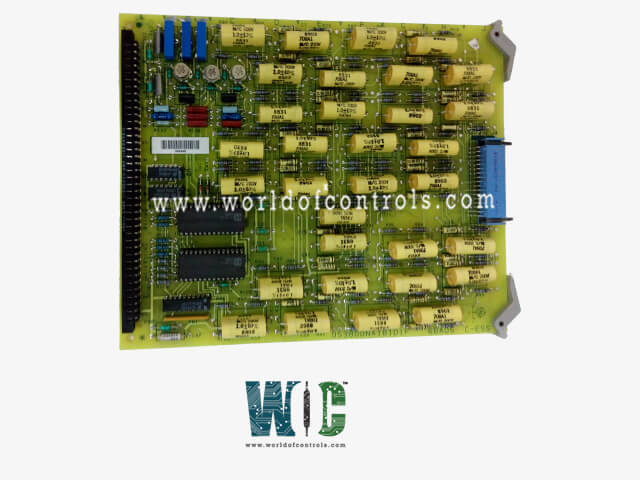
A key example is the multi-voltage buffer card used in GE turbine control systems. It ensures that signals from field instruments are accurately transmitted to the turbine control unit without degradation or interference.
Importance in Power Generation Reliability
Reliable signal management directly impacts turbine performance and plant safety. Inaccurate or unstable signals can lead to:
- Incorrect fuel control
- Poor load regulation
- Mechanical stress on turbine components
- Unexpected shutdowns
By maintaining signal integrity, buffer cards contribute to smoother turbine operation, reduced maintenance needs, and improved system uptime.
Conclusion
Signal management is a critical foundation of turbine control systems, ensuring that data flows accurately between all components of the plant. In demanding industrial environments, where electrical noise and voltage variation are constant challenges, buffer cards play an essential role in stabilizing and protecting signals.
Through proper signal conditioning, isolation, and voltage management, these components help ensure that turbine systems operate safely, efficiently, and reliably—supporting the continuous generation of power in modern energy infrastructure.