How Mold Quietly Damages Rental Properties
Mold is one of the most damaging and costly conditions that can develop at any rental property, and it almost always starts invisibly. The early stages of mold growth happen behind walls, under flooring, in HVAC systems, and in concealed corners where humidity has been elevated for extended periods. By the time visible spots, smells, or guest complaints make the issue apparent, significant remediation work is usually required and bookings often have to be paused while professional treatment occurs.
The financial impact of a serious mold problem routinely exceeds five thousand dollars and can climb into tens of thousands for properties with extensive contamination. Beyond direct remediation costs, mold incidents typically generate cancelled bookings, refund obligations, and review damage that extends for months. Insurance coverage for mold is often limited or excluded entirely from standard policies, leaving hosts to absorb the full cost. Prevention through environmental management is therefore not just a quality issue but a meaningful business protection.
The Direct Link Between Humidity and Mold Growth
Mold growth requires three conditions simultaneously: spores, organic material, and moisture. Spores exist in the air essentially everywhere and cannot be eliminated. Organic material is present in nearly every building in the form of wood, drywall paper, fabrics, and similar substances. The only condition hosts can practically control is moisture, which means humidity management is the central lever for mold prevention.
Sustained humidity above 60 percent dramatically increases mold risk, and humidity above 70 percent makes growth nearly inevitable in most building materials. Bathrooms after long showers, kitchens during cooking, basements with poor ventilation, and entire properties in coastal or tropical climates all routinely exceed these thresholds without active intervention. Without continuous humidity measurement, hosts have no way to know when these conditions have developed or how often they recur, making prevention impossible to manage systematically.
How Smart Sensors Catch Mold Conditions Early
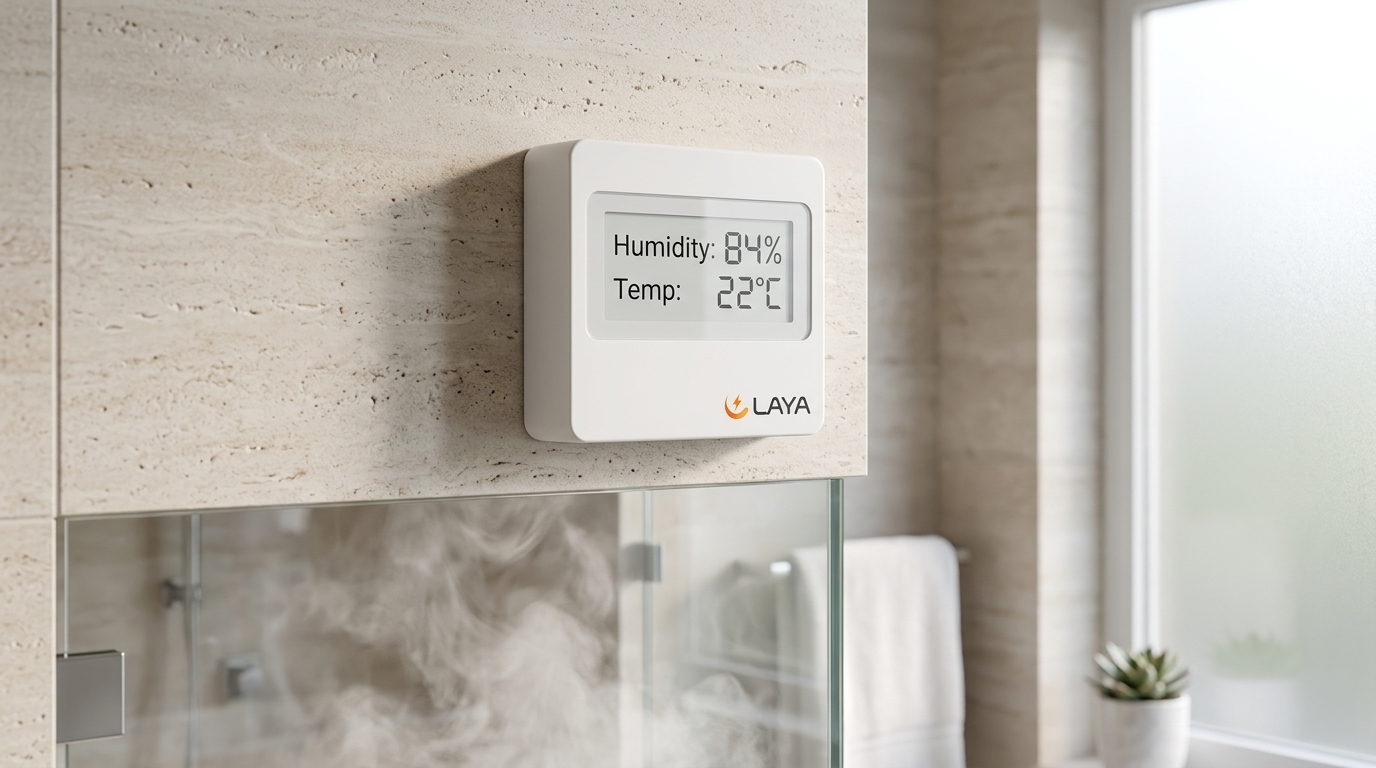
Modern environmental sensors monitor humidity continuously and report readings in real time through a host-facing dashboard. When humidity climbs above the configured threshold, the system sends an immediate alert. Hosts can then take action before the elevated humidity persists long enough to support mold growth. Possible interventions include running HVAC dehumidification cycles, encouraging guest behaviors like using bathroom exhaust fans during showers, deploying portable dehumidifiers in problem areas, or addressing underlying ventilation issues at the property level.
Beyond real-time alerts, historical humidity data reveals patterns that may otherwise remain invisible. A property that consistently shows elevated humidity in a particular room reveals a localized issue that warrants targeted attention, whether through additional ventilation, relocated furniture to improve airflow, or specific maintenance work. Properties with consistent humidity issues during certain seasons benefit from seasonal protocols that pre-empt problems before they develop. Layla’s humidity and mold monitoring consolidates these capabilities into a single device that supports both reactive alerts and longer-term pattern analysis.
High-Risk Areas in Most Rental Properties
Some areas of any rental property are inherently higher-risk for mold development and warrant particular attention. Bathrooms generate sustained humidity from showers and baths and frequently lack adequate ventilation, making them the single most common location for mold issues. Kitchens produce significant humidity from cooking and dishwashing, particularly when range hoods are not used or are venting into the same space rather than outside. Basements and other below-grade spaces collect moisture from groundwater seepage and lack the natural ventilation of above-grade areas.
HVAC systems themselves can become mold sources when condensate drain lines clog or insulation accumulates moisture. Properties with older HVAC equipment, properties in humid climates, and properties with limited natural ventilation all face elevated risk and warrant careful sensor placement. Multiple sensors covering kitchens, bathrooms, and any below-grade or poorly-ventilated rooms provide better coverage than a single unit in a central living area, particularly in properties with documented humidity issues or known historical mold problems.
Practical Steps to Reduce Humidity at Your Property
Reducing humidity at any rental property usually involves a combination of behavioral and mechanical interventions. Encouraging guests to use bathroom exhaust fans during and after showers is one of the simplest behavioral changes, often supported by a friendly note in the property information packet explaining the importance of ventilation for the property’s longevity. Ensuring that all exhaust fans actually vent outside rather than into attics or other interior spaces is a common mechanical issue that contributes to systemic moisture problems.
Running HVAC systems in dehumidification mode during humid weather, even when cooling is not strictly needed for temperature control, removes moisture continuously. Portable dehumidifiers in problem areas like basements provide targeted moisture removal where central HVAC cannot reach. For properties in genuinely humid climates, whole-home dehumidifiers integrated with the HVAC system represent a meaningful investment that often pays for itself through avoided mold remediation costs over a few years. Smart sensor data quantifies the actual humidity exposure and helps justify and prioritize these investments based on the specific conditions at each property. Layla’s continuous environmental monitoring turns this kind of property-level analysis into a routine operational capability.
Setting Smart Humidity Thresholds and Alerts
Effective humidity management depends on threshold configuration that catches genuine problems without generating constant alerts during normal humidity fluctuations. A reasonable approach is to set sustained humidity above 60 percent as a warning level and above 65 percent as a critical alert, with the timing element ensuring that brief humidity spikes from a single shower or cooking session do not trigger alarms. The duration thresholds typically range from thirty minutes to two hours depending on the property’s general conditions and the host’s tolerance for false alerts.
Different rooms may warrant different threshold configurations. Bathrooms may legitimately reach high humidity briefly without indicating a problem, so longer duration thresholds make sense. Bedrooms and living areas should rarely exceed 60 percent humidity, so shorter duration thresholds catch genuine issues faster. Most platforms allow per-sensor or per-zone threshold configuration that supports this level of nuance, and refining settings based on accumulated data over the first few weeks of operation produces alerts that consistently flag real problems rather than normal operations.
Long-Term Property Protection Through Continuous Monitoring
Continuous humidity monitoring delivers protection that extends well beyond the prevention of any single mold incident. The accumulated data documents the property’s environmental conditions over time, providing valuable evidence in case of insurance claims, tenant disputes, or regulatory inquiries. The pattern analysis surfaces structural issues like ventilation deficiencies or HVAC problems that warrant attention before they escalate. The behavior change driven by guest awareness of monitoring tends to extend across many environmental factors, not just humidity.
Hosts who deploy continuous monitoring early in their hosting careers tend to experience far fewer of the chronic environmental issues that plague their less-monitored peers. The cumulative effect is properties that age more gracefully, generate fewer surprise maintenance issues, and produce more consistent guest experiences over time. Prevent mold issues with Layla before they become expensive problems and protect the long-term value of every property in your portfolio through environmental visibility that traditional management approaches simply cannot match.
Frequently Asked Questions
Q1: What humidity level triggers mold growth?
A: Sustained humidity above 60 percent significantly increases risk, and above 70 percent makes mold growth nearly inevitable in most building materials.
Q2: How fast can mold develop in a rental property?
A: In ideal conditions, visible mold can develop within 24 to 48 hours of sustained high humidity, which is why early detection is so important.
Q3: Will guest behavior actually affect humidity readings?
A: Yes. Long showers without exhaust fan use, cooking without range hoods, and reluctance to ventilate all noticeably elevate property humidity levels.
Q4: Is mold remediation usually covered by insurance?
A: Coverage varies widely by policy, but standard rental insurance often excludes or limits mold coverage, making prevention especially important.
Q5: How many sensors do I need for a typical rental? A: For typical apartments, one sensor in a central area covers most needs. Properties with bathrooms, basements, or known humidity issues benefit from additional units in those areas.