Introduction
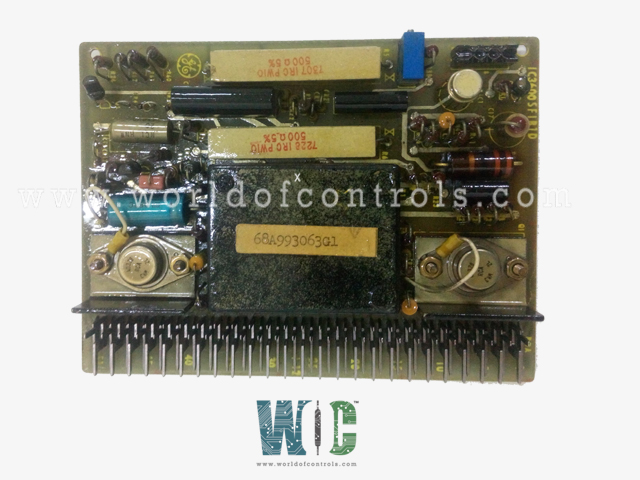
Flame indicator circuit boards are essential components in industrial control systems where combustion processes must be continuously monitored for safety and efficiency. In turbine-based power generation systems, they ensure that flame presence is reliably detected during startup, operation, and shutdown phases. Without accurate flame monitoring, turbines risk unsafe fuel accumulation, unstable combustion, and potential equipment damage. These boards are widely used in gas and steam turbine applications as part of legacy and modern control architectures, where they support real-time combustion safety functions.
Role of Flame Indicator Circuit Boards in Turbine Control Systems
In turbine systems, combustion is the core process that drives energy production. Fuel is injected into a combustion chamber and ignited under controlled conditions. Once ignition occurs, the system must confirm that a stable flame is present before continuing fuel flow.
Flame indicator circuit boards act as the interface between flame sensors and the turbine control system. Their main responsibilities include:
- Receiving electrical signals from flame detection sensors
- Processing and interpreting flame presence signals
- Filtering out false or unstable readings
- Communicating verified flame status to the control logic
These functions are critical in ensuring that turbines operate safely and efficiently under varying load and environmental conditions.
Working Principle of Flame Detection
Flame detection in industrial systems is based on the principle that flames emit specific types of radiation, such as ultraviolet (UV), infrared (IR), or visible light. Flame sensors placed near the combustion zone detect this radiation and convert it into electrical signals.
The flame indicator circuit board processes these signals through multiple stages:
1. Signal Acquisition
The board receives weak input signals from flame detectors installed in the turbine combustion chamber.
2. Signal Amplification
Since sensor outputs are typically low-level and susceptible to noise, the board amplifies these signals to a usable level for processing.
3. Noise Filtering and Conditioning
Industrial environments are highly noisy due to electrical interference, vibration, and temperature variation. The circuit board removes unwanted disturbances using filtering and conditioning circuits.
4. Flame Verification Logic
After conditioning, the signal is evaluated using predefined logic. The system checks for consistency, intensity, and stability of the flame signal to distinguish between a real flame and false detection.
5. Output Communication
Once a stable flame is confirmed, the board sends a validated signal to the turbine control system. If the flame is lost or becomes unstable, it immediately triggers an alarm or initiates a shutdown sequence.
Flame Indicator Boards in GE Turbine Systems
In GE turbine control systems, flame indicator circuit boards are part of the broader combustion management architecture. These systems are commonly found in industrial gas turbines used for power generation, oil and gas processing, and heavy industrial operations.
Within these systems, flame indicator boards are responsible for:
- Monitoring flame presence during ignition and operation
- Ensuring safe sequencing during startup
- Supporting automatic shutdown in case of flame failure
- Providing feedback to the main turbine controller
These functions are especially important in legacy turbine platforms where modular electronic boards handle specific control tasks rather than fully digital integrated systems.
Importance in Industrial Safety and Reliability
Flame indicator circuit boards are vital safety components in turbine operations. Any failure in flame detection can result in serious operational risks, including:
- Accumulation of unburned fuel
- Risk of explosion during ignition cycles
- Damage to combustion chambers and turbine components
- Unexpected system shutdowns and production loss
By continuously validating flame presence, these boards ensure that combustion remains stable and controlled throughout turbine operation.
Conclusion
Flame indicator circuit boards are fundamental to safe turbine operation, acting as the critical link between flame detection sensors and control systems. They process weak sensor signals, eliminate noise, and confirm flame stability before allowing continued fuel flow. In GE turbine systems, these boards play an important role in maintaining operational safety and reliability, particularly in industrial environments where precise combustion control is essential. Understanding their working principle highlights their significance in protecting both equipment and personnel in high-energy turbine applications.