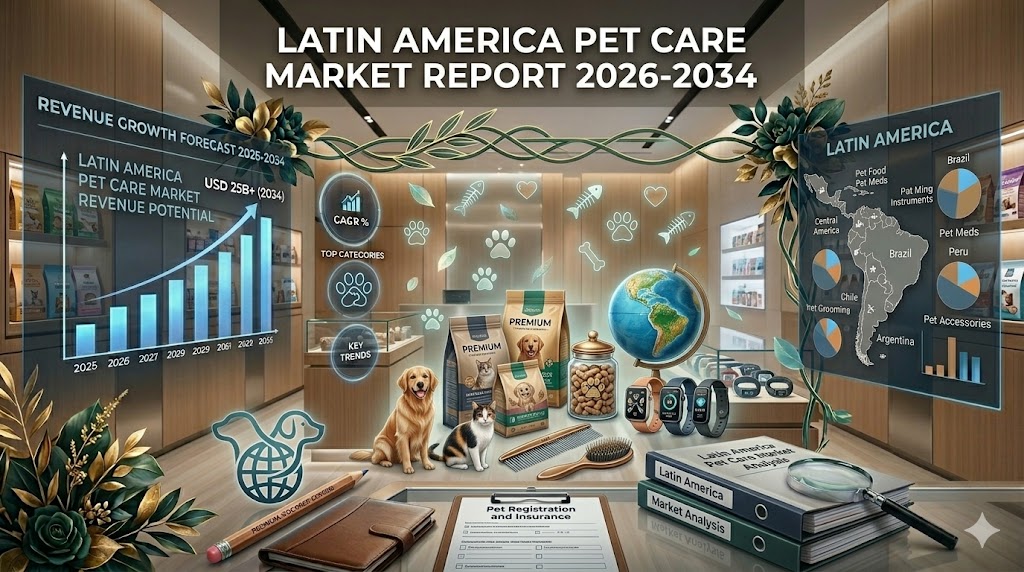
The Latin America pet care market is undergoing a period of remarkable transformation and growth. As of 2025, the market reached a significant valuation of USD 12.0 Billion. However, this is just the baseline for a sector that is rapidly expanding due to shifting cultural attitudes toward animal companionship.
Industry forecasts from the IMARC Group suggest that the Latin America pet care market size will surge to USD 19.5 Billion by 2034. This trajectory represents a steady Compound Annual Growth Rate (CAGR) of 5.34% during the 2026–2034 forecast period. This robust growth is fueled by a combination of rising disposable incomes, the “humanization” of pets, and an increasing demand for premium wellness products across major regional economies like Brazil, Mexico, and Argentina.
Why is the Humanization of Pets Driving Regional Market Growth?
The primary catalyst behind the booming pet industry in Latin America is the fundamental shift in how owners perceive their animals. Pets are no longer viewed merely as outdoor guardians or utilitarian animals; they have become integral members of the family unit. This “humanization” trend has several direct impacts on market dynamics:
- Emotional Bonding: As families become smaller, many individuals seek companionship in pets, leading to a deeper emotional connection.
- Willingness to Spend: This bond translates into a higher willingness to invest in premium pet food, advanced healthcare, and specialized grooming services.
- Lifestyle Integration: Urban areas are seeing an increase in pet-friendly establishments, such as restaurants and event spaces, mirroring trends in more developed global markets.
Social media also plays a pivotal role, as pet owners increasingly view their animals as lifestyle companions, sharing their lives online and driving demand for aesthetically pleasing accessories and high-quality lifestyle products.
Which Pet Type Currently Dominates the Latin American Landscape?
When analyzing the market by pet type, dogs remain the undisputed leaders in terms of revenue share. Their dominance is rooted in a high adoption rate across both urban and rural environments throughout the region.
The preference for dogs has created a massive demand for:
- Specialized Nutrition: Owners are moving away from generic scraps toward breed-specific and life-stage-specific diets.
- Preventive Healthcare: There is a heightened focus on vaccinations, parasite treatments, and regular veterinary check-ups.
- Grooming and Comfort: From high-end bedding to professional grooming, the dog segment captures the lion’s share of discretionary spending.
While cats are also seeing a rise in popularity – particularly in urban Chile where convenience-focused solutions are preferred – the dog segment continues to anchor the industry’s stability and growth.
How Are Specialized Pet Food and Nutrition Evolving in the Region?
The pet food segment is the largest component of the Latin America pet care market. It is primarily categorized into dry and wet food options, each serving distinct consumer needs.
Dry Food continues to be the preferred choice for the majority of owners due to its affordability, ease of storage, and long shelf life. However, Wet Food is gaining significant traction. This shift is driven by owners seeking higher moisture content and nutrient-rich formulations, which are often more appealing to senior pets or “picky eaters.”
Key industry players like Mars Petcare and Nestlé Purina are leading this evolution. For instance, Nestlé Purina recently announced a massive expansion of its Silao, Mexico facility to increase production of both wet and dry food, aiming to make it the largest pet food plant in Latin America.
Sample Request For Your Business
What Role Does E-Commerce Play in the Distribution of Pet Products?
While the offline channel – consisting of physical pet stores, supermarkets, and veterinary clinics – remains the dominant distribution method, the online channel is the fastest-growing segment.
The rise of digital platforms is transforming how Latin Americans shop for their pets for several reasons:
- Convenience and Variety: E-commerce provides access to a wider range of premium products that may not be available in local neighborhood stores.
- Subscription Models: Many pet owners are adopting subscription services for food and health essentials, ensuring they never run out of supplies.
- Competitive Pricing: Online retailers often offer better deals and home delivery, which is particularly attractive to busy urban professionals.
As internet penetration continues to rise across the region, e-commerce is expected to become a primary pillar of the market’s accessibility.
Why Is Sustainability Becoming a Priority for Pet Owners?
Environmental consciousness is no longer a niche concern; it is a core element of the Latin American pet market. Modern consumers are increasingly seeking sustainable and eco-friendly options for their pets. This trend is manifesting in several ways:
- Eco-Friendly Ingredients: There is a growing interest in plant-based and insect-based proteins as sustainable alternatives to traditional meat-based diets.
- Biodegradable Packaging: Brands are investing in packaging that reduces their carbon footprint.
- Sustainable Manufacturing: Companies like Mars Petcare are collaborating on programs to develop next-generation pet food solutions that focus on zero-waste manufacturing and renewable energy.
This shift toward ethical consumption is positioning brands that prioritize eco-responsibility as the new market leaders in the eyes of the younger, more environmentally aware generation.
How is the Grooming and Hygiene Segment Innovating?
The demand for grooming products has moved beyond simple soap and water. Today, the market includes a sophisticated array of shampoos, conditioners, clippers, and specialized hygiene tools.
Innovation in this segment focuses on simplifying routines for busy owners. Recent product launches, such as those by HugWith, include:
- Biodegradable grooming glove wipes.
- Dental finger wipes for oral hygiene.
- Eye and ear cleaning wipes.
These products reflect a holistic approach to pet health, where hygiene is seen as a preventive measure to maintain the pet’s overall well-being and appearance.
Which Countries are the Key Players in the Latin American Market?
The pet care landscape varies significantly across different nations in the region:
- Brazil: Driven by high ownership rates and a strong culture of pet humanization, Brazil is a powerhouse for premium food and healthcare spending.
- Mexico: Boasts a growing middle class and serves as a major manufacturing hub for regional exports.
- Argentina: Maintains a strong cultural bond with pets, though the market is currently more focused on balancing premium quality with cost-effective solutions.
- Colombia & Chile: Both nations are seeing rapid growth due to urbanization and a noticeable shift toward sustainable and specialized pet products.
- Peru: Emerging as a growth market with new regulations focused on pet safety and health, ensuring that animals entering or living in the country meet high standards of care.
What are the Major Competitive Trends Among Industry Leaders?
The Latin America pet care market is a competitive arena featuring a mix of multinational giants and rising local players. Companies like Colgate-Palmolive (Hill’s Pet Nutrition), Nestlé Purina, and Mars Petcare compete through:
- Production Expansion: Building larger, more efficient plants to meet local and export demand.
- M&A Activity: Strategic acquisitions and collaborations to expand geographical reach and product portfolios.
- Technological Innovation: The introduction of high-tech products like AI-powered smart collars (e.g., PetPace) that monitor vitals and track GPS location.
Local players like Adimax in Brazil are also expanding their manufacturing footprint to compete across all price points, from economy to super-premium segments.
What Future Trends Will Shape the Latin America Pet Care Industry by 2034?
Looking toward 2034, several key trends will define the industry:
- Technological Integration: The rise of pet wearables and AI-driven health monitoring will become standard for proactive pet care.
- Health-Centric Nutrition: Expect to see more functional foods targeting specific medical issues, such as joint health, digestive sensitivity, and cognitive function.
- Regulatory Maturity: Increased government focus on responsible pet ownership and safety regulations (like those seen in Peru) will create a more structured and professionalized market environment.