Most advice about reducing household waste reads like a lifestyle manifesto. Ditch all plastic. Make your own cleaning products. Bring mason jars to the bulk aisle. Sew your own produce bags. For most people with jobs, kids, and limited free time, that list feels exhausting before it even starts.
But you don’t have to do any of that to make a measurable dent in what your household sends to the landfill. A handful of small, targeted changes, the kind that take minutes to adopt and zero willpower to maintain, can cut your trash volume by a third or more. Here’s where to start.
Fix the Biggest Problem First: The Food in Your Trash Can
Before thinking about packaging, plastic, or recycling, look at what’s actually filling your garbage bag. For most American households, the answer is food. The EPA estimates that food scraps make up roughly 30 percent of what we throw away. That’s the single largest category of household waste, more than paper, plastic, or any other material.
This means the fastest way to reduce your trash isn’t switching to reusable bags or refusing straws. It’s dealing with the food scraps you produce every day while cooking, eating, and cleaning out the fridge.
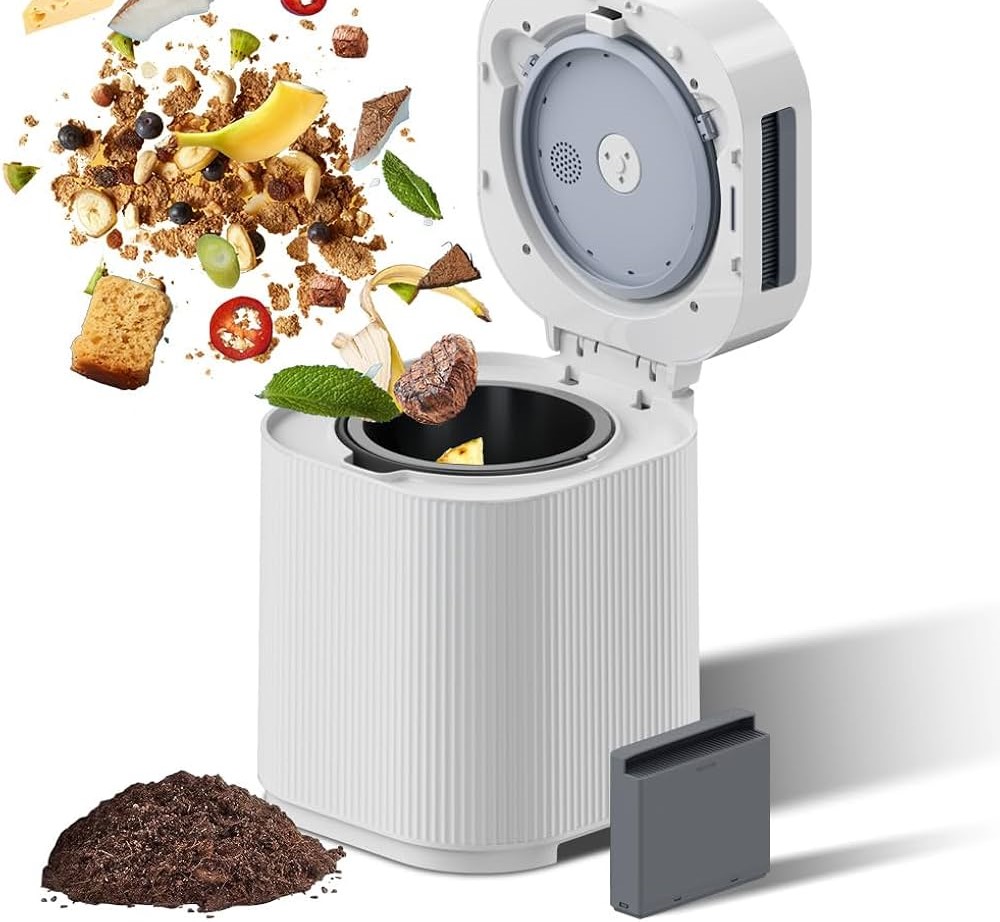
An electric composter sitting on your countertop handles this without asking you to change how you cook or what you buy. You scrape your plate, toss in the coffee grounds, drop in the vegetable trimmings, and the machine does the rest. The scraps break down into a dry, soil-like material you can use on houseplants, a balcony garden, or even give to a neighbor who gardens. Your trash bag fills up more slowly. The kitchen smells better. You didn’t join a movement. You just redirected where your scraps go.
Swap the Disposables You Use Most Often
After food waste, the next highest-impact changes target the disposable items you reach for every single day. Not every disposable. Just the ones with the highest turnover.
Paper towels are a good place to start. A pack of inexpensive cotton dish towels handles 90 percent of what paper towels do. Keep a small basket on the counter for used ones and wash them with your regular laundry. Most households that make this switch go from multiple rolls per week to one roll per month.
Plastic wrap is another easy target. Silicone lids or beeswax wraps cover bowls just as well and last for years. Zip-top bags can be replaced with reusable silicone bags for lunches and snacks. All of these are available at any big-box retailer.
You don’t need to eliminate every single-use item. Just replace the three or four you burn through fastest.
Stop Recycling Things That Aren’t Recyclable
Most households contaminate their recycling bin with items that can’t be processed: greasy pizza boxes, plastic bags, and food-stained containers. When a load is too contaminated, the entire batch gets sent to the landfill anyway.
A quick rule: rinse containers, flatten cardboard, and when in doubt, throw it in the trash rather than “wish-cycling” it into the blue bin.
Buy Less, Not Different
The simplest waste reduction strategy has nothing to do with what you buy. It’s about how much. Buying a smaller bag of salad greens you’ll actually finish, picking up three bananas instead of six, and skipping the bulk deal on yogurt your family won’t eat before it expires. These decisions prevent waste before it ever reaches your kitchen.
An electric food compostergives you a backup plan for the scraps that still happen, because no household eliminates food waste. But the less you overbuy, the less there is to process in the first place.
Start With One Change This Week
Waste reduction works best when it’s gradual. Pick one change from this list, just one, and stick with it for a week. Replace paper towels with cloth. Start redirecting food scraps away from the trash. Buy smaller portions of the three items you waste the most. Once that change feels automatic, add another.
The goal isn’t perfection. It’s progress you can maintain without thinking about it. If food waste is where you want to begin, and for most households, it’s the single biggest category, an electric food composter on your countertop is the easiest first step. Your scraps become a usable soil amendment instead of landfill waste, your trash bag fills up more slowly, and you don’t have to overhaul a thing.