
Introduction:
Every organization wants faster growth, smoother workflows, and higher output. Yet progress often slows for reasons that aren’t immediately obvious. The culprit is usually a Bottleneck — a single constraint that quietly restricts the performance of an entire system.
Unlike obvious failures, a Bottleneck doesn’t always look dramatic. It rarely announces itself. Instead, it builds pressure in subtle ways: delayed projects, frustrated teams, rising costs, and missed opportunities.
Understanding how bottlenecks form — and how to eliminate them — can transform productivity at every level.
What Is a Bottleneck, Really?
Most people describe a Bottleneck as a point of congestion. While technically correct, that definition barely scratches the surface.
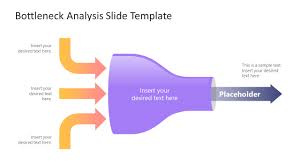
A Bottleneck is not just a slow step in a process. It is the limiting factor that determines the maximum capacity of an entire system.
Imagine a four-lane highway merging into one lane. It doesn’t matter how smooth the road is before or after that merge — traffic speed is controlled by the narrowest point. Similarly, in business, production, technology, or leadership, the narrowest constraint governs overall performance.
The critical insight: improving areas that are not the Bottleneck produces minimal impact.
The Different Types of Bottlenecks
Bottlenecks appear in many forms, and identifying the right category is essential for solving them effectively.
1. Operational Bottlenecks
These occur in workflows and production processes. Examples include:
- A single approval stage delaying projects
- Limited equipment capacity
- Manual tasks slowing automated systems
Operational bottlenecks are often visible but misunderstood. Teams may blame workload when the real issue is process design.
2. Decision-Making Bottlenecks
When all major decisions depend on one person or department, growth slows dramatically. Centralized authority may feel efficient at first, but as organizations scale, it becomes restrictive.
This type of Bottleneck often appears in founder-led companies where delegation hasn’t evolved with growth.
3. Communication Bottlenecks
Information delays are silent productivity killers. When updates, feedback, or approvals move slowly between teams, momentum stalls.
In hybrid and remote environments, communication bottlenecks are increasingly common.
4. Technological Bottlenecks
Outdated software, limited bandwidth, or incompatible systems can restrict performance even when teams are capable and motivated.
Sometimes the constraint is not human — it’s digital infrastructure.
Why Most Companies Misdiagnose the Bottleneck
One of the biggest strategic mistakes organizations make is focusing on symptoms instead of constraints.
For example:
- Hiring more staff when workflow design is flawed
- Increasing marketing spend when fulfillment capacity is limited
- Adding meetings when communication clarity is the real issue
When you improve a non-limiting area, overall output barely changes. This creates frustration because effort increases without proportional results.
The key is identifying the true Bottleneck before investing resources.
See more: Bottleneck Rechner
How to Identify a Bottleneck
Finding a Bottleneck requires observation, not assumption.
Start by asking:
- Where does work consistently pile up?
- Which step determines final delivery speed?
- Where do delays create downstream impact?
- What happens if we increase demand — where does strain appear first?
Data helps. Track cycle times, approval durations, and output rates. The constraint will usually reveal itself through consistent congestion.
Remember: the Bottleneck controls system capacity. If you double efficiency elsewhere and nothing changes, you haven’t fixed the right point.
The Strategy to Eliminate a Bottleneck
Once identified, solving a Bottleneck requires targeted action.
Step 1: Maximize Existing Capacity
Before adding resources, ensure the constrained area operates at optimal efficiency. Remove distractions, clarify responsibilities, and streamline unnecessary steps.
Step 2: Redistribute Workload
Sometimes the solution involves shifting tasks away from the constraint. Delegation or automation can free critical capacity.
Step 3: Increase Capacity Strategically
If demand exceeds what optimization can solve, expanding capacity becomes necessary — whether through hiring, upgrading systems, or redesigning processes.
Step 4: Repeat the Process
Eliminating one Bottleneck often reveals the next constraint. Growth is an ongoing cycle of identifying and relieving limitations.
The Psychological Bottleneck
Not all constraints are operational. Sometimes the biggest Bottleneck is mindset.
Fear of change, resistance to delegation, perfectionism, or risk aversion can limit performance more than infrastructure ever could.
For leaders, personal limitations often become organizational limitations. Recognizing this requires self-awareness and honest evaluation.
Bottlenecks and Sustainable Growth
Growth without addressing constraints creates instability. When pressure builds behind an unresolved Bottleneck, cracks form elsewhere in the system.
Sustainable expansion happens when organizations continuously:
- Identify constraints
- Strengthen weak points
- Align capacity with demand
- Reevaluate systems regularly
Rather than chasing productivity hacks, successful teams focus on constraint management.
Final Thoughts: The Power of Finding the Narrowest Point
A Bottleneck is not a failure — it is feedback. It reveals where attention is most needed.
The most efficient strategy is not doing more everywhere. It is improving the single point that limits everything else.
When you remove a Bottleneck, output increases naturally without multiplying effort. Momentum builds. Frustration decreases. Performance stabilizes.
See more blogs: Click Here